

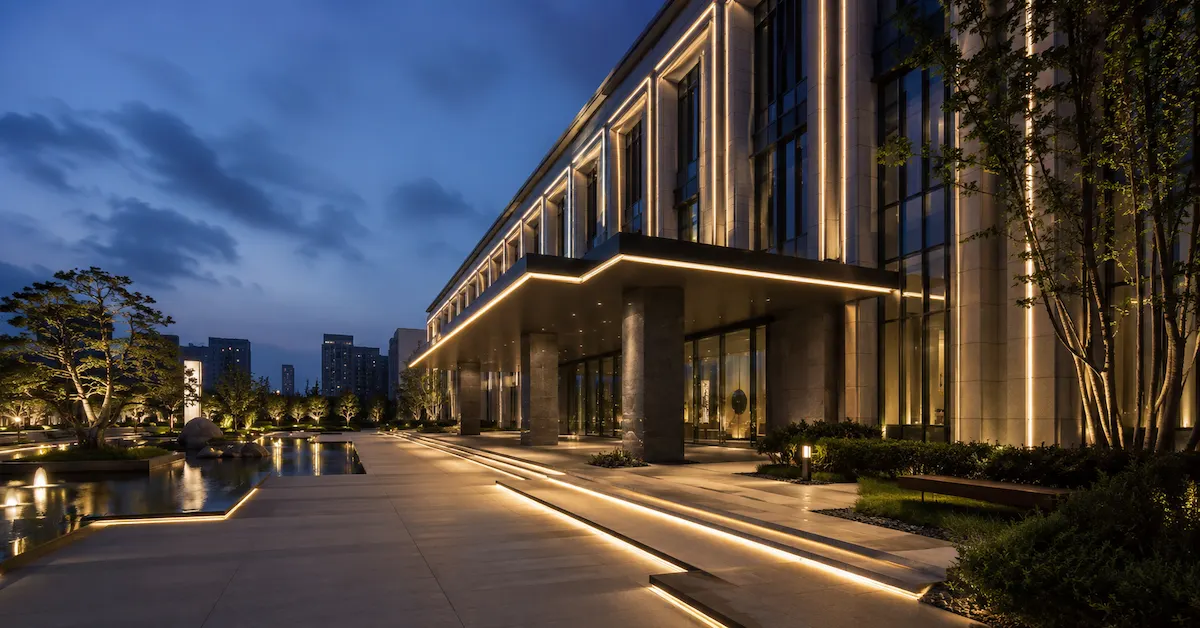
Architectural lighting is no longer only about illumination. Modern buildings use lighting to create identity, improve visual experience, highlight structural design, and enhance nighttime appearance.
A professional LED strip for architectural lighting provides flexible installation, continuous linear illumination, energy efficiency, and customized design possibilities for buildings, hotels, commercial spaces, landscape projects, and public areas.
For architects, lighting designers, contractors, and commercial project buyers, selecting the right LED strip is critical. The product must provide stable brightness, weather resistance, consistent color, suitable control options, and reliable performance for long-term outdoor or indoor operation.
YESUN LED provides LED strips, LED modules, FPC light sheets, LED neon strips, controllers, and power supplies for signage and commercial lighting projects, supporting customized architectural lighting solutions.
Why LED Strips Are Popular in Architectural Lighting
LED strips have become a popular choice for architectural projects because they combine flexibility with powerful lighting performance.
Compared with traditional lighting methods, LED strips offer:
- Slim installation design
- Flexible bending capability
- Continuous linear lighting effect
- Energy-efficient operation
- Multiple color options
- Easy integration into structures
- Custom length possibilities
- Indoor and outdoor application options
Architects and designers can use LED strips to highlight building lines, create indirect lighting, define architectural features, and improve the visual identity of a space.
Common Applications of LED Strip for Architectural Lighting
Architectural lighting covers many environments. Different applications require different LED strip specifications.
| Application | Recommended LED Strip Solution | Main Requirement |
|---|---|---|
| Building facade lighting | Waterproof LED strip, LED neon strip | Weather resistance and long lifespan |
| Commercial building outlines | Flexible linear LED strip | Continuous and uniform light |
| Hotel exterior lighting | Waterproof warm white LED strip | Premium atmosphere |
| Landscape lighting | Outdoor LED strip | Durability and waterproof protection |
| Bridges and public structures | High-efficiency waterproof strip | Long-distance stability |
| Interior architectural lighting | COB LED strip | Smooth indirect lighting |
| Ceiling cove lighting | High-density LED strip | Uniform illumination |
| Stair and pathway lighting | Low-voltage LED strip | Safety and clean installation |
| Museum and exhibition spaces | High CRI LED strip | Accurate color presentation |
On the YESUN LED Products page, buyers can explore waterproof LED strips, COB LED strips, high-density LED strips, RGB LED strips, CCT tunable LED strips, LED neon strips, controllers, and power supplies for different lighting applications.
Key Factors When Choosing LED Strip for Architectural Lighting
1. Waterproof Protection for Outdoor Projects
Many architectural lighting projects are installed outdoors and exposed to rain, humidity, dust, temperature changes, and sunlight.
For outdoor applications, buyers should consider:
- IP rating
- Waterproof coating
- Silicone protection
- Connector sealing
- Cable protection
- Installation position
- Maintenance accessibility
Common selections include:
| IP Rating | Application |
| IP20 | Indoor architectural decoration |
| IP65 | Protected outdoor areas |
| IP67 | Outdoor facade and landscape lighting |
| IP68 | More demanding waterproof environments |
A waterproof LED strip is only part of the solution. Connectors, power supplies, and installation methods must also be designed for outdoor conditions.
2. Brightness and Light Uniformity
Architectural lighting requires controlled brightness rather than simply maximum output.
Too little brightness may make the building invisible at night. Too much brightness may create glare and affect the overall design.
Important specifications include:
- Lumens per meter
- LED density
- Beam angle
- Installation distance
- Viewing distance
- Surface reflection
- Light distribution
For indirect architectural lighting, COB LED strips and high-density LED strips are often selected because they create smoother continuous light.
3. Color Temperature and Lighting Effect
Color temperature plays an important role in architectural atmosphere.
Common choices include:
Warm White
Suitable for:
- Hotels
- Restaurants
- Luxury buildings
- Historical architecture
Neutral White
Suitable for:
- Commercial buildings
- Offices
- Exhibition spaces
Cool White
Suitable for:
- Modern architecture
- Facade highlighting
- High-visibility applications
RGB / RGBW
Suitable for:
- Entertainment buildings
- Creative lighting
- Dynamic architectural effects
A professional supplier should provide consistent color quality across different production batches.
4. Voltage Selection for Long Installations
Architectural lighting often involves long installation distances. Voltage selection affects brightness consistency and wiring design.
12V LED Strip
Suitable for:
- Short decorative sections
- Small indoor projects
- Compact structures
24V LED Strip
Suitable for:
- Commercial buildings
- Long linear lighting
- Large-scale installations
24V systems are commonly preferred for longer projects because they can help reduce voltage drop.
Before installation, buyers should confirm:
- Total length
- Power supply location
- Cable distance
- Power injection points
- Total wattage
5. Heat Management and Installation Structure
Architectural lighting often operates for many hours. Heat management affects lifespan and brightness stability.
Professional installations may use:
- Aluminum profiles
- Metal mounting channels
- Heat-dissipating structures
- Proper ventilation
- Correct installation spacing
For long-term commercial projects, thermal design should be considered during the planning stage.
LED Strip vs LED Neon Strip for Architecture
Both LED strips and LED neon strips are popular in architectural applications.
| Product | Advantage | Suitable Applications |
| LED Strip | Flexible, efficient, various specifications | Cove lighting, linear lighting, interiors |
| LED Neon Strip | Smooth appearance and stronger visual effect | Facades, outlines, decorative structures |
LED neon strips are often selected when designers need a continuous neon-style appearance without visible LED points.
LED strips are commonly preferred when hidden lighting, indirect illumination, or custom installation is required.
Architectural Lighting Solutions by Project Type
Hotels
Hotels often use LED strips for:
- Lobby lighting
- Ceiling details
- Corridor lighting
- Room decoration
- Exterior facade highlights
Recommended solutions:
- Warm white LED strips
- CCT tunable strips
- Waterproof outdoor strips
Commercial Buildings
Commercial buildings use architectural lighting to improve visibility and brand image.
Applications include:
- Building outlines
- Entrance lighting
- Facade highlights
- Decorative walls
Recommended solutions:
- High brightness LED strips
- Waterproof LED strips
- Long-run 24V systems
Landscape Projects
Landscape lighting requires strong outdoor durability.
Applications include:
- Gardens
- Pathways
- Bridges
- Outdoor structures
Recommended solutions:
- IP67/IP68 waterproof LED strips
- LED neon strips
- Outdoor power systems
Retail and Brand Spaces
Retail architecture uses lighting to create atmosphere and highlight design elements.
Applications include:
- Storefronts
- Display areas
- Brand walls
- Ceiling features
Recommended solutions:
- COB LED strips
- High CRI strips
- RGB or CCT solutions
OEM/ODM LED Strip Solutions for Architectural Projects
Architectural projects often require customized lighting solutions because every building has different structures and design requirements.
YESUN LED supports OEM/ODM customization including:
- Custom LED strip length
- Custom PCB width
- Custom LED density
- Custom brightness
- Custom color temperature
- RGB/RGBW solutions
- Waterproof structure
- Custom connectors
- Cable length customization
- Private label packaging
- Project-specific solutions
According to the YESUN LED About Us page, YESUN LED focuses on advertising signage and commercial LED lighting solutions, supporting global buyers with customized products and engineering assistance.
How to Test LED Strip Samples Before Architectural Projects
Before large-scale installation, buyers should test samples in real project conditions.
| Test Item | Purpose |
| Brightness | Confirm visibility and lighting effect |
| Color consistency | Maintain design quality |
| Waterproof performance | Reduce outdoor risks |
| Heat performance | Ensure long operation |
| Voltage stability | Avoid uneven brightness |
| Flexibility | Confirm installation compatibility |
| Connector quality | Improve reliability |
| Control function | Verify RGB/CCT performance |
For technical files, catalogs, certificates, and product information, buyers can visit the YESUN LED Resources page.
Why Choose YESUN LED for Architectural Lighting Solutions?
YESUN LED supports architects, contractors, lighting designers, distributors, and OEM buyers with LED strip solutions for architectural projects.
Key advantages include:
- LED strips for architectural applications
- Waterproof outdoor lighting options
- COB and high-density LED strips
- LED neon strips for linear designs
- Controllers and power supplies
- OEM/ODM customization
- Factory production support
- Technical guidance for project selection
- Quality control for bulk orders
Buyers can also explore more lighting application guides through the YESUN LED Blog.
FAQ: LED Strip for Architectural Lighting
1. What is the best LED strip for architectural lighting?
The best LED strip depends on the application. Outdoor facades usually require waterproof LED strips, while indoor cove lighting often uses COB or high-density LED strips.
2. Can LED strips be used outdoors?
Yes. Outdoor architectural projects should use suitable waterproof LED strips with proper IP ratings and protected installation systems.
3. Should architectural lighting use 12V or 24V LED strips?
12V works well for short sections, while 24V is usually better for longer architectural installations because it helps reduce voltage drop.
4. What is better for building facades, LED strip or LED neon strip?
LED neon strips are often better for visible outlines and continuous decorative effects. LED strips are suitable for hidden and indirect lighting.
5. Can YESUN LED customize architectural LED strips?
Yes. YESUN LED supports customization of length, brightness, color temperature, waterproof structure, connectors, and packaging.
6. How do I choose IP rating for outdoor architectural lighting?
Choose according to exposure level. Protected areas may use IP65, while more exposed outdoor structures may require IP67 or IP68.
7. What accessories are needed for architectural LED strip systems?
Common accessories include power supplies, controllers, connectors, aluminum profiles, mounting accessories, and waterproof components.
8. Where can I view YESUN LED architectural lighting products?
You can visit the YESUN LED Products page for LED strips, neon strips, modules, controllers, and power supplies.
Conclusion
Choosing the right LED strip for architectural lighting requires careful consideration of brightness, waterproof protection, voltage, heat management, color quality, installation structure, and long-term reliability.
For architects, lighting designers, contractors, distributors, and OEM buyers, YESUN LED provides flexible LED strip lighting solutions for building facades, hotels, landscapes, commercial spaces, and custom architectural projects.
With professional manufacturing capability, OEM/ODM support, and complete lighting components, YESUN LED helps global buyers create reliable and visually impressive architectural lighting systems.