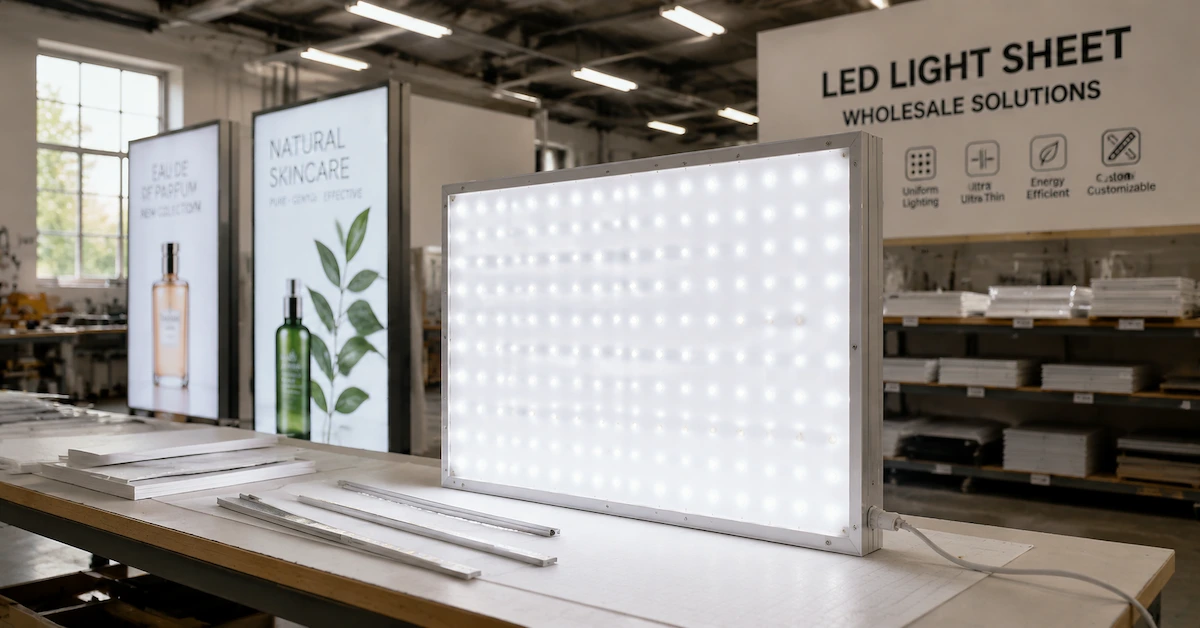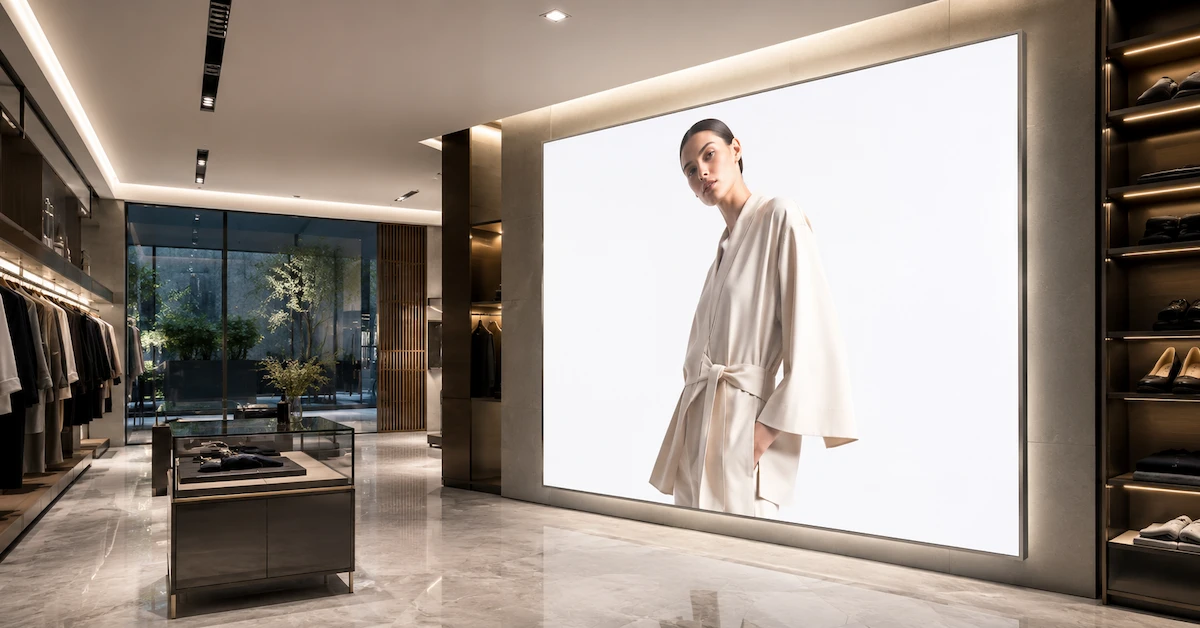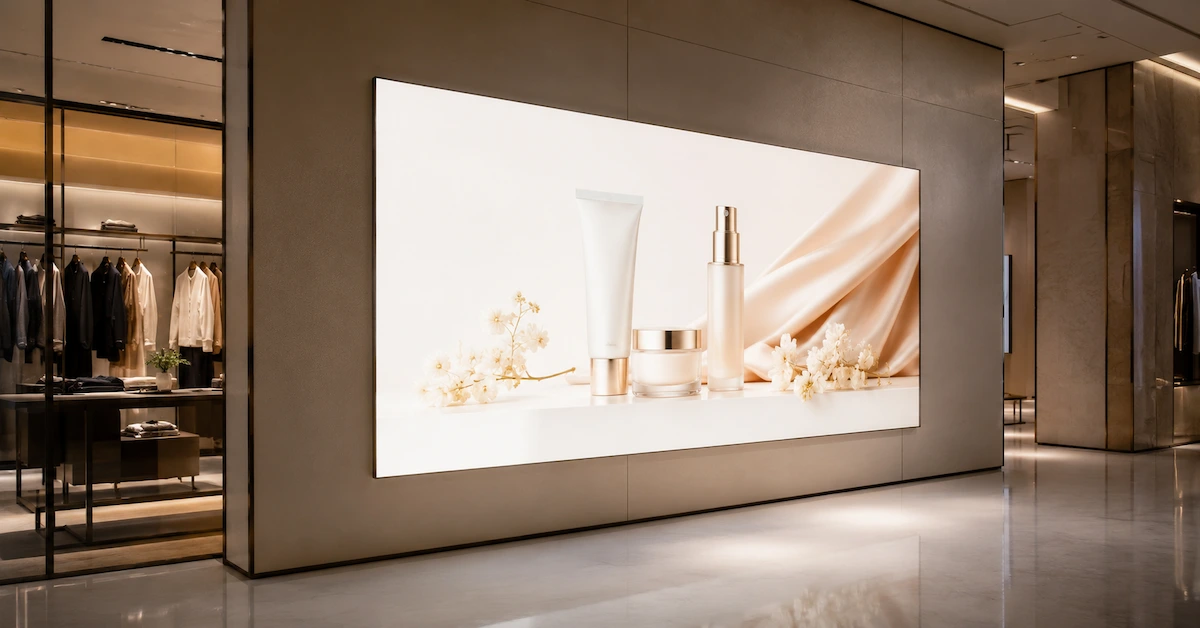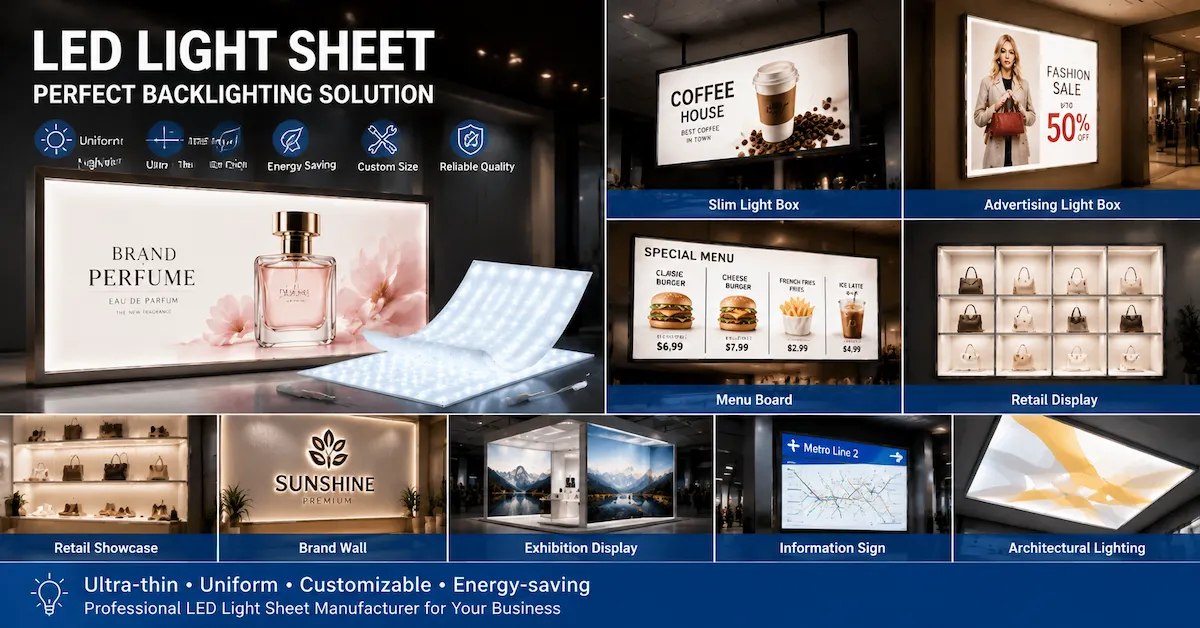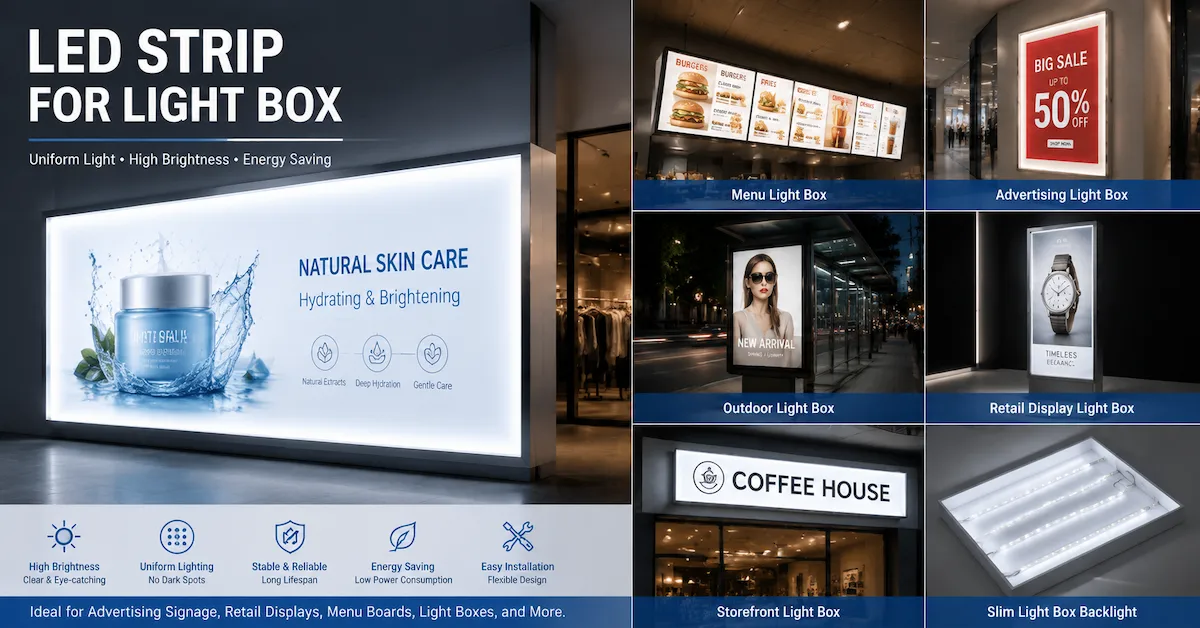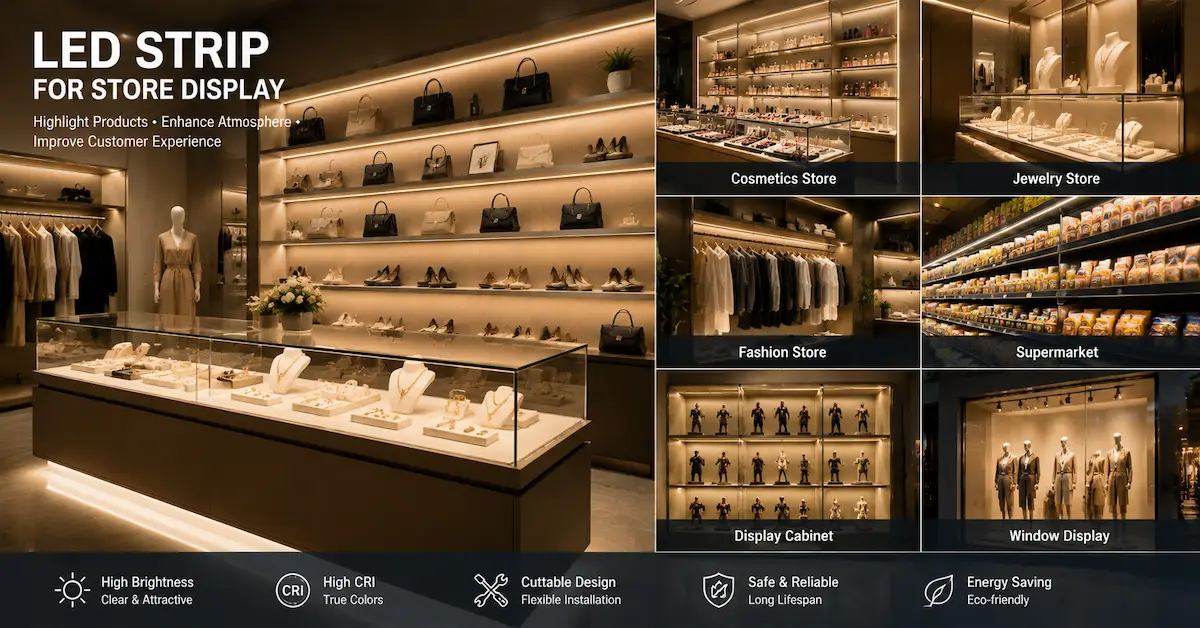


Choosing the right high brightness LED strip is important for projects that require strong illumination, clear visibility, and reliable long-term operation. Unlike standard decorative LED strips, high brightness LED strips are designed for commercial applications where lighting performance directly affects visibility, product presentation, and customer experience.
For signage manufacturers, lighting contractors, distributors, retail display companies, and OEM buyers, brightness alone is not enough. A professional lighting solution must balance brightness, energy efficiency, heat management, color consistency, voltage stability, waterproof protection, and installation requirements.
YESUN LED provides LED strips, LED modules, FPC light sheets, LED neon strips, LED controllers, and LED power supplies for signage and commercial lighting applications.
What Is a High Brightness LED Strip?
A high brightness LED strip is an LED lighting product designed to deliver higher light output compared with standard LED strips. It usually achieves stronger illumination through higher LED density, higher-power LED chips, optimized PCB design, improved heat dissipation, and efficient optical structures.
High brightness LED strips are commonly used in:
- Outdoor signage
- Large light boxes
- Storefront displays
- Retail shelves
- Commercial interiors
- Architectural lighting
- Exhibition displays
- Brand walls
- Restaurant and hotel lighting
- Industrial display applications
For commercial buyers, the goal is not simply maximum brightness. The correct product should provide enough illumination while maintaining stable performance and reasonable operating costs.
Why Commercial Projects Need High Brightness LED Strips
Many commercial environments have higher lighting requirements than residential applications.
For example:
- Outdoor signs need visibility at night and from a distance.
- Light boxes need enough output to create uniform backlighting.
- Retail displays need strong but comfortable illumination.
- Architectural projects need consistent brightness across long distances.
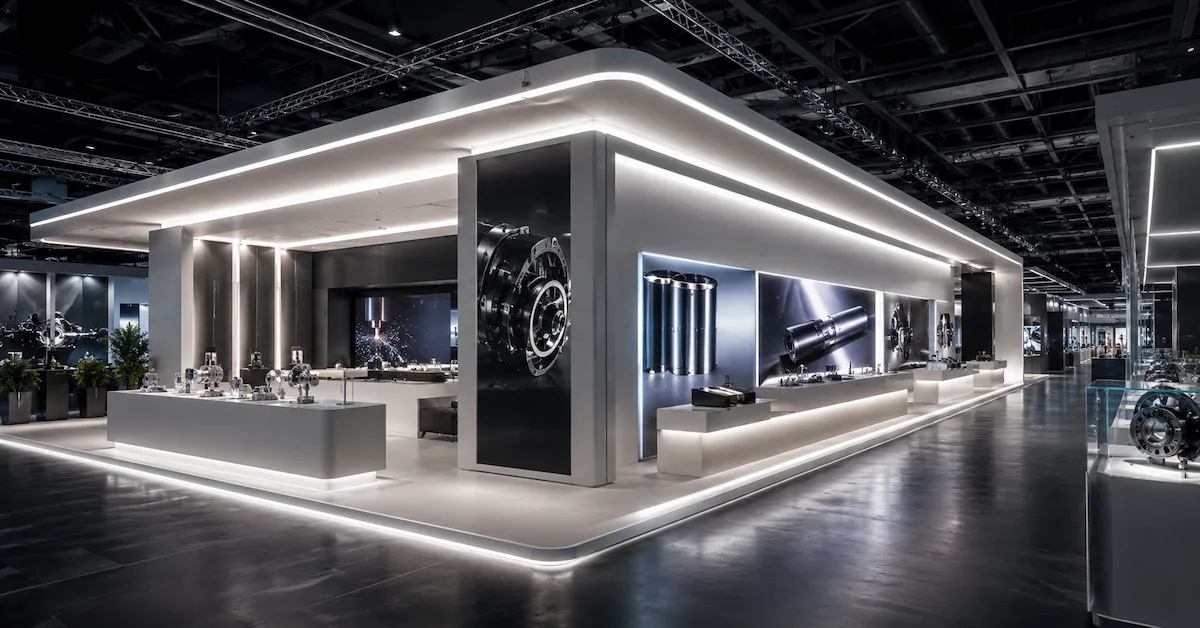
- Exhibition displays need products to attract attention.
Using a standard LED strip in these applications may result in:
- Weak visual impact
- Uneven lighting
- Dark areas
- Poor product presentation
- Higher maintenance frequency
A high brightness LED strip solution helps improve visual performance while reducing the need for additional lighting components.
Main Applications of High Brightness LED Strips
| Application | Recommended Solution | Key Requirement |
|---|---|---|
| Outdoor signage | High brightness waterproof LED strip | Strong output and weather resistance |
| Large light boxes | High-density LED strip | Uniform backlighting |
| Retail displays | High-output COB LED strip | Product visibility and color quality |
| Storefront lighting | 24V high brightness strip | Longer installation distance |
| Architectural lighting | Waterproof linear LED strip | Long-term outdoor stability |
| Exhibition displays | High brightness flexible strip | Attention-grabbing illumination |
| Commercial interiors | High CRI LED strip | Accurate product appearance |
| Brand walls | Custom LED strip solution | Design flexibility |
On the YESUN LED Products page, buyers can explore high-density LED strips, COB LED strips, LED strips with lens, waterproof LED strips, CCT tunable strips, RGB strips, LED neon strips, controllers, and power supplies.
Key Factors When Choosing a High Brightness LED Strip
1. LED Density and Light Output
One of the most important factors affecting brightness is LED density.
A higher LED density usually provides:
- More uniform illumination
- Reduced visible LED points
- Better performance in shallow spaces
- Improved light box appearance
However, higher density also increases power consumption and heat generation. Buyers should balance brightness requirements with installation conditions.
Important specifications include:
- LEDs per meter
- Lumens per meter
- Power consumption per meter
- LED chip type
- Beam angle
- Installation distance
2. Power and Voltage Selection
High brightness LED strips require suitable power systems. Choosing the wrong voltage or insufficient power supply may cause brightness reduction, flickering, or uneven output.
Common options include:
12V LED Strip
Suitable for:
- Short installations
- Small displays
- Compact signage
24V LED Strip
Suitable for:
- Longer commercial runs
- Large signage
- Retail projects
- Architectural applications
24V systems are often preferred for commercial projects because they can help reduce voltage drop over longer distances.
A professional supplier should help buyers calculate:
- Total power requirement
- Power supply capacity
- Wiring distance
- Voltage drop
- Number of power injection points
3. Heat Dissipation Design
Higher brightness means higher power output, which makes heat management important.
Poor heat dissipation may cause:
- Faster brightness decay
- Color shift
- Shorter lifespan
- Early product failure
Commercial projects often use:
- Aluminum profiles
- Metal mounting channels
- Proper installation spacing
- Suitable PCB design
A reliable supplier should consider thermal performance during product selection, not only brightness output.
4. Color Consistency and CRI
High brightness is not enough if the lighting quality is poor.
For retail displays, hotels, restaurants, and brand spaces, buyers should also consider:
- Color temperature
- CRI value
- Batch consistency
- White light quality
High CRI LED strips help products appear more natural, especially in:
- Fashion stores
- Jewelry displays
- Cosmetics counters
- Food displays
5. Waterproof Protection
Many high brightness LED strips are used outdoors, so waterproof performance is essential.
| IP Rating | Application |
| IP20 | Indoor dry environments |
| IP65 | Semi-outdoor and splash protection |
| IP67 | Outdoor signage and exposed areas |
| IP68 | Higher waterproof requirements |
Outdoor projects should also consider:
- Waterproof connectors
- Power supply protection
- Wire sealing
- Installation method
- Maintenance accessibility
High Brightness LED Strip vs Standard LED Strip
| Feature | High Brightness LED Strip | Standard LED Strip |
| Light output | Higher illumination | Normal decorative lighting |
| LED density | Usually higher | Standard density |
| Application | Commercial and professional projects | Home and basic decoration |
| Heat requirement | Higher attention needed | Lower thermal demand |
| Installation | Requires better planning | Simple installation |
| Best for | Signs, displays, light boxes | Decorative lighting |
For commercial buyers, choosing the correct brightness level helps avoid both insufficient lighting and unnecessary energy consumption.
How to Select a Reliable High Brightness LED Strip Supplier
A reliable supplier should provide more than product specifications.
Before purchasing, buyers should evaluate:
Factory Capability
Check:
- Production capacity
- Engineering support
- Quality control process
- Export experience
- Customization ability
According to the YESUN LED About Us page, YESUN LED focuses on advertising signage LED lighting solutions and supports global buyers with LED strips, LED modules, FPC light sheets, LED neon strips, power supplies, and customized lighting solutions.
Product Range
A professional supplier should provide different solutions instead of one standard model.
For example:
- High brightness LED strips
- COB LED strips
- Waterproof LED strips
- RGB LED strips
- CCT tunable strips
- LED modules
- Power supplies
- Controllers
This allows buyers to source complete lighting solutions from one supplier.
Quality Testing
Before bulk orders, buyers should confirm:
- Brightness testing
- Aging testing
- Color inspection
- Waterproof testing
- Voltage testing
- Thermal testing
- Batch consistency control
OEM/ODM High Brightness LED Strip Solutions
Many commercial buyers need customized high brightness LED strips for special projects.
OEM options may include:
- Custom LED density
- Custom PCB width
- Custom brightness level
- Custom color temperature
- RGB/RGBW options
- Waterproof structure
- Custom connectors
- Private label packaging
- Project-specific specifications
YESUN LED supports OEM/ODM lighting solutions for signage companies, distributors, contractors, and commercial project buyers.
Sample Testing Checklist Before Bulk Orders
Before ordering large quantities, buyers should test samples in realistic conditions.
| Test Item | Purpose |
| Brightness | Confirm lighting performance |
| Uniformity | Check dark spots |
| Heat performance | Evaluate long-term stability |
| Color temperature | Ensure visual consistency |
| Waterproof quality | Confirm outdoor suitability |
| Voltage stability | Prevent brightness loss |
| Power supply matching | Avoid system problems |
| Installation fit | Confirm project compatibility |
For catalogs, certificates, technical files, and application information, buyers can visit the YESUN LED Resources page.
Why Choose YESUN LED for High Brightness LED Strip Solutions?
YESUN LED provides high brightness LED strip solutions for:
- Signage manufacturers
- Lighting contractors
- Retail display companies
- Distributors
- OEM brands
- Commercial project buyers
Key advantages include:
- High brightness LED strip options
- COB and high-density LED strips
- Waterproof solutions
- LED modules and FPC light sheets
- Controllers and power supplies
- OEM/ODM customization
- Factory production support
- Technical assistance for project selection
Buyers can also explore more LED lighting guides on the YESUN LED Blog.
FAQ: High Brightness LED Strip
1. What is a high brightness LED strip?
A high brightness LED strip is designed to provide stronger illumination through higher LED density, optimized LED chips, and improved lighting performance.
2. Where are high brightness LED strips used?
They are commonly used in signage, light boxes, retail displays, architectural lighting, exhibitions, hotels, restaurants, and commercial interiors.
3. Is a high brightness LED strip better for outdoor signs?
Yes, when combined with suitable waterproof protection and the correct power system, high brightness LED strips can improve outdoor sign visibility.
4. Should I choose 12V or 24V high brightness LED strips?
12V is suitable for shorter runs. 24V is often better for longer commercial installations because it helps reduce voltage drop.
5. How can I prevent overheating?
Use suitable aluminum profiles, correct power supply capacity, proper installation spacing, and products designed for commercial operation.
6. Can high brightness LED strips be customized?
Yes. OEM customization can include LED density, PCB width, brightness level, color temperature, waterproof structure, connectors, and packaging.
7. What products are used with high brightness LED strips?
Common accessories include LED power supplies, controllers, connectors, aluminum profiles, and mounting accessories.
8. Where can I view YESUN LED high brightness products?
Visit the YESUN LED Products page to explore LED strips, modules, controllers, power supplies, and related lighting products.
Conclusion
Choosing the right high brightness LED strip requires more than selecting the highest output product. Commercial buyers should consider brightness, LED density, voltage, heat management, waterproof protection, color quality, supplier capability, and system compatibility.
For signage, light boxes, retail displays, architectural projects, and commercial lighting applications, YESUN LED provides reliable high brightness LED strip solutions with OEM/ODM support and professional project guidance.