

Choosing the right LED strip manufacturer affects more than the purchase price. It influences lighting consistency, installation efficiency, project reliability, maintenance costs, and the reputation of the buyer supplying the finished system.
For signage makers, commercial lighting contractors, distributors, retail display manufacturers, and OEM brands, a suitable manufacturing partner should provide stable production, clear technical specifications, consistent color, suitable waterproof options, compatible power components, and responsive project support.
YESUN LED specializes in LED products for signage and commercial lighting applications, including LED strips, LED modules, FPC light sheets, LED light bars, neon strips, controllers, power supplies, and custom lighting solutions.
Who Should Work Directly with an LED Strip Manufacturer?
Working directly with a manufacturer is most valuable when the buyer needs repeatable quality, technical customization, bulk production, or long-term supply.
Typical buyers include:
- Advertising signage manufacturers
- Light box producers
- Commercial lighting contractors
- Retail fixture and display companies
- LED lighting distributors
- Importers and wholesalers
- Hotel and restaurant project suppliers
- Architectural lighting companies
- Private-label lighting brands
- OEM and ODM product developers
A small buyer purchasing one short strip for a temporary decorative installation may not require direct factory cooperation. A local retailer may be more efficient for that type of order.
However, buyers managing commercial projects, repeated orders, custom specifications, or branded products usually benefit from working with a real factory.
What Products Should a Professional LED Strip Manufacturer Offer?
Commercial projects require different LED strip technologies. A manufacturer offering only one standard model may not be able to support varied installation environments.
A complete product range should include several of the following categories:
| LED Strip Type | Main Advantage | Typical Applications |
|---|---|---|
| COB LED strip | Smooth light with fewer visible dots | Shelves, cabinets, hotels, retail displays |
| High-density LED strip | Improved brightness uniformity | Light boxes and shallow structures |
| Waterproof LED strip | Protection against moisture and dust | Outdoor signs, facades, landscape projects |
| RGB LED strip | Multiple color effects | Bars, entertainment spaces, decorative lighting |
| RGBW LED strip | Color effects plus a white channel | Hospitality and multifunctional commercial spaces |
| CCT-tunable LED strip | Adjustable warm-to-cool white light | Retail, hotels, restaurants, showrooms |
| Addressable RGB strip | Pixel-level dynamic effects | Creative displays, events, interactive installations |
| S-shape LED strip | Easier lateral bending | Logos, curved signs, irregular structures |
| LED strip with lens | Controlled and wider light distribution | Signage and advertising light boxes |
| High-voltage LED strip | Supports certain longer linear applications | Large architectural and commercial projects |
Buyers can review the available categories on the YESUN LED Products page, which includes LED strips and related signage lighting components.
Which Applications Require Different LED Strip Solutions?
A reliable manufacturer should recommend products according to the application rather than promoting one model for every project.
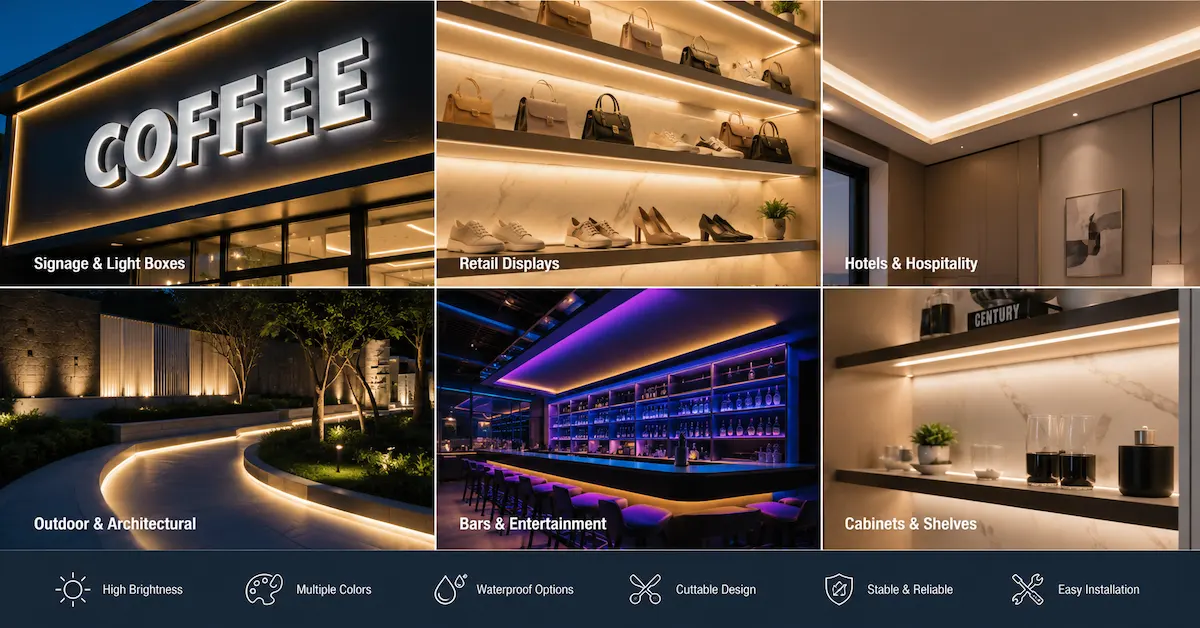
Signage and Light Boxes
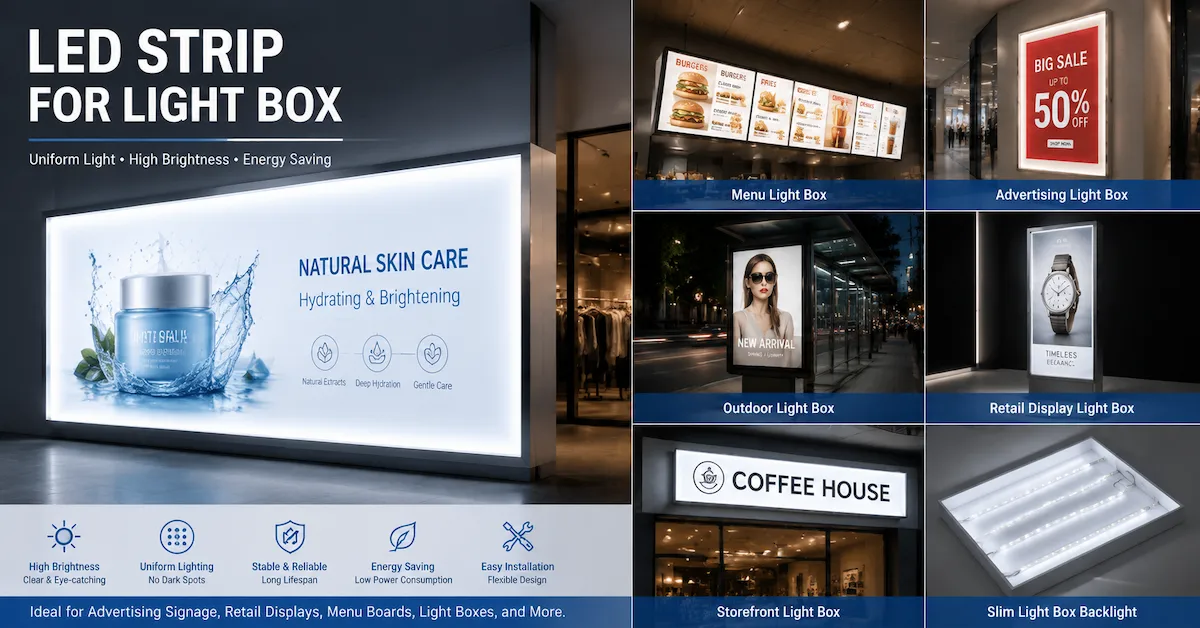
Light boxes require uniform backlighting and controlled spacing. COB strips, high-density strips, and LED strips with lenses can help reduce dark areas and visible LED points.
Outdoor storefront signs also need waterproof connectors, protected power supplies, and suitable installation sealing.
Retail Displays
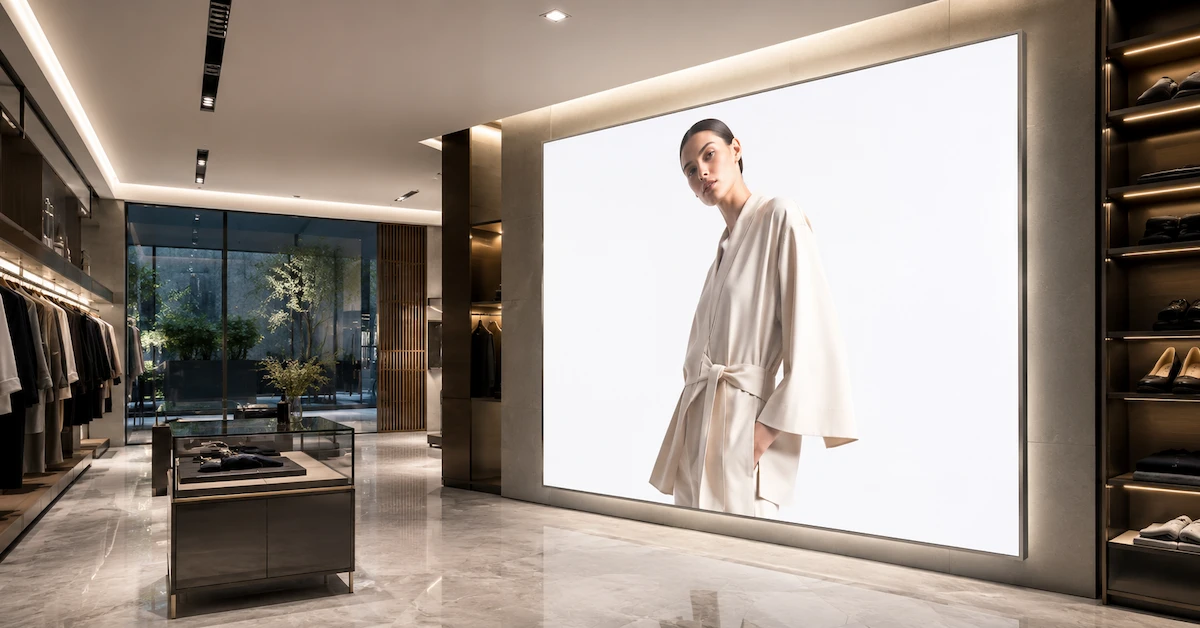
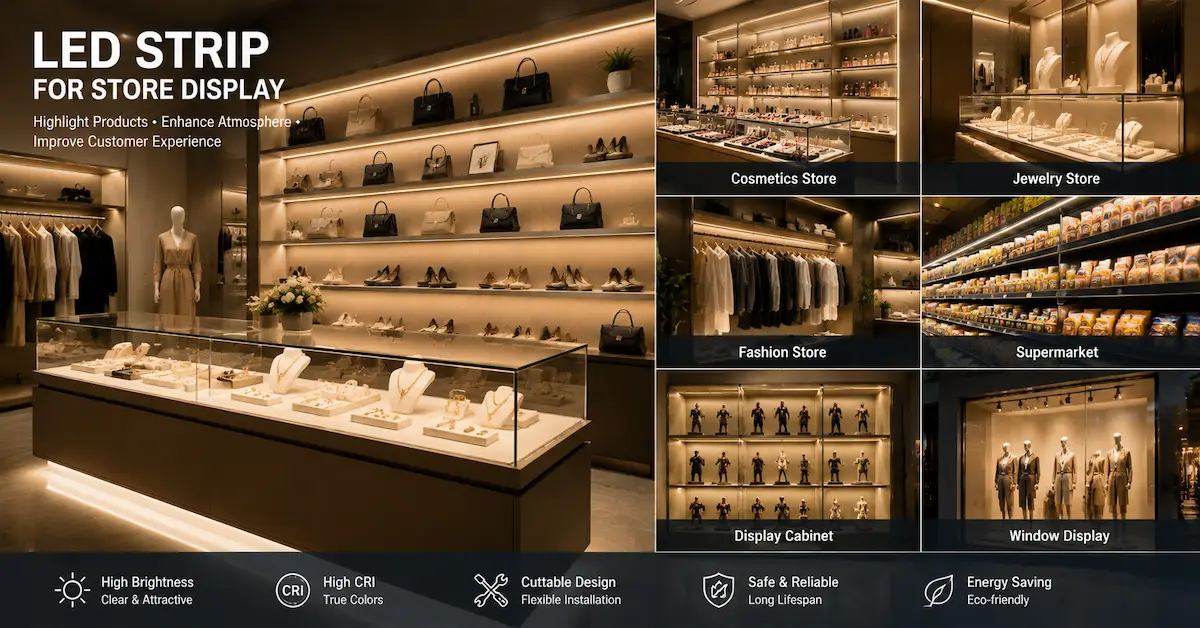
Retail shelves, cabinets, cosmetics counters, and jewelry displays often require soft illumination and accurate color presentation.
High-CRI or COB LED strips are frequently considered because they can improve product appearance without creating strong visible dots.
Hotels and Restaurants
Hospitality projects usually focus on atmosphere, comfort, and dimming. Warm-white and CCT-tunable LED strips can be used in ceiling coves, corridors, reception areas, guest rooms, bars, and decorative walls.
Architectural Lighting
Building outlines, facades, landscape structures, and outdoor linear installations require weather resistance, voltage-drop control, installation planning, and accessible maintenance.
Waterproof LED strips and silicone neon strips are common options for these applications.
Entertainment and Dynamic Displays
Bars, clubs, gaming areas, event spaces, and creative displays may require RGB, RGBW, or addressable RGB systems with compatible controllers.
The manufacturer should confirm the controller protocol, channel capacity, voltage, and power load before production.
What Technical Specifications Should Buyers Compare?
A quotation should include more than product length and unit price. Buyers should compare the specifications that determine real installation performance.
Brightness and LED Density
Important factors include:
- Lumens per meter
- LEDs per meter
- Power consumption per meter
- Beam angle
- Strip width
- Cutting interval
- Recommended installation distance
Higher LED density can improve uniformity, but it also increases power consumption and heat. Buyers should select the output according to the project rather than assuming the brightest strip is always the best.
Color Temperature and Color Consistency
Common white-light options include:
- Warm white
- Neutral white
- Pure white
- Cool white
- CCT-tunable white
For chain stores, brand signage, and repeated projects, batch consistency is especially important. The manufacturer should explain how LED binning and production control maintain consistent color between orders.
Color Rendering
Color rendering affects how products, materials, food, clothing, cosmetics, and branded finishes appear under the light.
Retail and display projects may require higher color-rendering performance than outdoor signage or decorative effects.
Voltage
Typical systems include 12V and 24V.
A 12V strip is suitable for many short runs and compact signs. A 24V system is often preferred for longer commercial installations because it can help reduce current and voltage-drop problems.
The manufacturer should help calculate:
- Total system wattage
- Maximum run length
- Cable size
- Power injection points
- Power supply capacity
- Controller load
IP Protection
The appropriate IP level depends on the installation environment.
| IP Rating | Typical Environment |
| IP20 | Dry indoor spaces |
| IP65 | Humid interiors and protected semi-outdoor areas |
| IP67 | Outdoor signs, facades, and exposed commercial installations |
| IP68 | Applications with more demanding water exposure |
The finished system also depends on the protection of connectors, wire exits, cut points, controllers, and power supplies.
How Can Buyers Verify Factory Capability?
A professional website and product catalog do not automatically prove manufacturing capability. Buyers should evaluate the production infrastructure behind the products.
Important questions include:
- Does the supplier operate its own production facility?
- How many SMT lines are available?
- What is the monthly production capacity?
- Is there an internal engineering team?
- How are raw materials inspected?
- Which processes are automated?
- Can the factory trace production batches?
- What testing equipment is available?
- Can it support repeat orders with the same specification?
- Does it have experience exporting to the buyer’s target market?
According to the YESUN LED About Us page, YESUN LED was established in 2013 and operates a 5,000-square-meter production facility in Shenzhen. Its published capabilities include six SMT lines, more than 100 employees, an engineering team, and monthly production exceeding 1.5 million LED products.
These capabilities are relevant to buyers who need stable supply, custom development, and repeat production.
What Materials and Manufacturing Details Affect Quality?
LED strips may look similar in product photos, but their internal materials can differ significantly.
Buyers should confirm the following components:
PCB Quality
The PCB carries current and supports heat transfer. Width, copper thickness, flexibility, and circuit design affect voltage stability and long-term performance.
LED Chips
The LED chip influences brightness, color consistency, efficiency, and light decay. Buyers should request clear information about chip type, density, and performance targets.
Soldering Quality
Weak solder joints may cause flickering, intermittent failure, or broken sections. Automated SMT production and inspection can improve consistency.
Waterproof Materials
Silicone coating, extrusion, tubing, end sealing, and connector protection affect outdoor reliability.
Adhesive and Mounting
Adhesive quality matters for shelves, cabinets, channels, and interior installations. High-power strips may require aluminum profiles or mechanical mounting rather than adhesive alone.
Connectors and Wiring
Connector current capacity, wire gauge, polarity marking, wire length, and waterproof sealing should match the system design.
Which Quality Tests Should an LED Strip Factory Perform?
Before mass production, the factory should establish clear inspection standards.
A practical QC process may include:
- Incoming-material inspection
- PCB and soldering inspection
- Voltage and current testing
- Brightness measurement
- Color-temperature inspection
- Aging tests
- Waterproof testing
- High-temperature and humidity testing
- Connector and wiring checks
- Packaging inspection
- Final batch sampling
The approved production sample should be used as the reference for mass production.
For buyers requiring catalogs, certificates, videos, and technical information, the YESUN LED Resources page provides supporting materials for product and project evaluation.
Certifications and Documentation for Global Buyers
Certification requirements depend on the destination market, product type, power system, and final application.
Buyers may need to confirm:
- CE documentation
- RoHS compliance
- UL-related requirements
- UKCA requirements
- EMC documentation
- Safety documentation
- IP test information
- Product specification sheets
- Installation instructions
- Shipping and customs documents
A professional manufacturer should clearly state which certificates apply to the exact product being quoted. Buyers should avoid assuming that one certificate covers every model and configuration.
OEM and ODM Capabilities to Evaluate
A strong LED strip manufacturer should support more than logo printing.
OEM and ODM customization may include:
- Strip length
- PCB width
- Cutting interval
- LED density
- Brightness level
- Color temperature
- CRI target
- RGB, RGBW, or CCT configuration
- Waterproof structure
- Connector type
- Wire length and direction
- Label design
- Retail or bulk packaging
- Matching power supplies
- Compatible controllers
- Project-specific installation kits
For private-label brands and project buyers, the factory should provide a sample-development process, final specification sheet, packaging approval, and production-confirmation procedure.
YESUN LED supports custom signage and commercial lighting projects, helping buyers match LED strips with controllers, power supplies, connectors, and related lighting products.
How Should Buyers Test Samples Before a Bulk Order?
A sample should be tested inside the intended application whenever possible.
| Test Item | What the Buyer Should Verify |
| Brightness | Whether output meets the visual target |
| Uniformity | Whether dark spots or visible dots appear |
| Color | Whether CCT and color effects match the design |
| Voltage drop | Whether brightness changes across the run |
| Heat | Whether the mounting structure controls temperature |
| Waterproofing | Whether seals and connections match the environment |
| Controller response | Whether dimming and color control operate smoothly |
| Power supply | Whether wattage and voltage are correctly matched |
| Installation fit | Whether the strip fits channels, cabinets, or signage |
| Packaging | Whether products are protected and clearly labeled |
Testing a loose strip on a table is not enough for a light box, display cabinet, or architectural installation. The structure, diffuser, profile, wiring, and mounting surface all affect the final result.
How Do Price, MOQ, and Lead Time Affect the Decision?
The lowest unit price may not create the lowest total project cost.
Buyers should compare:
- Unit price
- Minimum order quantity
- Tooling or sample costs
- Packaging costs
- Controller and power supply costs
- Lead time
- Shipping method
- Replacement risk
- Warranty support
- Repeat-order consistency
A cheaper strip may require more rows inside a light box, create higher installation labor, or lead to expensive maintenance.
The best quotation should balance purchase cost with installation efficiency, expected life, and after-sales risk.
Information about samples, MOQ, customization, shipping, payments, warranties, and after-sales support can be reviewed on the YESUN LED FAQ page.
Common Mistakes When Choosing an LED Strip Manufacturer
Comparing Only Unit Price
Price should be evaluated together with PCB quality, brightness, consistency, testing, packaging, and warranty.
Using One Strip for Every Application
A retail shelf, outdoor sign, hotel ceiling, and building facade require different technical solutions.
Skipping Sample Testing
Approved samples reduce the risk of mismatched brightness, color, connectors, and installation dimensions.
Ignoring Power-System Design
An unsuitable power supply or controller can cause failure even when the strip itself is reliable.
Not Confirming Batch Consistency
Repeat orders should match the approved color, brightness, construction, labeling, and packaging.
Choosing a Supplier Without Technical Support
Project buyers need clear answers about spacing, wiring, voltage drop, waterproofing, power load, and control compatibility.
Why Consider YESUN LED as Your Manufacturing Partner?
YESUN LED focuses on signage and commercial LED lighting rather than general decorative products alone.
Its product and service scope includes:
- COB and high-density LED strips
- Waterproof LED strips
- RGB and addressable RGB strips
- CCT-tunable products
- LED strips with lenses
- LED modules for signs
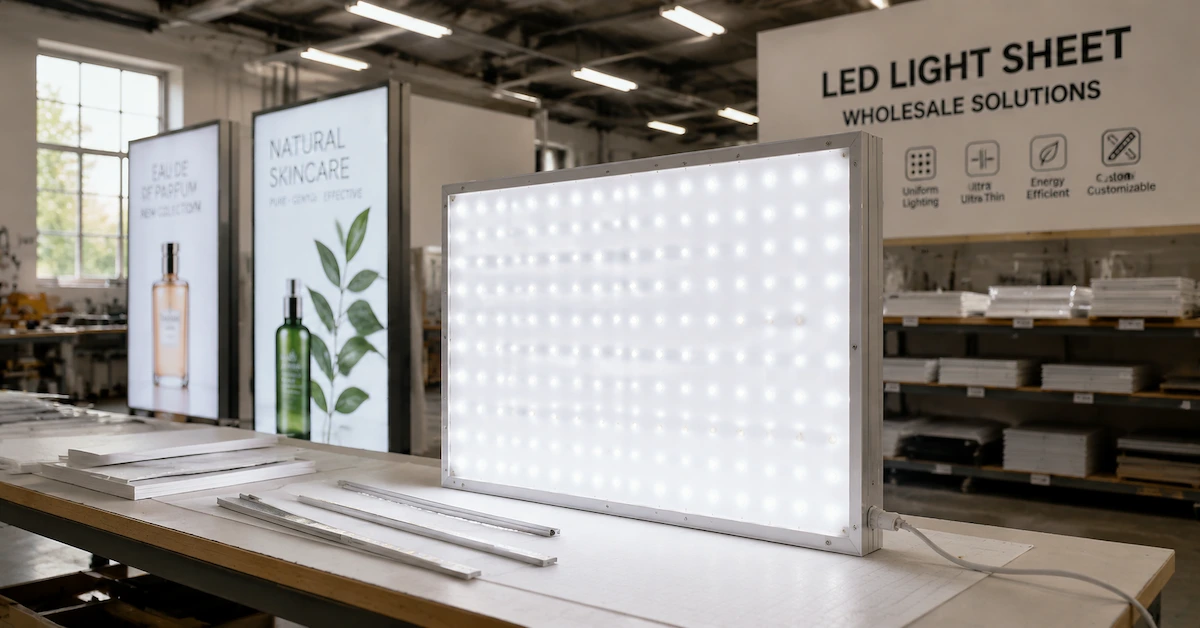
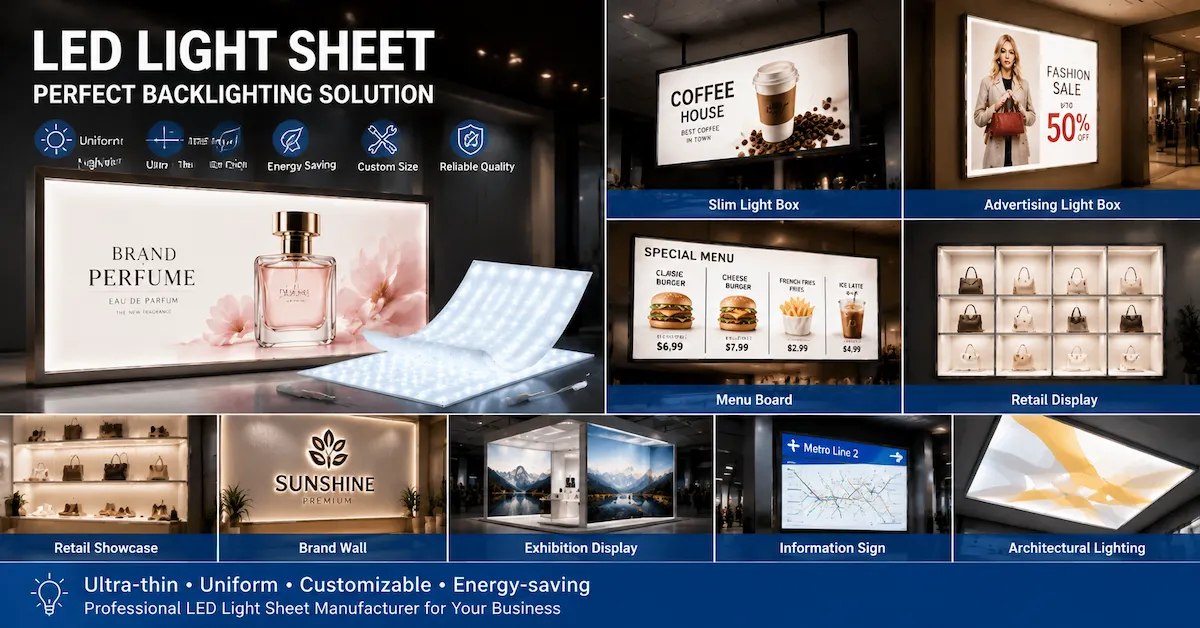
- FPC light sheets for slim light boxes
- LED neon strips
- Controllers and power supplies
- OEM and ODM customization
- Sample and bulk-order support
- Technical consultation
- Global shipping support
This product coverage allows buyers to source more of the lighting system from one manufacturer and reduce compatibility issues between unrelated suppliers.
Additional purchasing guides and application articles are available on the YESUN LED Blog.
FAQ About Choosing an LED Strip Manufacturer
1. What does an LED strip manufacturer produce?
An LED strip manufacturer produces flexible LED lighting products such as COB, SMD, RGB, CCT-tunable, waterproof, high-density, and special-design LED strips for commercial and decorative applications.
2. How can I verify that a supplier is a real factory?
Review its production facility, SMT lines, equipment, staff, engineering team, QC process, production videos, certifications, samples, and ability to support factory inspections.
3. What is the best LED strip for a light box?
COB, high-density, or lens-equipped strips are commonly considered. The final choice depends on the box depth, diffuser, target brightness, and spacing.
4. Should I choose 12V or 24V LED strips?
A 12V strip is suitable for many short runs. A 24V system is often easier to manage in longer commercial installations because it can reduce voltage drop.
5. Which LED strip is suitable for outdoor signage?
Outdoor signage generally requires a suitable waterproof rating, protected connectors, sealed cut points, and a compatible outdoor power supply.
6. Can LED strips be customized?
Yes. Manufacturers can customize length, PCB width, density, brightness, color temperature, waterproof structure, connectors, wires, labels, packaging, and control systems.
7. Do I need samples before placing a bulk order?
Yes. Samples should be tested for brightness, color, uniformity, voltage drop, heat, waterproofing, controller response, and installation compatibility.
8. What certifications should an LED strip manufacturer provide?
The required documentation depends on the destination market and product configuration. Buyers may request CE, RoHS, UL-related, UKCA, EMC, IP, and safety documentation where applicable.
9. What information should I provide for a quotation?
Provide the application, drawings or dimensions, total length, voltage, color, IP rating, control method, installation environment, expected quantity, packaging needs, and destination market.
10. Can YESUN LED support private-label projects?
Yes. YESUN LED supports OEM and ODM projects involving product specifications, connectors, packaging, labels, power supplies, controllers, and project-based LED lighting solutions.
Conclusion
Choosing a reliable LED strip manufacturer requires more than searching for the lowest quotation. B2B buyers should evaluate product range, technical specifications, factory capability, materials, quality control, certifications, sample testing, customization, lead time, and after-sales support.
A qualified partner should help match the LED strip, power supply, controller, connectors, waterproof protection, and installation structure to the real project.
For signage makers, lighting contractors, distributors, retail display companies, architects, and OEM brands, YESUN LED provides LED strip products and custom lighting support for light boxes, commercial signs, retail displays, hotels, restaurants, architectural projects, and private-label product lines.