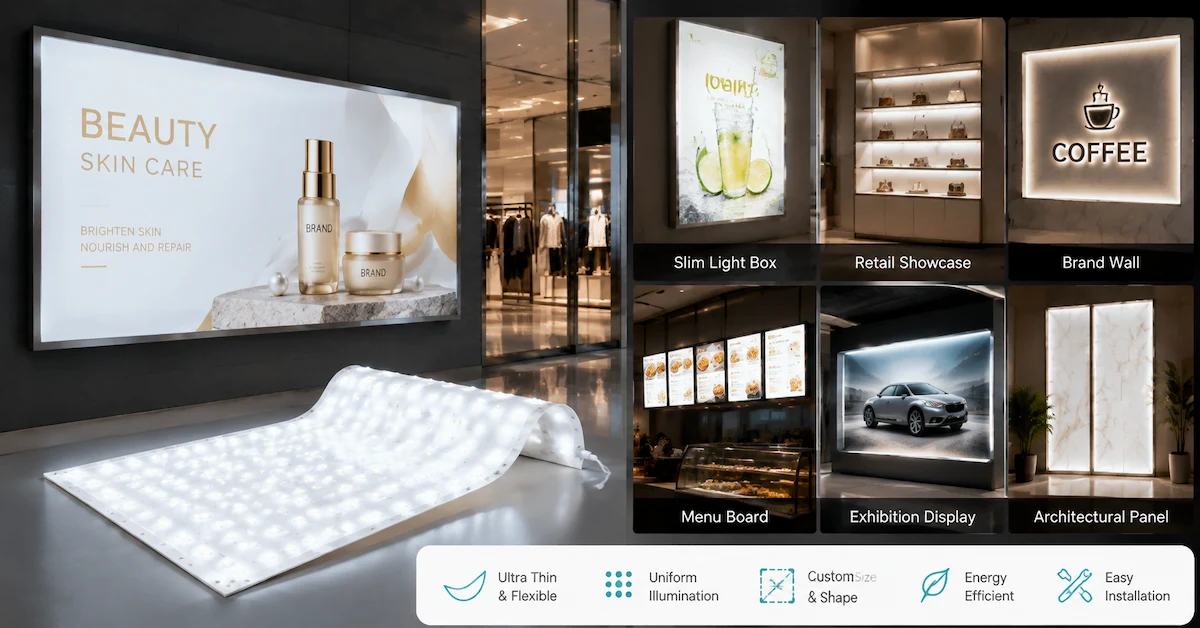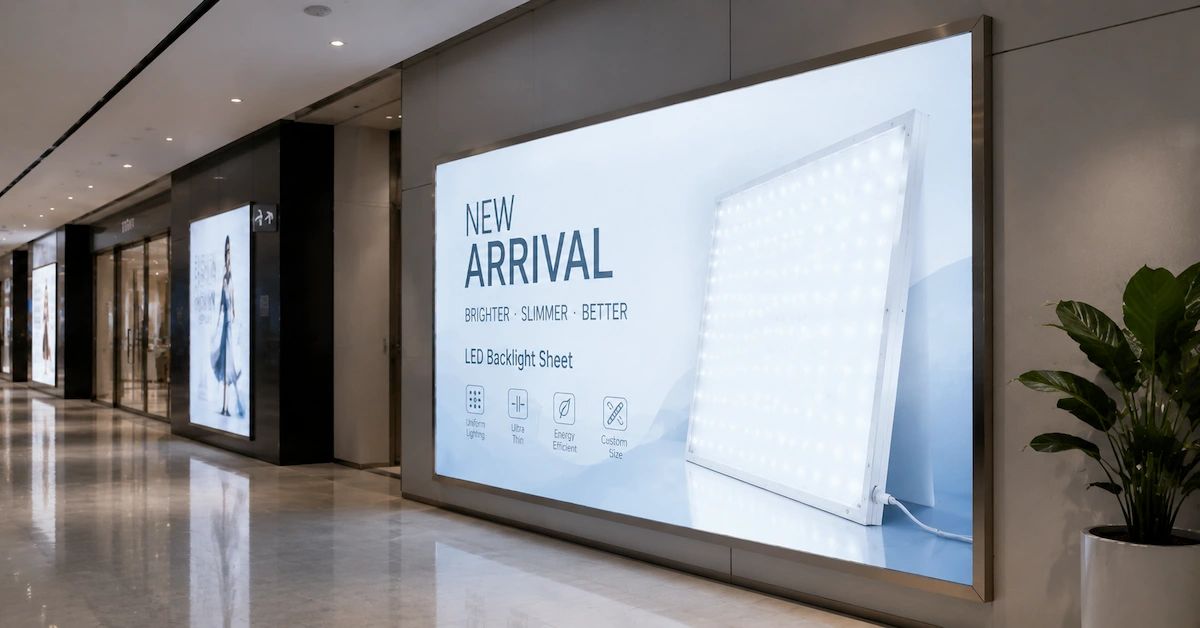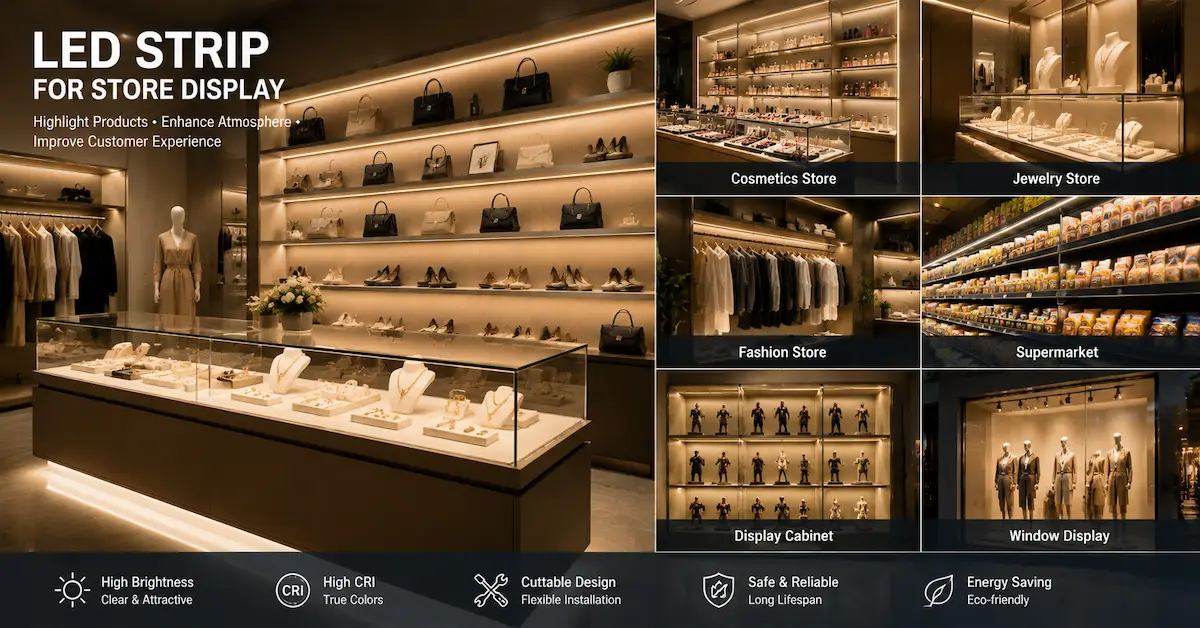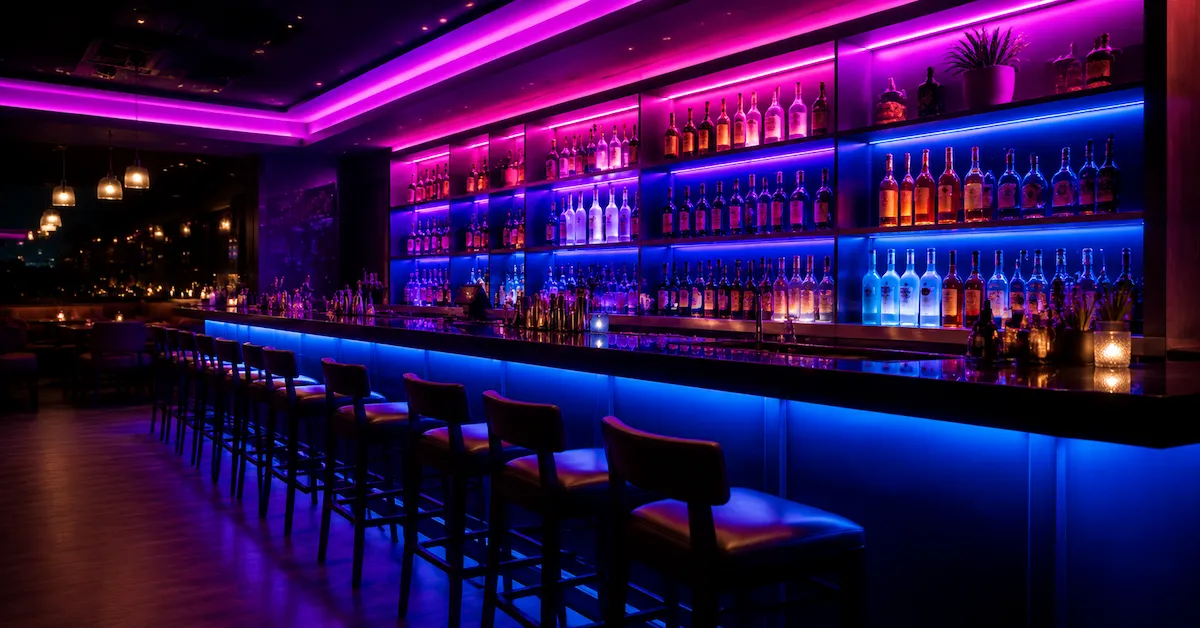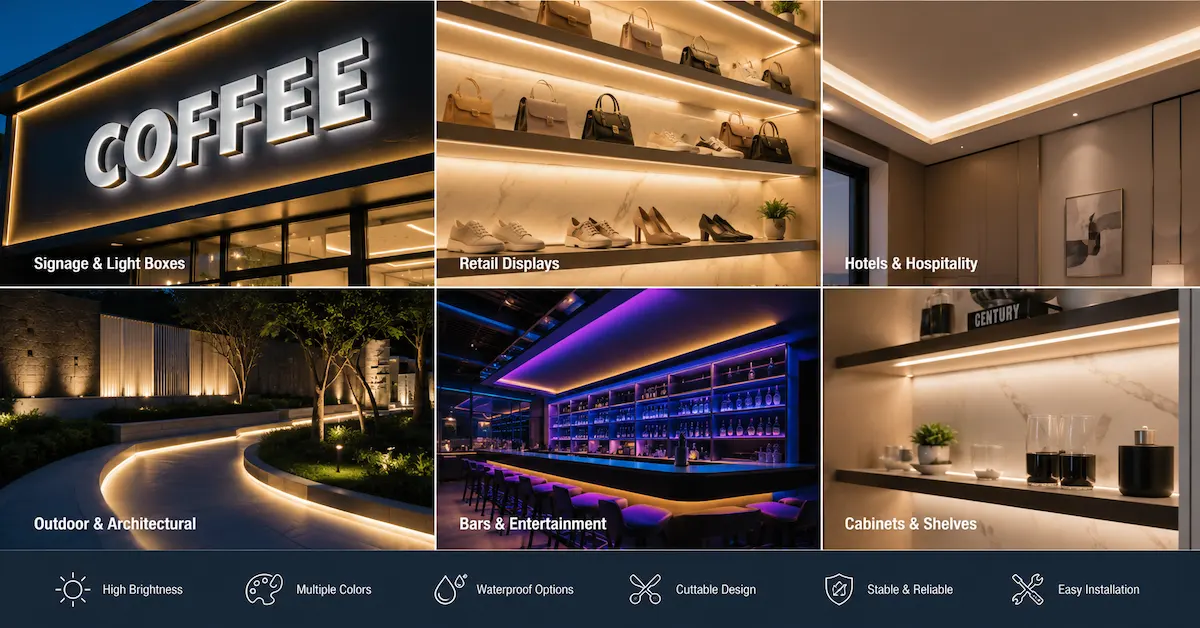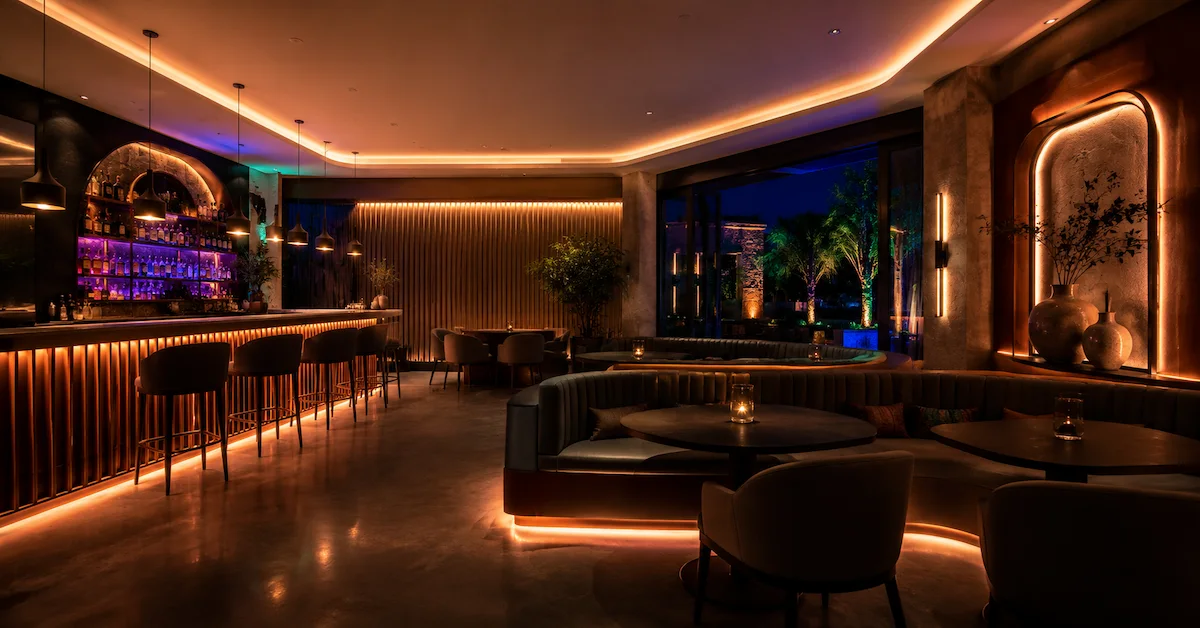


Commercial LED strip lights are no longer used only for simple decoration. Today, they are widely applied in signage projects, retail displays, restaurant menus, hotel interiors, shopping malls, architectural outlines, light boxes, display cabinets, and branded commercial spaces.
For B2B buyers, the challenge is not simply finding a bright LED strip. The real challenge is choosing a product that can work reliably in daily commercial use, match project requirements, reduce maintenance cost, and support repeat orders.
If you are a signage maker, lighting contractor, distributor, retail display company, or OEM buyer, this guide will help you understand what to check before sourcing commercial LED strip lights.
YESUN LED provides LED strips, LED modules, FPC light sheets, LED neon strips, slim LED light boxes, LED controllers, and LED power supplies for signage and commercial lighting projects.
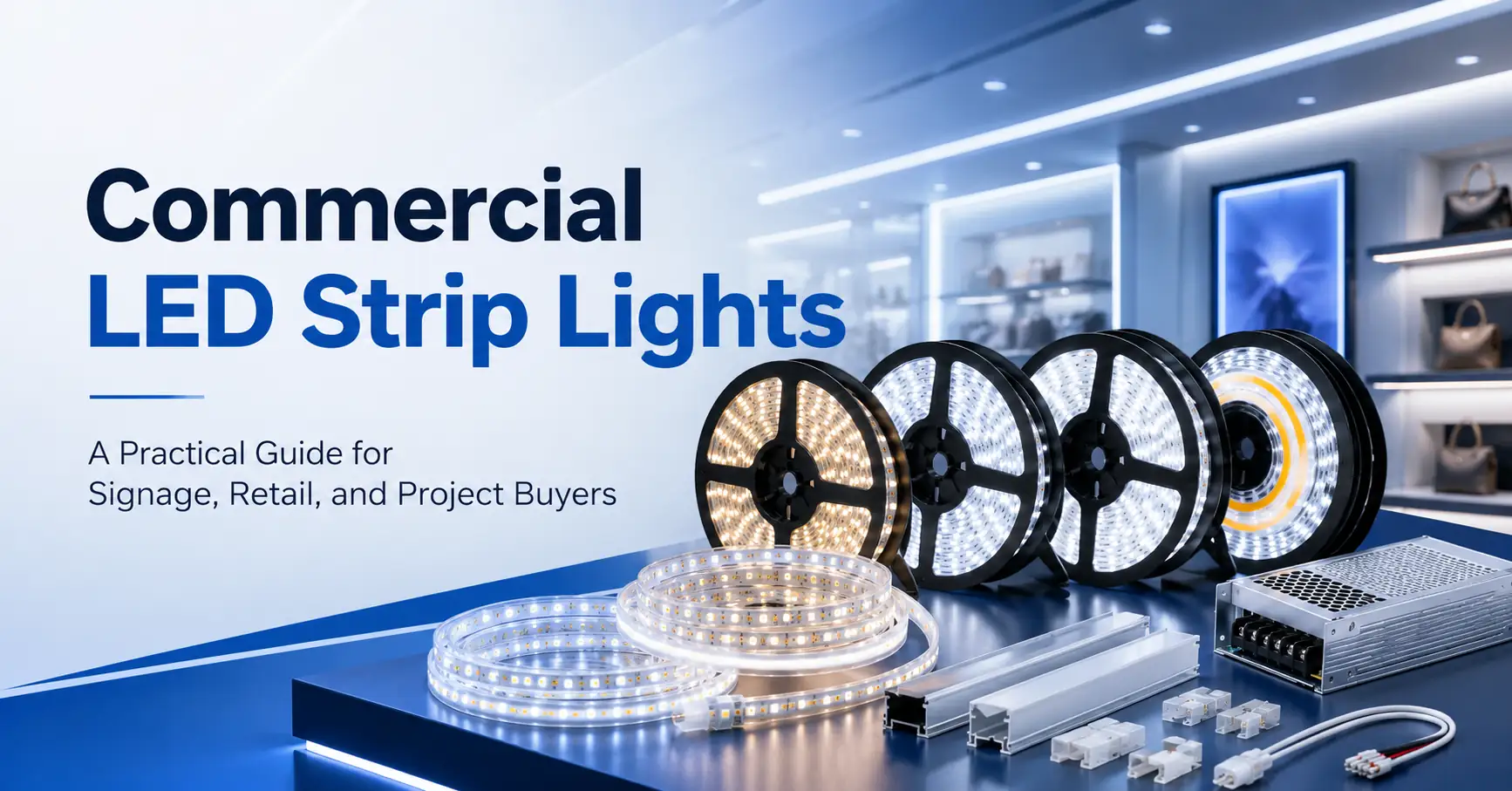
What Are Commercial LED Strip Lights?
Commercial LED strip lights are flexible or linear LED lighting products designed for business, retail, signage, and project-based applications. Compared with simple household LED strips, commercial LED strips usually require higher stability, better brightness consistency, stronger waterproof options, safer voltage design, and more professional installation support.
They are commonly used in:
- Light box backlighting
- Channel letters and signage
- Retail shelf lighting
- Display cabinet lighting
- Restaurant and bar decoration
- Hotel and lobby lighting
- Shopping mall commercial spaces
- Outdoor storefront signs
- Architectural outline lighting
- OEM/ODM lighting products
For these applications, buyers need to consider not only the strip itself, but also power supply, controller, installation structure, heat dissipation, waterproof rating, and long-term maintenance.
Why Commercial Buyers Should Not Choose LED Strips by Price Alone
A low-cost LED strip may look attractive during quotation, but commercial projects often run for long hours every day. Poor-quality LED strips may cause problems such as:
- Uneven brightness
- Color temperature difference
- Visible dark spots
- Voltage drop
- Weak adhesive
- Overheating
- Waterproof failure
- Short lifespan
- Frequent replacement
- Customer complaints after installation
For project buyers, the cost of replacing failed LED strips is often much higher than the initial product savings. This is why commercial buyers should evaluate quality, supplier capability, technical support, and application suitability before placing bulk orders.
Common Applications of Commercial LED Strip Lights
Different commercial spaces need different LED strip solutions. A product that works well in a retail cabinet may not be suitable for outdoor signage.
| Application | Recommended Product Type | Key Buying Focus |
|---|---|---|
| Light boxes | COB LED strip, high-density LED strip, LED strip with lens | Uniform backlighting, fewer dark spots |
| Retail displays | High CRI LED strip, CCT tunable LED strip | Product color accuracy, soft light |
| Outdoor signage | Waterproof LED strip, IP65/IP67 LED strip | Weather resistance, stable brightness |
| Restaurants and bars | RGB LED strip, warm white LED strip, LED neon strip | Atmosphere, color effects, dimming |
| Hotels and lobbies | COB LED strip, CCT tunable strip | Premium visual effect, soft indirect lighting |
| Display cabinets | High CRI LED strip, low-voltage LED strip | Safe operation, color rendering |
| Architectural outlines | Waterproof flexible strip, LED neon strip | Flexibility, outdoor durability |
| OEM lighting products | Custom LED strip | Private label, special size, custom specs |
On the YESUN LED products page, buyers can explore LED Strip with Lens, High Voltage LED Strip, CCT Tunable LED Strip, High-Density LED Strip, COB Light Strip, RGB & Multi-color LED Strip, Addressable RGB LED Strip, S Shape LED Strip, and other related commercial lighting products.
Key Factors When Choosing Commercial LED Strip Lights
1. Brightness and LED Density
Brightness should match the installation environment. A light box needs even backlighting, while a display cabinet may need softer light with higher color rendering. Higher LED density can help reduce visible light spots, especially in shallow spaces.
For commercial projects, buyers should check:
- Lumen output
- LED quantity per meter
- Power per meter
- Beam angle
- Installation distance
- Whether dark spots may appear
- Whether the brightness is suitable for day and night use
2. Color Temperature and Visual Consistency
Commercial spaces rely heavily on visual presentation. A retail display may need neutral white or high CRI lighting to show product colors accurately. A restaurant or hotel may prefer warm white lighting to create a comfortable atmosphere. Signage projects may need cool white lighting for stronger visibility.
Common options include:
- Warm white
- Natural white
- Cool white
- CCT tunable
- RGB
- RGBW
- Addressable RGB
For chain stores and repeat orders, color consistency across batches is especially important.
3. IP Rating for Indoor and Outdoor Projects
Commercial LED strip lights are used in different environments. Indoor dry spaces may only need IP20, while outdoor signage and humid areas require waterproof protection.
| IP Rating | Suitable Environment | Typical Use |
| IP20 | Dry indoor use | Shelves, cabinets, indoor decoration |
| IP65 | Splash and dust protection | Semi-outdoor signs, humid interiors |
| IP67 | Stronger waterproof protection | Outdoor signage, exterior light boxes |
| IP68 | Higher waterproof demand | More demanding outdoor or wet projects |
For outdoor applications, buyers should also consider waterproof connectors, sealed installation, matching power supplies, and long-term weather resistance.
4. Voltage Selection: 12V, 24V, or High Voltage
Voltage affects installation length, voltage drop, safety, and system design.
12V LED strips are suitable for short runs and compact installations. 24V LED strips are often better for longer commercial runs because they help reduce voltage drop. High voltage LED strips may be used in some long-distance commercial lighting projects, but they require professional installation and safety control.
A reliable supplier should help buyers choose the correct voltage based on project length, brightness requirement, power supply location, and installation environment.
5. Power Supply and Controller Matching
Commercial LED strip lights should be matched with suitable power supplies and controllers. If the power supply is not stable, the LED strip may flicker, overheat, or fail earlier than expected.
Buyers should confirm:
- Total power load
- Voltage compatibility
- Dimming requirement
- RGB or CCT control requirement
- Waterproof power supply needs
- Installation wiring method
- Safety margin for power capacity
YESUN LED supplies LED power supplies and LED controllers, helping buyers build complete commercial lighting systems instead of sourcing each part separately.
How to Choose a Commercial LED Strip Supplier
Choosing the right supplier is just as important as choosing the right product. For B2B buyers, the supplier should provide factory capability, technical support, customization, testing, and reliable after-sales service.
According to the YESUN LED About Us page, YESUN LED was founded in 2013 and focuses on advertising signage LED lighting solutions. The company has a 5,000㎡ automated production base in Shenzhen, 6 SMT production lines, 100+ employees, and 10+ R&D engineers.
For commercial buyers, this means stronger support for bulk orders, OEM/ODM customization, technical communication, and repeat production.
A good commercial LED strip supplier should provide:
- Clear product specifications
- Multiple LED strip options
- OEM/ODM customization
- Sample testing support
- Stable production capacity
- Quality inspection before shipping
- Waterproof and non-waterproof options
- Compatible power supplies and controllers
- Technical guidance for projects
- Warranty and after-sales support
OEM/ODM Commercial LED Strip Lights
Many commercial buyers need custom LED strip lights rather than standard products. OEM/ODM support is especially important for distributors, lighting brands, signage companies, and project contractors.
Common customization options include:
- Custom length
- Custom PCB width
- Custom LED density
- Custom color temperature
- RGB, RGBW, or CCT options
- Waterproof structure customization
- Custom connectors
- Logo label
- Private label packaging
- Project-specific lighting layout
- Bulk packaging for distributors
If your project requires special specifications, it is better to work with a factory that can support samples before mass production.
Quality Control Checklist Before Bulk Orders
Before ordering commercial LED strip lights in bulk, buyers should test samples and confirm key quality points.
| Check Item | Why It Matters |
| Brightness | Confirms whether the strip meets project needs |
| Color temperature | Prevents visible batch differences |
| Waterproof quality | Reduces outdoor failure risk |
| Flexibility | Supports curved and narrow installation |
| Adhesive or mounting method | Affects installation stability |
| Heat performance | Helps reduce light decay |
| Voltage drop | Prevents uneven brightness in long runs |
| Power supply matching | Improves system safety |
| Packaging | Protects products during transport |
| Warranty terms | Reduces purchasing risk |
For catalogs, technical materials, certificates, and videos, buyers can visit the YESUN LED Resources page.
Common Mistakes to Avoid
Choosing Decorative Strips for Commercial Use
Some low-cost decorative LED strips are not designed for long-hour commercial operation. Commercial buyers should choose products with suitable power, thermal design, and quality control.
Ignoring IP Rating
Using indoor LED strips outdoors may lead to water damage and failure. Always select the IP rating based on the actual environment.
Not Testing Samples
Photos and specification sheets are not enough. Sample testing helps buyers check brightness, color, flexibility, waterproofing, and power compatibility.
Forgetting the Complete System
LED strips need power supplies, controllers, connectors, and installation accessories. A complete system performs better than disconnected parts from multiple unknown sources.
Overlooking Supplier Support
Commercial projects often need technical answers before and after installation. A supplier with project experience can reduce sourcing and installation risks.
The YESUN LED FAQ page provides useful answers about MOQ, customization, samples, payment, shipping, warranty, certifications, and after-sales support.
Why Choose YESUN LED for Commercial LED Strip Lights?
YESUN LED supports B2B buyers who need LED strip lights for signage, retail displays, light boxes, outdoor advertising, hotels, restaurants, commercial interiors, and OEM/ODM projects.
Key advantages include:
- LED strips designed for signage and commercial lighting
- COB, RGB, CCT, waterproof, high-density, and special design options
- LED modules, FPC light sheets, LED neon strips, power supplies, and controllers available
- OEM/ODM customization support
- Factory direct supply
- Technical support for project selection
- Quality control for bulk orders
- Experience serving global signage and commercial lighting buyers
For more lighting knowledge and application ideas, buyers can also visit the YESUN LED Blog.
FAQ: Commercial LED Strip Lights
1. What are commercial LED strip lights?
Commercial LED strip lights are LED strip products designed for business and project applications such as signage, retail displays, light boxes, hotels, restaurants, and architectural decoration.
2. How are commercial LED strips different from home LED strips?
Commercial LED strips usually require better brightness stability, stronger quality control, suitable IP ratings, longer working life, and more professional installation support.
3. What LED strip is best for light boxes?
COB LED strips, high-density LED strips, and LED strips with lens are commonly used for light boxes because they help improve lighting uniformity and reduce dark spots.
4. Can commercial LED strip lights be used outdoors?
Yes, but outdoor projects should use waterproof LED strip lights with proper IP ratings such as IP65, IP67, or IP68.
5. Should I choose 12V or 24V LED strips?
12V is suitable for short runs and compact spaces. 24V is often better for longer commercial installations because it helps reduce voltage drop.
6. Can commercial LED strip lights be customized?
Yes. A professional supplier can customize length, PCB width, LED density, color temperature, waterproof level, connectors, and packaging.
7. Do I need samples before placing a bulk order?
Yes. Sample testing helps confirm brightness, color, waterproof quality, flexibility, adhesive strength, and power compatibility before mass production.
8. What products are used together with commercial LED strips?
Common matching products include LED power supplies, LED controllers, connectors, aluminum profiles, LED modules, FPC light sheets, and LED neon strips.
9. Is YESUN LED suitable for OEM commercial LED strip projects?
Yes. YESUN LED supports OEM/ODM commercial LED strip projects for signage makers, distributors, contractors, and private label buyers.
10. Where can I find more product information?
You can visit YESUN LED, browse the Products page, read common questions on the FAQ page, or check technical materials on the Resources page.
Conclusion
Choosing commercial LED strip lights is not only about brightness or price. B2B buyers should evaluate application needs, voltage, IP rating, color consistency, supplier capability, customization support, power supply matching, and long-term reliability.
For signage makers, lighting contractors, distributors, and OEM buyers, YESUN LED provides commercial LED strip solutions for light boxes, retail displays, outdoor signage, restaurants, hotels, architectural decoration, and custom lighting projects.
If you need reliable commercial LED strip lights for bulk orders or OEM/ODM projects, YESUN LED can help you choose the right solution for your application.