

Why Choosing the Right LED Driver Supplier Matters
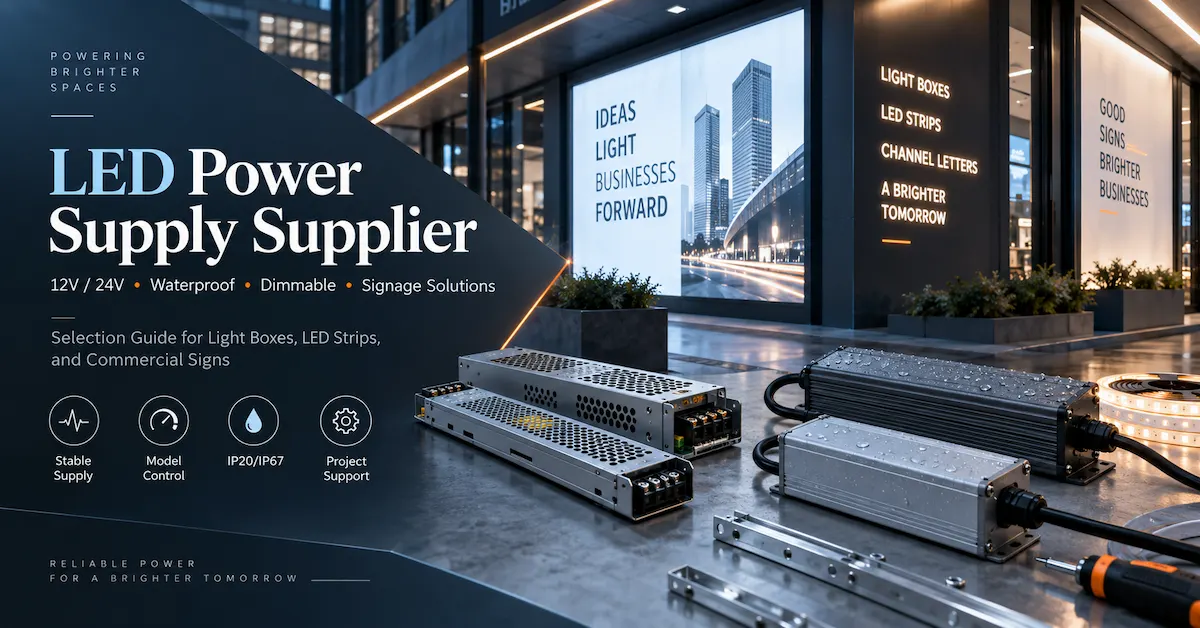
Selecting an LED driver supplier is an important step in designing a stable and reliable LED lighting system. Although the LED driver is only one component inside the complete lighting solution, it directly affects voltage stability, current regulation, dimming performance, thermal management, and the overall operating reliability of the LED product.
For signage manufacturers, light box producers, retail lighting suppliers, and commercial lighting contractors, the correct LED driver selection depends on more than output wattage. Buyers need to consider the LED load, operating voltage, installation environment, control requirements, wiring distance, protection level, and future replacement needs.
A professional LED driver supplier should help customers select the correct driver architecture instead of simply recommending a higher-power model. The right solution should match the actual LED system, including LED modules, strips, light sheets, light bars, and other commercial lighting products.
YESUN provides LED power supply and accessory solutions designed for different LED applications. Buyers can review the LED Light Accessories category to understand available power and control components for commercial LED systems.
Different Buyers Have Different LED Driver Requirements
Signage Manufacturers
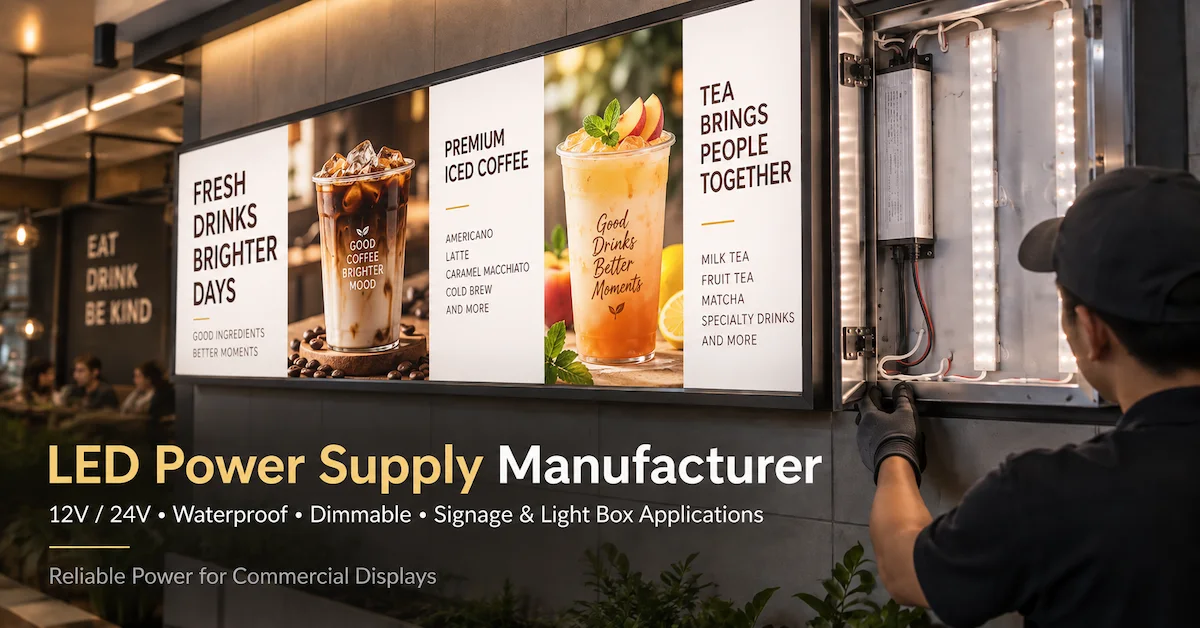
Sign companies usually integrate LED drivers with channel letters, illuminated signs, advertising boxes, and custom display structures. Their main concerns are stable output, easy installation, compact size, and long-term replacement availability.
A signage manufacturer should evaluate:
- LED module voltage compatibility
- Total connected power
- Installation location
- Cable distance
- Environmental conditions
- Quantity requirements
For example, a shallow sign cabinet may require a compact driver, while a large advertising light box may require multiple drivers or higher-power solutions.
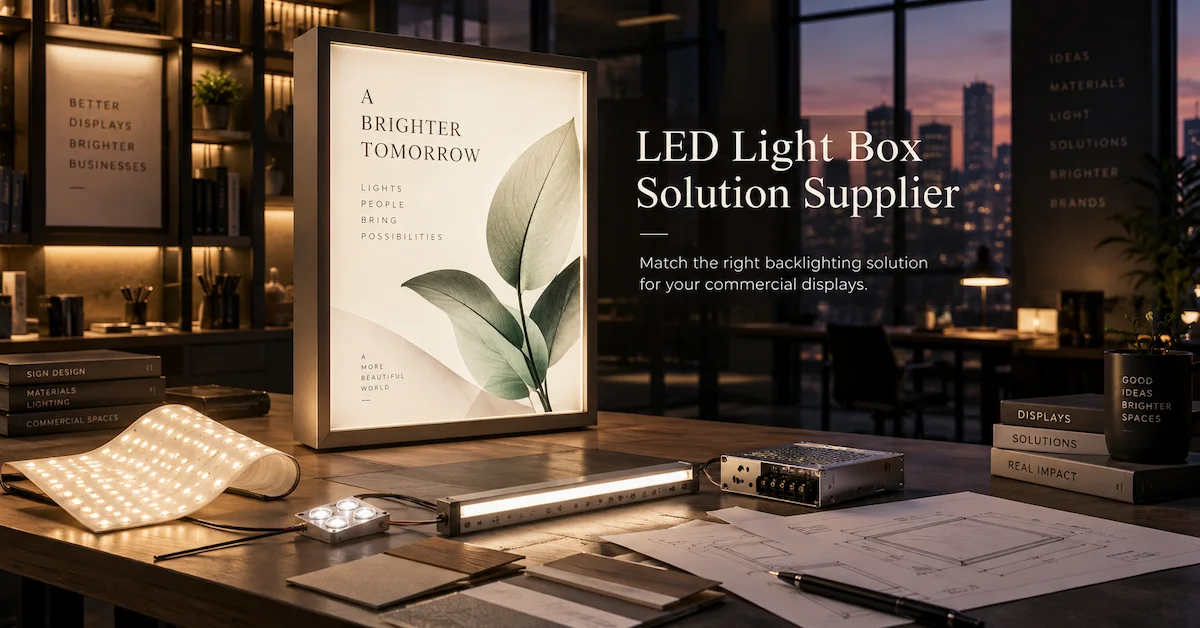
YESUN provides various LED lighting components including LED Modules and LED Light Bars, which need to be matched with suitable power and driver configurations.
Lighting Brands and OEM Buyers
Lighting brands often need more than a standard catalog product. They may require:
- Specific output specifications
- Custom cable length
- Special connectors
- Private-label packaging
- Stable repeat production
- Product documentation
An LED driver supplier for OEM customers should be able to maintain consistency between approved samples and future production batches.
Before starting an OEM project, buyers should define whether they need:
- Standard product with branding changes
- Modified existing driver platform
- New custom driver development
These three requirements involve different engineering and production processes.
Distributors and Wholesalers
Distributors usually focus on product availability, model clarity, and market compatibility.
A distributor managing multiple LED applications may need different categories:
- Indoor LED drivers
- Waterproof LED drivers
- Dimmable LED drivers
- Different voltage versions
- Different power ranges
Clear product identification is important because similar-looking drivers may have different:
- Input voltage
- Output voltage
- Protection level
- Control method
- Power rating
A reliable supplier should provide consistent model information to reduce inventory errors.
How to Select the Correct LED Driver for Your Application
Understand Constant Voltage and Constant Current LED Drivers
One of the first decisions when selecting an LED driver is understanding whether the LED product requires constant voltage or constant current operation.
Constant Voltage LED Driver
Constant voltage drivers provide a fixed output voltage, commonly 12V or 24V.
They are commonly used for:
- LED strips
- LED light sheets
- Many LED modules
- Signage lighting systems
YESUN's LED power supply range includes different constant-voltage models designed for commercial LED applications.
For example, the selection between 12V and 24V depends on the connected LED product rather than personal preference.
Constant Current LED Driver
Constant current drivers regulate output current and are commonly used for specific high-power LED applications.
Before selecting this type of driver, buyers should confirm:
- Required LED current
- Forward voltage range
- LED quantity
- Thermal conditions
- Dimming requirements
Using an unsuitable driver type may result in unstable LED operation or reduced system performance.
12V vs 24V LED Driver Selection
When Should You Choose 12V LED Drivers?
12V LED drivers are commonly used with many compact LED products and signage applications.
They can be suitable when:
- The LED product requires 12V input
- The installation distance is relatively short
- The current requirement is manageable
- The system design is based on 12V components
When Should You Choose 24V LED Drivers?
24V systems are often used in larger LED installations because the same power level can operate at lower current compared with 12V systems.
This can influence:
- Cable selection
- Voltage drop management
- Installation layout
- Power distribution
YESUN publishes separate 12V and 24V power supply models rather than treating them as one interchangeable product.
For example, the YS-N-12100 and YS-N-24100 models represent different voltage versions. Buyers should confirm the exact model number before ordering.
How to Match LED Driver Specifications With the Lighting System
Voltage Compatibility
The LED driver output voltage must match the LED product requirement.
Before ordering, confirm:
- LED operating voltage
- Driver output voltage
- Product model
- System configuration
A 24V LED strip should not be powered by an unsuitable 12V driver simply because the wattage appears sufficient.
Power Capacity
Power rating should be selected according to the actual connected LED load.
Consider:
- Total LED quantity
- Operating power
- Installation environment
- Future expansion requirements
A larger wattage driver is not automatically a better choice. Oversized products may increase cost and installation complexity.
Protection Requirements
Different environments require different driver designs.
Indoor applications may use standard protected drivers, while outdoor signage and exposed installations may require waterproof solutions.
YESUN provides waterproof LED power supply options within its product portfolio for applications requiring additional environmental protection.
However, the driver protection rating does not automatically represent the protection level of the complete LED installation.
The complete system also depends on:
- Cable connections
- Controllers
- LED products
- Enclosures
- Installation methods
Dimming Compatibility Should Be Confirmed Before Purchasing
Many commercial lighting projects require brightness control, but not every dimmable driver works with every control system.
Common control methods include:
- TRIAC dimming
- 0–10V dimming
- PWM control
- Other digital control methods
YESUN provides dimmable LED power supply solutions, including models designed for TRIAC and 0–10V applications.
Before purchasing, buyers should test:
- Controller compatibility
- Minimum brightness level
- Flicker performance
- Startup behavior
- Load stability
A driver should be evaluated together with the actual LED system instead of being tested separately.
Compare Different LED Driver Solutions Before Ordering
| Driver Type | Typical Application | Main Selection Factor |
|---|---|---|
| Indoor LED Driver | Retail lighting, indoor signs, protected installations | Size and installation space |
| Waterproof LED Driver | Outdoor signage and exposed environments | Protection and sealing |
| Dimmable LED Driver | Commercial lighting requiring control | Controller compatibility |
| High Power LED Driver | Large LED systems | Load distribution and thermal design |
| Compact LED Driver | Small displays and fixtures | Mechanical integration |
The best LED driver supplier should provide multiple options because different projects require different electrical solutions.
How to Evaluate LED Driver Supplier Quality
Electrical Testing
A professional supplier should have processes to verify:
- Output voltage stability
- Current accuracy
- Protection functions
- Load performance
Thermal Performance
Thermal conditions affect long-term reliability.
Buyers should understand:
- Operating temperature range
- Installation environment
- Heat dissipation method
- Product limitations
Production Control
Supplier evaluation should include:
- Incoming material inspection
- Production testing
- Product identification
- Batch control
- Final inspection
YESUN's About Us page describes manufacturing capability, production systems, and testing resources. Buyers should confirm how these capabilities apply to the specific LED driver model being purchased.
Certification and Documentation Requirements
Commercial buyers should verify documentation according to the exact product model.
Important information includes:
- Model number
- Output specification
- Input version
- Applicable certificates
- Destination-market requirements
YESUN provides a Certification Resource Center where customers can review available certification information.
Certification should always match the actual purchased product rather than being applied generally to an entire product category.
OEM and Custom LED Driver Requirements
OEM projects often require more than adding a company logo.
Customization may include:
- Product labels
- Cable specifications
- Connector types
- Packaging
- Output requirements
- Product identification
A reliable LED driver supplier should establish a clear development process:
Step 1: Requirement Confirmation
Define:
- LED application
- Electrical requirements
- Quantity
- Market requirements
Step 2: Sample Evaluation
Test:
- Electrical performance
- Installation compatibility
- Control functions
- Thermal behavior
Step 3: Production Approval
Confirm:
- Final specifications
- Model number
- Packaging
- Documentation
This process helps prevent differences between prototype samples and mass production.
How to Reduce LED Driver Procurement Risks
Common purchasing risks include:
- Incorrect voltage selection
- Wrong input version
- Poor dimming compatibility
- Unclear model identification
- Inconsistent repeat orders
A practical risk-control process includes:
- Confirm LED requirements
- Select suitable driver type
- Test representative samples
- Approve specifications
- Record product revision
- Control future orders
This approach is especially important for distributors and brands managing long-term product lines.
What Information Should You Send an LED Driver Supplier?
For accurate quotation and technical evaluation, provide:
- LED product type
- Operating voltage
- Total power
- Quantity
- Installation environment
- Input voltage requirement
- Dimming requirement
- Cable requirements
- Destination market
- Packaging needs
If the driver will be used with YESUN LED products, include related product information from:
For project evaluation, submit your requirements through YESUN Contact Us.
Frequently Asked Questions About LED Driver Suppliers
What should I consider when choosing an LED driver supplier?
Consider product compatibility, voltage options, quality control, documentation, customization capability, and long-term supply stability.
What is the difference between LED driver and LED power supply?
The terms are often used similarly. The correct choice depends on the LED system requirements, including voltage regulation, current control, and application conditions.
Can one LED driver work with all LED products?
No. Different LED products require different voltage, current, and power specifications.
Should I choose a 12V or 24V LED driver?
Choose according to the LED product requirement and system design rather than selecting based only on preference.
Do outdoor LED projects need waterproof drivers?
Outdoor environments may require additional protection, but the complete installation should be evaluated, including cables and connectors.
Can LED drivers support dimming?
Some drivers support dimming, but compatibility depends on the control method and connected LED system.
How do I compare different LED driver suppliers?
Compare technical specifications, production capability, documentation, customization support, and repeat-order reliability.
Can LED drivers be customized?
Many suppliers support customization, but the available scope depends on product platforms and engineering requirements.
What documents should I request before ordering?
Request product specifications, model information, relevant certificates, packaging details, and commercial terms.
How can I avoid LED driver failures?
Match the driver with the LED load, test samples, confirm installation conditions, and maintain accurate product specifications.
Conclusion
Choosing the right LED driver supplier requires a complete evaluation of electrical compatibility, product quality, application requirements, and long-term supply capability. For signage manufacturers, lighting brands, distributors, and commercial contractors, the best supplier is not simply the one offering the lowest price, but the one that can provide stable models, suitable voltage options, compatible control solutions, reliable documentation, and consistent repeat production.
YESUN provides LED power supply and accessory solutions for commercial LED applications, allowing buyers to evaluate drivers together with LED Modules, LED Strips, LED Light Sheets, and other lighting products. Contact YESUN with your LED load, voltage requirement, installation environment, quantity, and project details to discuss a suitable LED driver solution.