

What Does an LED Lighting Manufacturer OEM Provide?
Selecting an LED lighting manufacturer OEM is not only about finding a factory that can produce LED products. For brands, distributors, signage companies, and commercial lighting buyers, the right OEM partner should help transform a lighting requirement into a stable product solution.
An OEM relationship usually involves more than manufacturing. It may include product selection, specification confirmation, design adjustment, component matching, sample approval, production control, packaging customization, and repeat-order management.
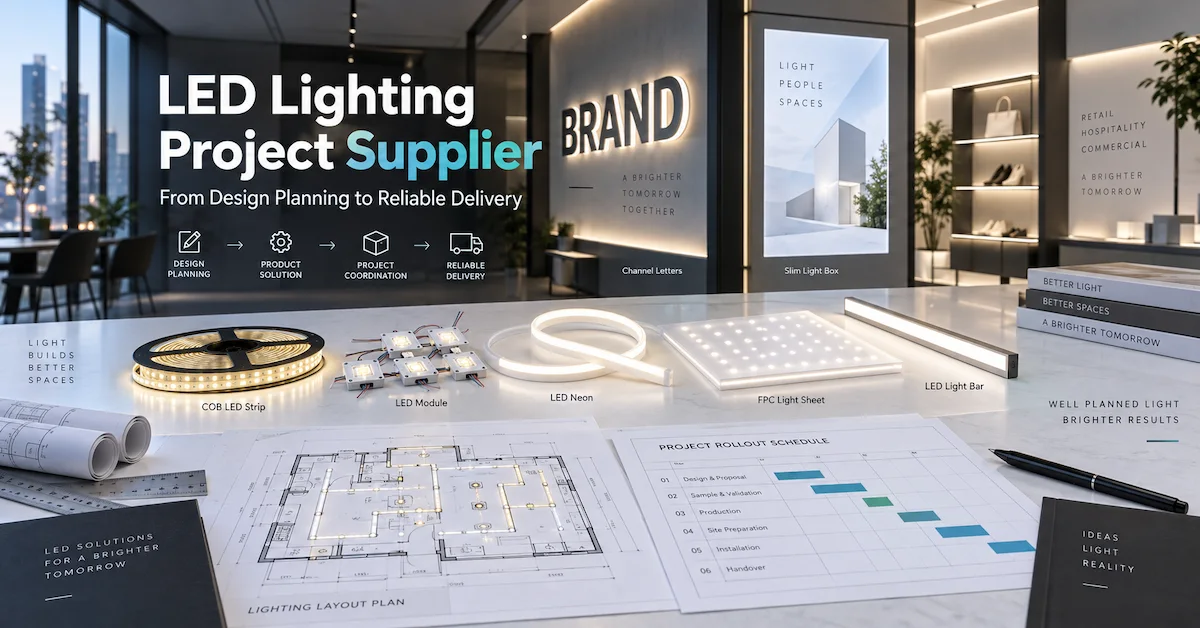
For commercial LED projects, buyers often need more than one product. A signage company may require LED modules for channel letters, LED light bars for cabinets, and power accessories for installation. A retail brand may need slim light boxes, LED strips, or customized display lighting. Therefore, an effective OEM partner should understand the complete lighting system instead of supplying isolated components.
YESUN provides LED lighting products covering LED Modules, LED Strips, LED Light Sheets, LED Light Bars, LED Neon Strips, and related accessories. This product structure allows buyers to evaluate different lighting approaches based on actual application requirements.

Who Needs an OEM LED Lighting Manufacturer?
Different buyers approach OEM lighting projects with different goals. Understanding the buyer type helps define the right manufacturing process.
Lighting Brands Building Private-Label Products
Lighting brands often need products that match their own market positioning. Their requirements may include:
- Custom product specifications
- Brand labeling
- Packaging design
- Product documentation
- Stable production quality
- Long-term supply support
A private-label project should define which elements are standard and which elements require customization. Changing a label is different from changing the optical design, electrical structure, or mechanical construction.
Signage Manufacturers and Advertising Companies
Sign manufacturers usually focus on:
- Brightness consistency
- Installation efficiency
- Product reliability
- Suitable dimensions
- Different sign structures
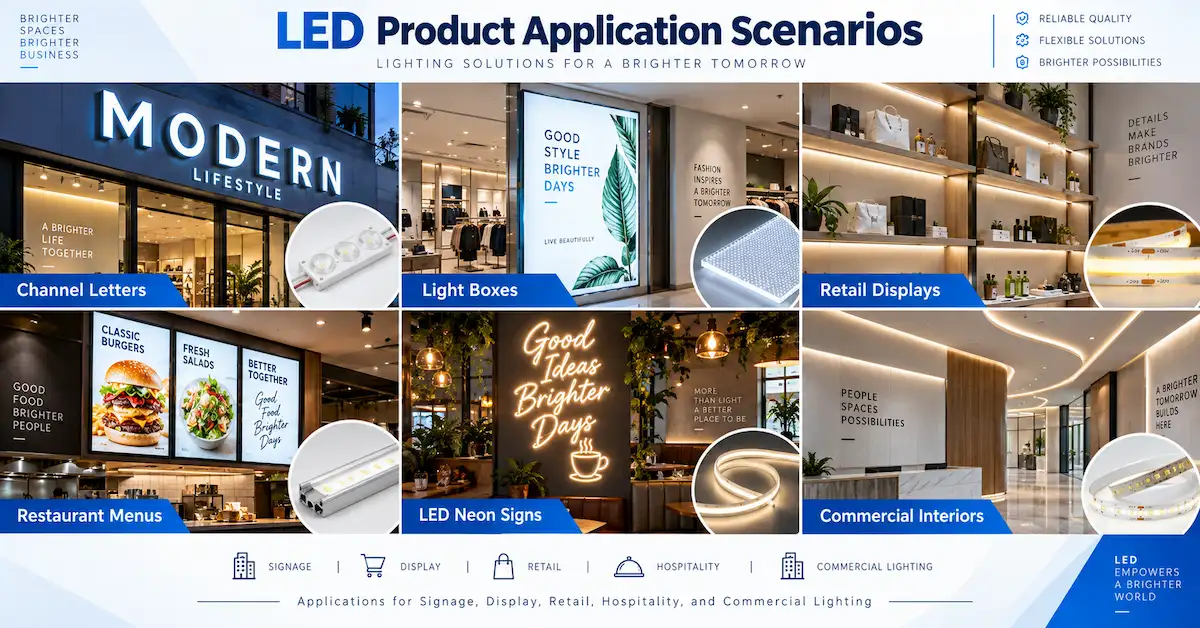
For example, channel letters may require LED modules, while large advertising cabinets may require LED light bars or LED sheets.
YESUN's LED Signage Solutions provide different lighting approaches for commercial signage applications.
Distributors and Importers
Distributors usually need:
- Stable product models
- Consistent specifications
- Competitive purchasing cost
- Reliable documentation
- Repeat-order availability
For distributors, OEM success depends not only on product customization but also on supply-chain consistency.
Commercial Project Contractors
Contractors often evaluate:
- Installation requirements
- Electrical compatibility
- Environmental conditions
- Maintenance convenience
- Project delivery schedule
A suitable OEM manufacturer should provide technical information that helps contractors complete projects successfully.
How to Evaluate an LED Lighting Manufacturer OEM Capability
A professional OEM evaluation should cover several areas.
Product Development Capability
A capable OEM manufacturer should understand:
- LED optical design
- Product structure
- Electrical requirements
- Material selection
- Application conditions
Before starting development, buyers should provide:
- Target application
- Required dimensions
- Lighting effect
- Operating environment
- Quantity forecast
- Market requirements
The clearer the requirement, the easier it is for the manufacturer to propose a suitable solution.
Manufacturing Capability
OEM manufacturing requires stable production processes.
Important evaluation points include:
- Production equipment
- Assembly capability
- Testing procedures
- Quality control systems
- Production capacity
- Traceability management
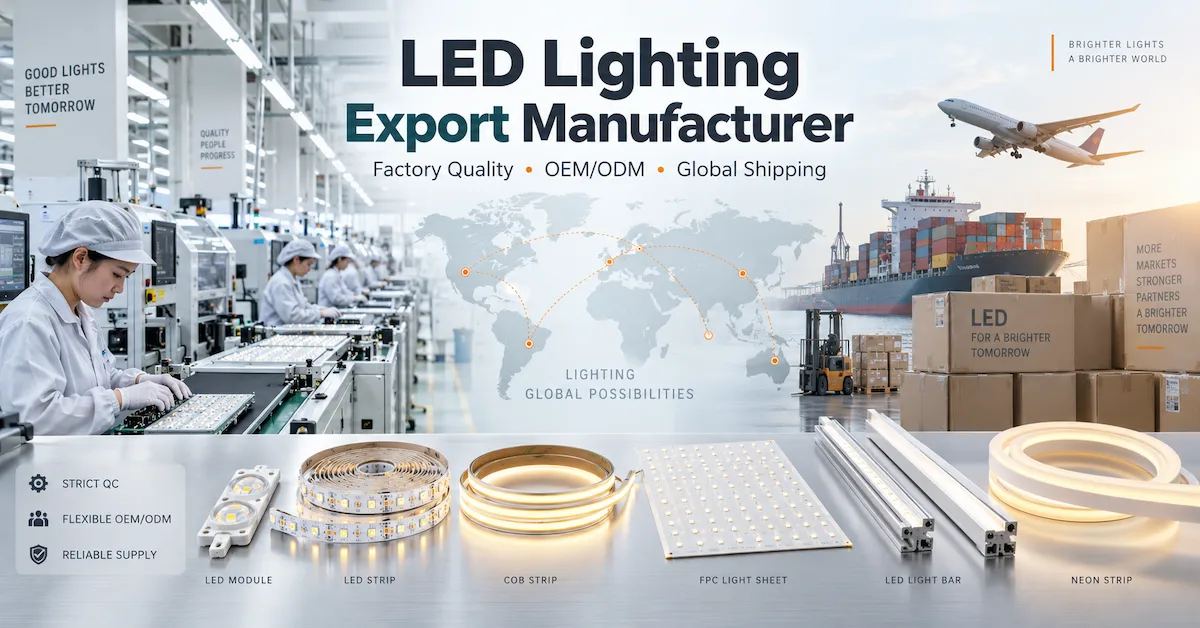
YESUN's About Us page introduces its manufacturing background, production facilities, R&D resources, and testing capabilities.
However, buyers should always connect factory capability with the specific product being purchased rather than relying only on general company information.
OEM LED Lighting Product Categories and Applications
An experienced LED lighting manufacturer OEM should support different product categories.
| Product Category | Typical Applications | OEM Considerations |
|---|---|---|
| LED Modules | Channel letters, signs, cabinets | Size, beam angle, voltage, spacing |
| LED Strips | Decorative lighting, retail displays | Density, color, voltage, control |
| LED Light Sheets | Thin backlighting, light panels | Cutting layout, connection, uniformity |
| LED Light Bars | Large light boxes, advertising displays | Installation structure, spacing |
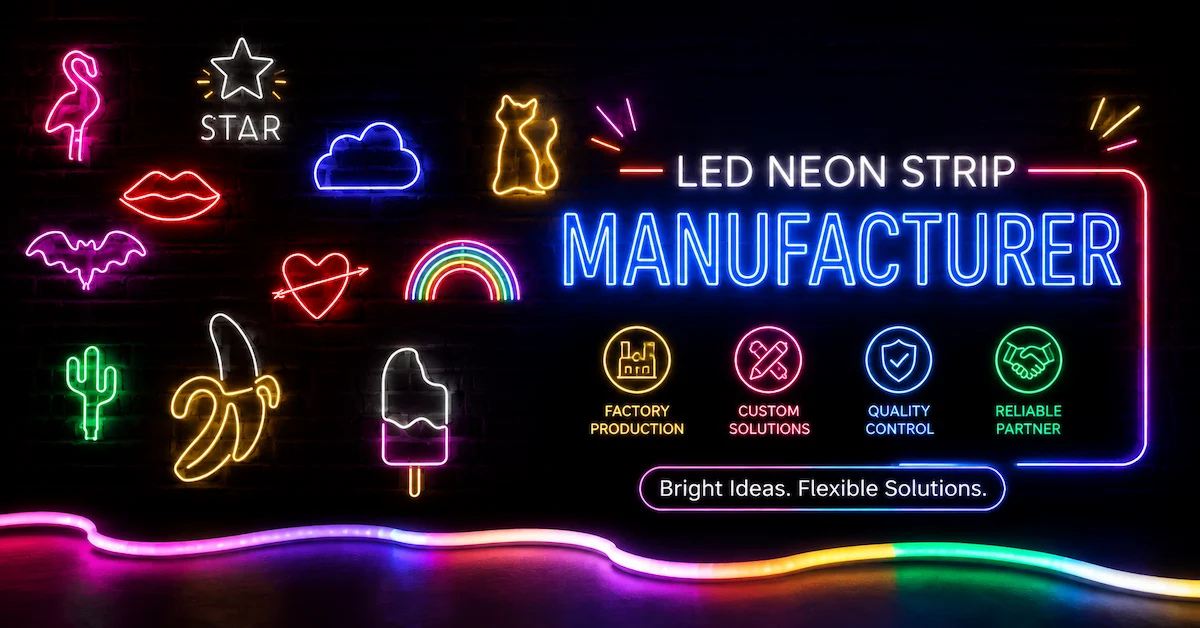
| LED Neon Strips | Decorative signage, outlines | Shape, bending direction, protection |
| Slim LED Light Boxes | Menus, retail posters | Size, graphics, mounting |
The correct OEM product depends on the customer's application rather than simply selecting the product with the highest brightness or lowest price.
How OEM Buyers Should Define LED Product Specifications
A common mistake in OEM projects is starting with only a product name.
For example:
“Need LED strip.”
This information is not enough for a professional quotation.
A complete OEM specification should include:
| Specification Area | Information Required |
|---|---|
| Application | Signage, retail, architecture, display, or other use |
| Product type | Module, strip, sheet, bar, neon, or light box |
| Voltage | 12V, 24V, or other requirement |
| Lighting effect | White, CCT, RGB, RGBW, or dynamic effect |
| Size | Length, width, thickness, installation space |
| Environment | Indoor, outdoor, temperature, moisture conditions |
| Quantity | Sample, trial order, annual forecast |
| Packaging | Standard or private label |
| Documentation | Required market documents |
This information helps an OEM manufacturer avoid incorrect assumptions during development.
Custom LED Lighting Solutions Require Sample Validation
A sample is not only a product demonstration. It is a reference point for future production.
During OEM sample approval, buyers should evaluate:
- Actual lighting appearance
- Product dimensions
- Installation method
- Electrical performance
- Material quality
- Packaging condition
For lighting products, testing only the LED component may not represent the final application.
For example:
A light sheet should be tested inside the intended panel.
A module should be tested inside the sign structure.
A light strip should be tested with the planned installation method.
A validated application sample reduces production risks.
How Should Buyers Compare OEM LED Lighting Suppliers?
Price is only one part of OEM supplier evaluation.
A complete comparison should include:
| Evaluation Factor | Key Questions |
|---|---|
| Product capability | Can the supplier manufacture the required LED category? |
| Customization | Can specifications be modified when needed? |
| Quality control | How are products tested before shipment? |
| Communication | Can technical requirements be understood clearly? |
| Production stability | Can repeat orders maintain consistency? |
| Documentation | Are specifications and reports available? |
| Delivery management | Can production schedules be controlled? |
A supplier with a lower initial price may create additional costs if samples fail, specifications change unexpectedly, or repeat orders are inconsistent.
LED Lighting OEM Quality Control Process
Quality control should cover the complete production process.
Incoming Material Control
Important materials may include:
- LED chips
- PCB materials
- Housing materials
- Wires
- Connectors
- Power components
Material consistency affects final product performance.
Production Inspection
Manufacturers should monitor:
- Assembly quality
- Soldering quality
- Product dimensions
- Electrical connections
- Appearance consistency
Final Testing
Depending on the product, testing may include:
- Lighting test
- Electrical test
- Aging test
- Environmental evaluation
YESUN provides different product testing and manufacturing information through its company resources.
OEM Packaging and Brand Customization
For private-label projects, packaging is part of the product experience.
OEM buyers may require:
- Custom labels
- Product manuals
- Brand packaging
- Carton markings
- Barcode information
Before mass production, confirm:
- Artwork version
- Label information
- Product identification
- Packaging quantity
- Shipping requirements
Clear packaging standards help distributors manage inventory more effectively.
How OEM Buyers Manage Long-Term Supply Risk
Long-term OEM cooperation requires more than a successful first order.
Buyers should maintain:
- Approved product specifications
- Sample references
- Product model numbers
- Packaging records
- Revision history
When a manufacturer changes:
- LED components
- PCB design
- Cable structure
- Housing materials
- Packaging
the buyer should understand whether the change affects product performance or market approval.
LED Lighting Manufacturer OEM for Commercial Applications
Commercial lighting projects often require customized solutions rather than standard products.
Common applications include:
Retail Displays
Requirements:
- Attractive lighting effects
- Color consistency
- Easy installation
Restaurant and Hospitality Lighting
Requirements:
- Brand atmosphere
- Menu displays
- Decorative lighting
Advertising Signage
Requirements:
- High visibility
- Long operating hours
- Reliable installation
Architectural Applications
Requirements:
- Environmental compatibility
- Lighting control
- Project-specific design
YESUN provides different LED product categories that can support these commercial applications.
What Information Should You Send an OEM LED Lighting Manufacturer?
Before contacting an OEM manufacturer, prepare:
- Product application
- Target market
- Product drawings
- Required specifications
- Quantity forecast
- Packaging requirements
- Certification requirements
- Delivery expectations
If you need a complete lighting system, include related product information such as:
- LED modules
- LED strips
- LED light sheets
- LED light bars
- Controllers
- Power supplies
Buyers can review YESUN's Product Catalog and submit project requirements through Contact Us.
Frequently Asked Questions About LED Lighting Manufacturer OEM
What is an LED lighting manufacturer OEM?
An LED lighting manufacturer OEM produces customized or branded LED products according to buyer requirements. OEM projects may include product specifications, packaging, labeling, and manufacturing support.
What products can an LED lighting OEM manufacturer produce?
OEM manufacturers may produce LED modules, strips, light sheets, light bars, neon products, light boxes, and related accessories depending on their production capability.
How do I choose the right LED OEM supplier?
Evaluate product capability, manufacturing experience, customization ability, quality control, documentation, communication, and repeat-order stability.
What information should I provide for an OEM quotation?
Provide application, product type, dimensions, voltage, lighting requirements, quantity, packaging needs, and market requirements.
Can LED products be customized for private brands?
Many LED products can support customization such as labels, packaging, specifications, and selected design changes. The exact scope depends on the product platform.
How long does LED OEM development take?
The timeline depends on product complexity, sample requirements, testing needs, and customization level. Standard products with limited changes usually require less development than completely new designs.
What is the difference between OEM and ODM LED lighting?
OEM usually means manufacturing according to buyer specifications, while ODM involves more supplier participation in product design and development.
How can I ensure OEM product consistency?
Maintain approved samples, specifications, model numbers, and revision records for every production order.
Do OEM LED products require certification?
Certification requirements depend on the product, market, and application. Buyers should confirm which documents apply to the exact configuration.
Why should brands work with an experienced LED OEM manufacturer?
Experienced manufacturers can help reduce development risks, improve production consistency, and support long-term product supply.
Conclusion
Choosing the right LED lighting manufacturer OEM is a strategic decision for brands, distributors, signage companies, and commercial project buyers. A reliable OEM partner should provide not only manufacturing capacity but also product knowledge, customization support, quality control, documentation management, and stable long-term supply. YESUN offers a broad range of LED solutions including LED Modules, LED Strips, LED Light Sheets, LED Light Bars, and related accessories. By defining your application, technical requirements, customization needs, and production expectations clearly, you can build a more reliable OEM lighting supply chain. Contact YESUN with your project requirements to discuss suitable LED OEM solutions.