

Buying LED lighting in bulk can reduce purchasing complexity for commercial contractors, signage manufacturers, display fabricators, and lighting distributors. However, purchasing a large quantity of LED products without a complete installation specification can introduce unexpected costs, compatibility problems, and project delays.
A commercial signage installation may require LED modules, power supplies, connectors, and mounting accessories. A retail display project may combine COB LED strips with flexible backlighting sheets and dimming controls. Ordering the lighting products without accounting for the complete system can leave installers with missing or incompatible components.
Quick Answer: A reliable LED lighting wholesale supplier should provide products suited to the intended application, clear technical specifications, compatible accessory options, transparent wholesale quotations, and a documented sample-approval process. Before confirming a bulk order, buyers should verify electrical requirements, installation dimensions, environmental protection, delivery details, and quality acceptance criteria.
This guide explains how to prepare a project-ready wholesale LED lighting order, compare available technologies, verify product quality, and work with a specialized manufacturer such as YESUN LED.
1. Who Needs an LED Lighting Wholesale Supplier?
Wholesale LED lighting procurement is relevant to businesses that purchase lighting components for resale, manufacturing, or installation across commercial projects.
However, different customers have different priorities.
Signage Manufacturers and Sign Installers
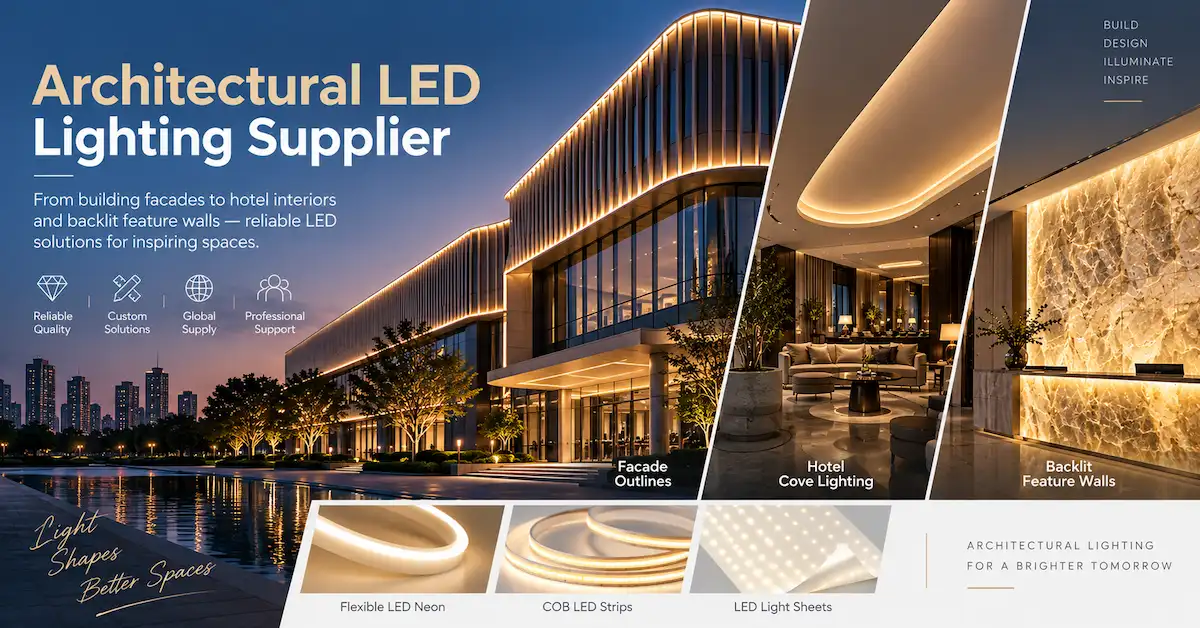
Advertising signage businesses often require LED modules for channel letters, flexible LED strips for decorative details, and suitable backlighting for illuminated advertising cabinets.
They prioritize brightness uniformity, installation efficiency, outdoor durability, and replacement compatibility.
Commercial Lighting Contractors
Contractors purchasing for retail stores, restaurants, hotels, and other commercial spaces need products that match architectural drawings, electrical systems, and installation requirements.
A complete materials list is particularly important when multiple lighting types are used within one project.
Light Box and Display Manufacturers
These buyers need suitable lighting for shallow cabinets, advertising displays, menu boards, and illuminated retail features.
The primary technical challenges are often illumination uniformity, available installation depth, heat management, and ease of assembly.
Lighting Distributors and Importers
Distributors need consistent specifications, identifiable models, reliable packaging, and suitable documentation to support repeat purchasing.
They may also require customization, product labeling, and wholesale pricing for different order quantities.
OEM and Private-Label Lighting Brands
Brands developing their own commercial lighting ranges may require customized electrical specifications, product dimensions, cables, and packaging.
For these customers, engineering approval and controlled production specifications are especially important.
A specialized component manufacturer may not be the right partner for projects requiring complete building-wide lighting design, unrelated industrial luminaires, or installation contracting. Buyers should confirm the exact services needed before requesting quotations.
2. Start With the Application, Not the Lowest Wholesale Price
The first step in wholesale LED lighting procurement is identifying where the products will be installed and what they need to accomplish.
For example, LED lighting for a commercial light box has different requirements from lighting used inside a retail shelf.
The light box may need broad, uniform backlighting. The shelf may require a narrow continuous line of light with an appropriate color-rendering specification.
Using the wrong technology can create installation problems even when the product itself is functioning correctly.
Match LED Lighting Products to Commercial Applications
| Commercial application | LED technology to evaluate | Main buying priority |
|---|---|---|
| Channel letters and illuminated signs | LED modules | Optical distribution, module spacing, installation depth |
| Large advertising light boxes | LED light bars or modules | Uniform illumination and assembly efficiency |
| Slim backlit panels | Flexible LED light sheets | Low-profile construction and reduced hotspots |
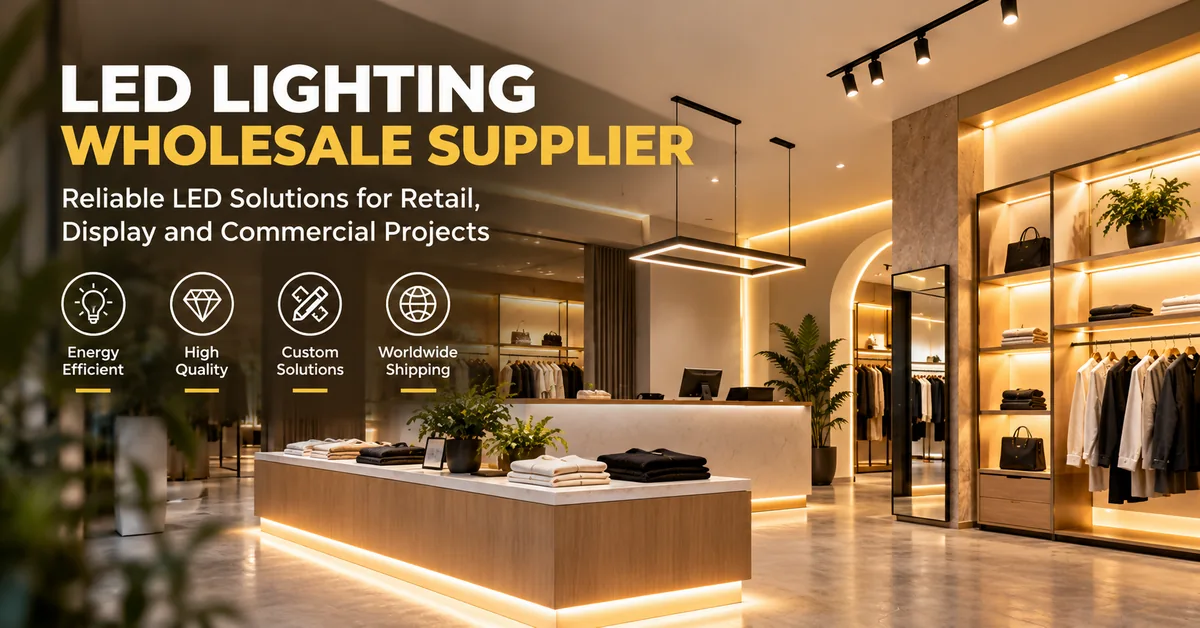
| Retail shelves and display cabinets | COB LED strips | Continuous-looking light and color quality |
| Restaurant and hotel decorative lighting | SMD or COB LED strips | Color temperature and dimming compatibility |
| Brand logos and decorative outlines | Silicone LED neon | Profile dimensions, bending direction, visual continuity |
| Commercial building contours | Suitable outdoor LED neon | Weather protection and mounting reliability |
| RGB decorative displays | RGB or addressable LED products | Controller compatibility and power distribution |
YESUN LED supplies a range of commercial LED lighting products for signage, light boxes, retail displays, and related applications.
Why Operating Conditions Matter
Before selecting products, determine the expected operating schedule.
A decorative installation operating for a few evening hours may have different thermal and maintenance priorities from a commercial display operating for extended periods every day.
Consider ambient temperature, ventilation, installation enclosure, operating hours, and maintenance accessibility.
The correct wholesale product should suit the actual operating environment—not simply look attractive in a catalog photograph.
3. Compare LED Technologies Before Placing a Bulk Order
A professional wholesale lighting order may include several product types.
Understanding their differences helps buyers avoid purchasing materials that do not match the intended application.
LED Modules for Illuminated Signage
LED modules are commonly used inside channel letters and advertising signs.
Depending on the design, they may incorporate optical lenses, protective housings, and connection cables.
Selection should consider sign depth, letter dimensions, beam distribution, electrical rating, and environmental exposure.
Explore YESUN LED Modules for illuminated signage applications.
SMD LED Strips for Versatile Linear Lighting
SMD LED strips offer flexibility for installation in cabinets, counters, decorative profiles, and commercial interiors.
Common selection factors include voltage, LED density, PCB width, color temperature, power consumption, and cutting intervals.
Browse the YESUN LED Strip range for different commercial lighting configurations.
COB LED Strips for Continuous-Looking Illumination
COB LED strips use closely arranged light-emitting elements to create a more continuous-looking light source.
They are useful for applications where individual LED points should be less noticeable.
COB products are particularly relevant to retail shelves, display cabinets, and decorative linear profiles.
Explore COB LED lighting solutions.
LED Light Sheets for Large-Area Backlighting
LED light sheets are suitable for thin backlit structures, advertising panels, and selected decorative surfaces.
Their layout can help distribute light over a wider area than a conventional linear strip.
However, the final appearance depends on the sheet arrangement, diffuser, distance, and illuminated material.
Review YESUN flexible LED light sheets.
LED Light Bars for Advertising Cabinets
LED light bars provide another approach to commercial backlighting.
Different designs may use back-emitting or side-emitting arrangements.
For larger advertising cabinets, product selection should consider mounting positions, optical distribution, electrical connections, and serviceability.
See YESUN LED Light Bars.
Flexible LED Neon for Commercial Outlines
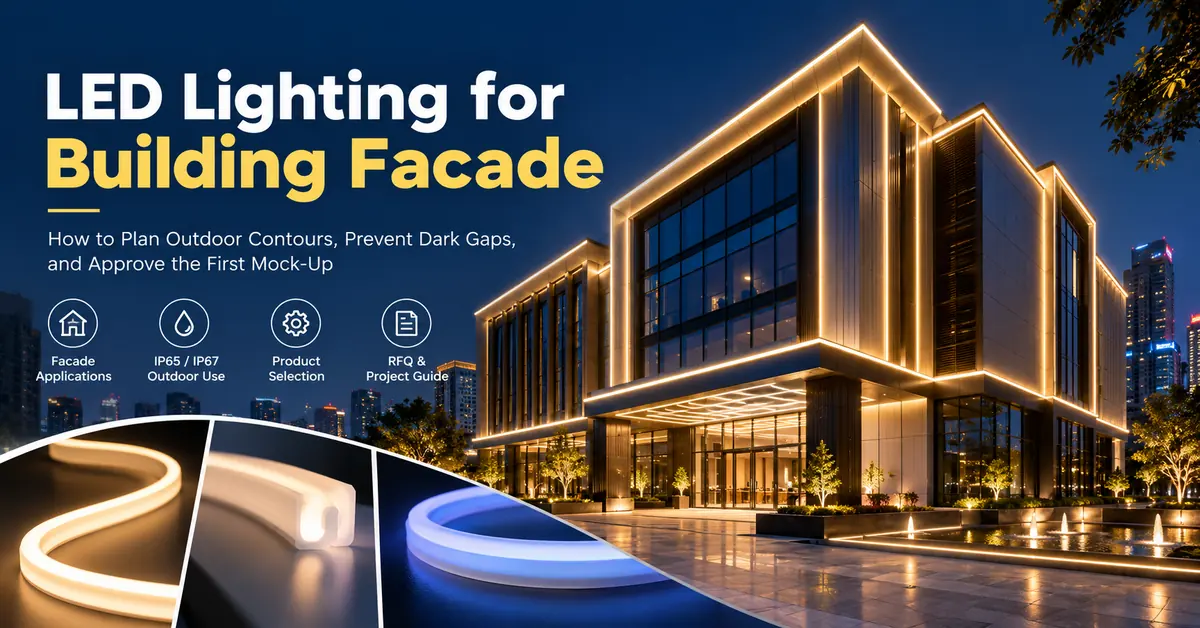
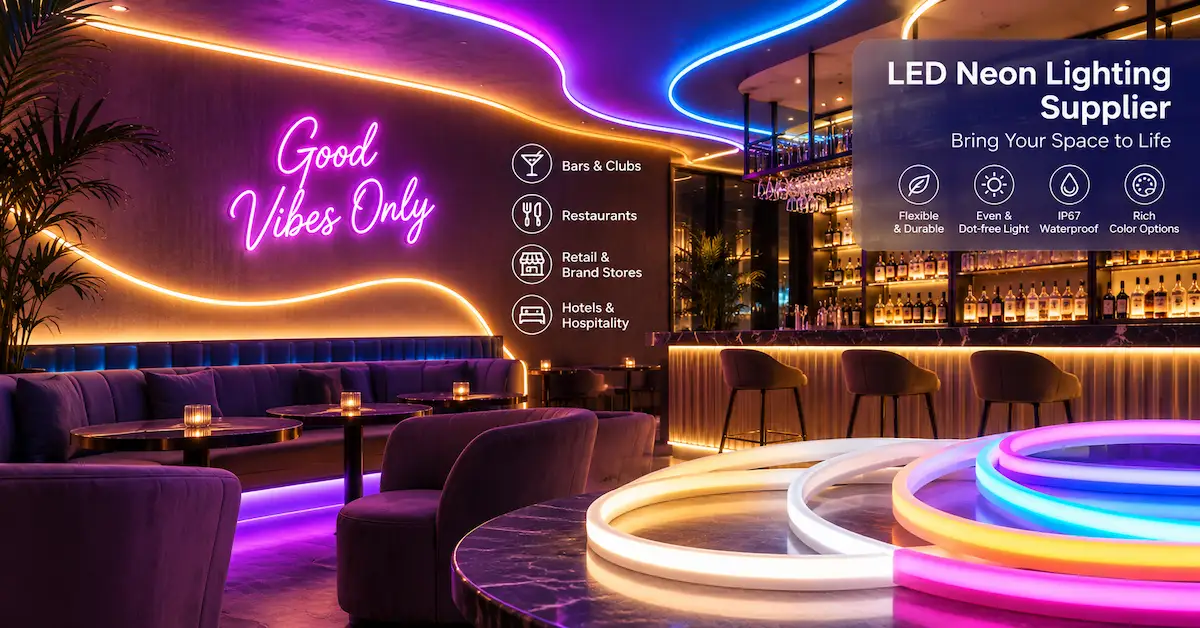
Silicone LED neon creates visible linear lighting for architectural contours, decorative signage, and brand features.
The product's profile, bending direction, color, power, and environmental protection should match the installation.
Explore YESUN LED Neon Strips.
4. What Technical Specifications Should Wholesale Buyers Compare?
Two LED products can look similar but have different electrical and optical characteristics.
Wholesale buyers should therefore request a consistent specification format.
| Specification | What to verify | Purchasing significance |
|---|---|---|
| Input voltage | DC12V, DC24V, or specified alternative | Power-supply compatibility |
| Rated power | W/module, W/m, or W/sheet | Electrical load calculation |
| Light output | Luminous flux and test conditions | Brightness comparison |
| Color temperature | CCT and acceptable variation | Consistent lighting appearance |
| Color rendering | CRI where relevant | Visual presentation of products |
| Optical distribution | Beam angle and light pattern | Uniform illumination |
| LED density | LEDs/m or module arrangement | Lighting appearance and layout |
| Physical dimensions | Width, thickness, length | Installation compatibility |
| IP rating | Exact product configuration | Indoor or outdoor suitability |
| Cutting interval | Approved cutting positions | Custom installation lengths |
| Control method | Dimming, RGB, RGBW, or addressable | System compatibility |
| Operating conditions | Temperature and installation restrictions | Long-term reliability |
Why 12V and 24V Products Are Not Interchangeable
Voltage affects electrical system design.
At equal power, a 24V system draws less current than a 12V system, which can influence cable sizing and voltage-drop management.
However, 24V does not automatically mean that every product can operate over a longer uninterrupted distance.
Buyers must confirm the specific product's allowed electrical run length, power-feed arrangement, and driver requirements.
Why IP Ratings Require Careful Review
An IP65 or IP67 product may be suitable for particular environmental conditions, but the rating does not automatically cover every component of the completed installation.
Connectors, cut ends, power supplies, and junction boxes may require separate protection.
For outdoor wholesale orders, confirm how the selected configuration meets the intended environmental requirements.
5. Build a Complete Wholesale LED Lighting Bill of Materials
One of the most practical ways to reduce purchasing errors is to prepare a detailed bill of materials before requesting a quotation.
A BOM connects the lighting design to the components the installer will actually use.
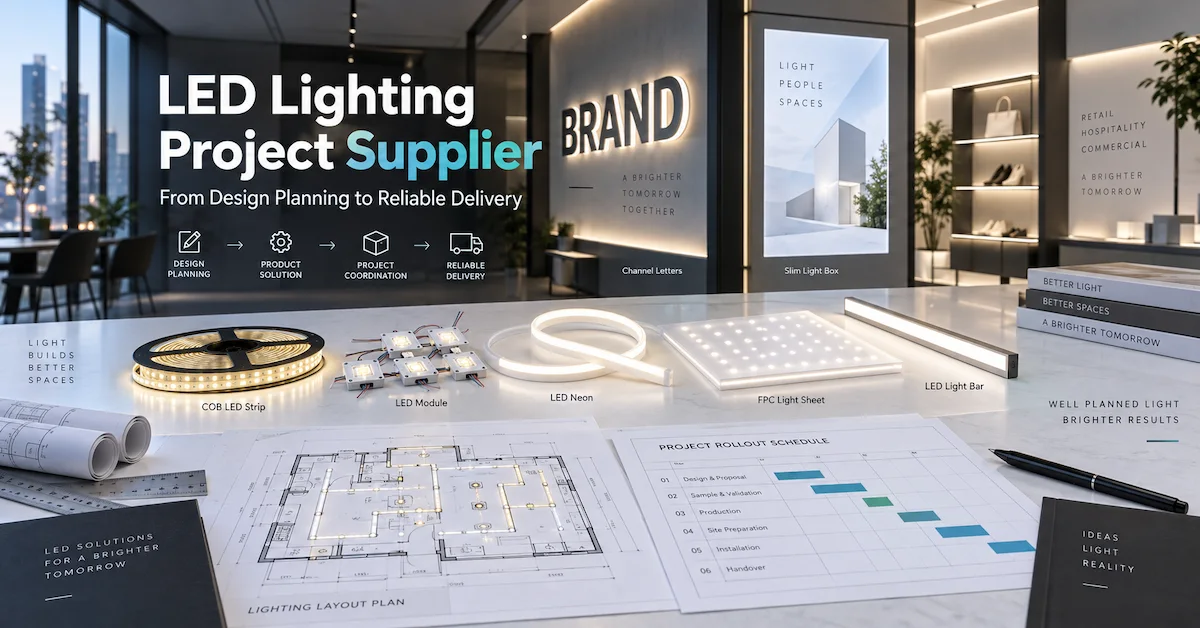
Example: Commercial Retail and Signage Project
The following is an illustrative purchasing checklist, not a fixed YESUN product bundle.
| Project zone | Main lighting product | Supporting components to specify |
|---|---|---|
| Illuminated storefront letters | LED modules | Suitable power supplies, connectors, installation accessories |
| Retail display shelves | COB LED strips | Drivers, mounting profiles, wiring and dimming equipment where required |
| Advertising light box | LED light sheets or bars | Matching power supplies, mounting and connection accessories |
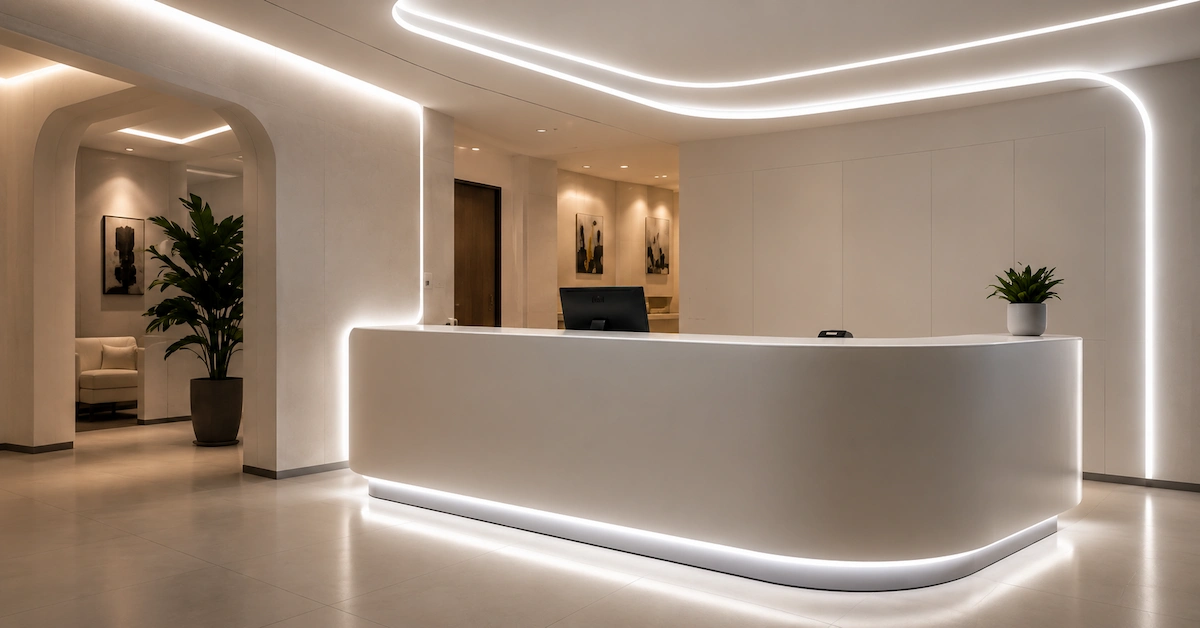
| Decorative reception feature | LED neon | Suitable mounting hardware, cable connections, controls if needed |
| Control and distribution | Compatible power supplies/controllers | Wiring, protection, accessible installation points |
The buyer should confirm exact models and quantities rather than assuming that all products shown in a catalog can operate together.
What Should Be Included in the BOM?
A complete purchasing BOM should identify the product model, quantity, operating voltage, rated power, color, dimensions, protection requirements, connectors, control accessories, packaging, and installation notes.
For distributors, it may also include an internal SKU, manufacturer model, sales unit, and approved revision.
A properly prepared BOM helps prevent incomplete shipments, mismatched accessories, and delays caused by discovering missing components during installation.
6. Check Power Supplies, Controllers, and Accessories Before Ordering
A wholesale LED lighting supplier should be evaluated on the suitability of the complete proposed configuration—not only the LED light sources.
Match the Power Supply to the Load
Calculate the connected load for each lighting circuit using the product's rated electrical consumption.
Confirm the power supply's output voltage, continuous load capacity, installation conditions, and applicable operating margin.
Do not assume that a power supply is suitable simply because its advertised wattage exceeds the nominal LED load.
Verify Dimming and Control Compatibility
Dimming systems must match the connected product and driver technology.
Likewise, RGB and addressable LED products require compatible controllers and appropriate electrical connections.
Incorrect combinations can result in flickering, limited functions, unstable operation, or equipment damage.
Confirm Installation Accessories
Some projects may also require:
-
Mounting clips and profiles
-
Compatible connectors
-
Approved cable assemblies
-
End caps and sealing accessories
-
Extension cables
-
Driver mounting hardware
-
Suitable electrical enclosures
YESUN provides LED power supplies, controllers, and connection accessories.
For a wholesale project, request confirmation of specific accessory compatibility instead of relying only on category descriptions.
7. How to Compare Wholesale LED Lighting Prices Correctly
A low unit price is useful only when the product and purchasing terms meet the project's requirements.
Different wholesale quotations may exclude important items.
Compare the Total Purchasing Package
| Cost factor | Why it matters |
|---|---|
| LED product price | Establishes the initial component cost |
| Minimum order quantity | Influences purchasing capital and inventory |
| Power supplies and controls | Necessary for a complete working system |
| Installation accessories | Affect site readiness and assembly cost |
| Customization | May involve engineering or tooling charges |
| Packaging | Influences handling and transport protection |
| Inspection and documentation | Supports product acceptance |
| International freight | Adds to the delivered cost |
| Import duties and taxes | Affect landed cost |
| Replacement and maintenance | Influence long-term project expenses |
Lowest Unit Price vs Lowest Practical Project Cost
Consider two hypothetical wholesale quotations.
Supplier A offers a lower LED strip price but excludes compatible drivers and connection accessories.
Supplier B offers a higher component price but provides a clearly specified package with matching electrical components.
Neither quotation should be selected until both are normalized to the same deliverables.
The buyer should determine what must be purchased separately, whether installation labor differs, and how future replacement costs may affect the commercial result.
For commercial projects, purchasing value should be evaluated against the complete installed requirement rather than the LED unit price alone.
8. How to Verify Samples and Product Quality Before Bulk Purchasing
Bulk buyers should not rely on product photographs or general quality claims.
Representative sample testing helps determine whether the selected products meet the actual installation requirements.
Sample Approval Checklist
| Inspection item | What buyers should verify |
|---|---|
| Model identification | Correct product and variant |
| Electrical performance | Voltage, power, and operating behavior |
| Light output | Meets the agreed brightness requirement |
| Color | Matches the approved CCT or color reference |
| Optical performance | Suitable light distribution in the intended installation |
| Dimensions | Fits the available installation space |
| Connections | Correct wiring and compatible accessories |
| Environmental design | Suitable for the intended exposure |
| Appearance | No unacceptable visible defects |
| Documentation | Agreed specifications and revision recorded |
Test Products in Realistic Conditions
For a channel-letter project, test the LED modules inside a representative sign structure.
For a slim light box, evaluate the sample using the planned diffuser and installation depth.
For a retail shelf, assess the lighting inside the intended mounting profile.
A product that performs well in an open-air sample demonstration may behave differently when enclosed.
Quality Control for Wholesale Orders
YESUN LED describes SMT manufacturing, engineering, quality-control processes, and optical and environmental testing capabilities in its company and factory profile.
Buyers should request applicable model-specific inspection criteria and testing evidence rather than assume that every product undergoes identical testing.
For repeat orders, approve the relevant product configuration and establish a procedure for notifying the buyer of material engineering changes.
9. How to Manage MOQ, Lead Time, and Delivery
Wholesale purchasing requirements vary by product category, customization, and quantity.
A standard LED module may have different ordering conditions from a custom-color strip, specialized neon profile, or non-standard light sheet.
Confirm Three Different Order Stages
Sample order: Used to verify technical suitability and appearance.
Trial bulk order: Used to assess packaging, order accuracy, and production consistency.
Regular wholesale order: Based on confirmed product demand and repeat-order requirements.
These stages should not automatically be assumed to have the same MOQ or price structure.
Ask the Supplier to Clarify
-
MOQ by product and variant
-
Sample availability and quotation
-
Standard versus customized production requirements
-
Production lead time and start conditions
-
Mixed-product order feasibility
-
Packaging and labeling requirements
-
Shipping method and agreed Incoterms
-
Inspection and release procedures
-
Warranty and replacement arrangements
For project installations, confirm which items must arrive together.
Receiving the LED strips while drivers or special connectors remain unavailable can delay installation even when the main lighting products arrive on schedule.
10. OEM and Customized Wholesale LED Lighting Solutions
Standard products are suitable for many commercial installations, but some projects require customized configurations.
YESUN LED offers OEM/ODM support for signage and commercial LED lighting applications.
Depending on the product and feasibility review, customers may discuss requirements involving:
-
Product dimensions
-
LED arrangement
-
Voltage and electrical configuration
-
Color temperature and color options
-
Cables and connectors
-
Suitable environmental protection
-
Product labeling
-
Customized packaging
For commercial contractors, such changes may help products fit a particular structure.
For distributors and private-label businesses, custom labeling and controlled specifications may support a differentiated wholesale product range.
However, every modification should be reviewed for technical feasibility, required testing, minimum quantities, and commercial impact.
A customized product must be approved against a documented specification before bulk production.
11. Why Consider YESUN LED as Your Wholesale Lighting Partner?
YESUN LED is a Shenzhen-based manufacturer specializing in LED signage and commercial lighting components.
The company was established in 2013 and publishes information about its manufacturing facility, SMT production lines, engineering resources, and quality-control procedures.
Its product portfolio includes LED modules, SMD and COB strips, LED light sheets, LED light bars, silicone neon products, power supplies, and controllers.
Relevant Advantages for B2B Wholesale Buyers
Application-focused product range
Buyers can source products intended for channel letters, illuminated advertising, retail displays, light boxes, and decorative commercial lighting.
Manufacturing and engineering support
YESUN's published company information describes manufacturing, R&D, and quality-control capabilities relevant to specialized LED components.
Product customization
OEM/ODM services support discussions about non-standard requirements and brand-specific configurations.
Related lighting accessories
Available power supplies, controllers, and connectors support the selection of compatible component combinations.
Wholesale procurement communication
Overseas buyers can discuss samples, technical requirements, quantities, and delivery arrangements directly with the company.
These capabilities should be evaluated against the buyer's specific product requirements and confirmed during quotation.
12. What Should You Include in an LED Lighting Wholesale RFQ?
A clear request for quotation allows a supplier to identify suitable products and prepare more relevant commercial terms.
Recommended Wholesale RFQ Template
| RFQ information | What the buyer should provide |
|---|---|
| Buyer type | Distributor, contractor, signage manufacturer, OEM brand |
| Project application | Channel letters, retail displays, light boxes, decorative lighting |
| Destination market | Country and applicable purchasing requirements |
| Product categories | Modules, strips, COB, light sheets, neon, accessories |
| Technical specifications | Voltage, power, dimensions, color, IP rating |
| Product quantities | Number of pieces, meters, sheets, or reels |
| Accessories | Drivers, controllers, connectors, mounting components |
| Samples | Required models and quantities |
| OEM requirements | Custom specifications, labels, or packaging |
| Inspection | Testing and acceptance requirements |
| Delivery | Destination, schedule, and preferred commercial terms |
| Documentation | Datasheets and applicable model-specific compliance records |
If you are purchasing for a defined project, include drawings, installation measurements, and photographs where helpful.
If you are a distributor, explain your target product categories and expected purchasing quantities.
Clearly separate mandatory requirements from optional preferences.
Request Wholesale LED Lighting From YESUN
YESUN LED can discuss available lighting products and application-specific sourcing requirements for signage, light box, retail display, and decorative commercial projects.
Browse YESUN Commercial LED Products
Request Wholesale Pricing and Product Consultation
13. Frequently Asked Questions
1. What does an LED lighting wholesale supplier provide?
An LED lighting wholesale supplier provides LED products in quantities suitable for commercial purchasing or resale. Depending on its capabilities, the supplier may also provide technical documentation, samples, customization, related accessories, and support for repeat orders.
2. How do I choose a reliable LED lighting wholesale supplier?
Start with the intended applications and required specifications. Compare product suitability, manufacturing capabilities, sample quality, accessory compatibility, MOQ, delivery arrangements, applicable documentation, and after-sales terms before committing to a bulk order.
3. Is buying LED lighting wholesale cheaper than retail?
Wholesale purchasing may reduce the unit price, particularly at suitable order volumes. However, the final cost depends on freight, accessories, customization, import charges, quality, and installation requirements. Compare the complete purchasing cost rather than unit prices alone.
4. What LED products are best for commercial signage?
LED modules are commonly used inside channel letters, while LED light bars and light sheets may be suitable for advertising cabinets. LED neon is often used for visible outlines. Selection depends on dimensions, lighting performance, installation conditions, and environmental exposure.
5. Should I buy 12V or 24V LED strips in bulk?
Choose according to the required product, installation length, power distribution, and driver compatibility. A 24V system may offer electrical advantages in some configurations, but the manufacturer's permitted run lengths and connection requirements must still be verified.
6. Are COB LED strips suitable for retail displays?
COB LED strips are often suitable where a continuous-looking line of light is desired. Buyers should also evaluate color rendering, color temperature, installation profiles, thermal conditions, and required brightness.
7. What accessories should be included in a wholesale LED lighting order?
Depending on the project, required accessories may include power supplies, controllers, connectors, cables, mounting profiles, clips, and sealing components. Confirm compatibility with the exact lighting products before purchasing.
8. Can LED lighting wholesale orders include customized products?
Many manufacturers offer customization for certain product categories. YESUN supports OEM/ODM discussions involving electrical specifications, dimensions, colors, connections, and packaging. Feasibility and commercial terms must be confirmed for each request.
9. What quality tests should wholesale LED buyers request?
Useful tests may include electrical operation, luminous output, color consistency, dimensional inspection, environmental suitability, and packaging verification. The exact inspection plan should match the product and intended application.
10. How can I request wholesale LED lighting prices from YESUN?
Visit the YESUN LED contact page and provide your application, product categories, technical requirements, estimated quantities, destination market, and delivery schedule. Including an installation drawing or BOM can help clarify the quotation.
Conclusion
Selecting the right LED lighting wholesale supplier requires a balance of technical compatibility, product quality, purchasing cost, and project support.
For signage manufacturers, commercial contractors, light box producers, lighting distributors, and OEM brands, successful wholesale procurement begins with understanding how each LED product will be used.
LED modules, flexible strips, COB lighting, light sheets, light bars, and neon products offer different benefits. The correct selection should reflect the application, installation structure, electrical requirements, environment, and expected operating conditions.
A detailed BOM, verified electrical compatibility, approved samples, and clear commercial terms can help businesses reduce purchasing errors and avoid preventable installation delays.
YESUN LED offers a specialized range of signage and commercial lighting components, supported by its published manufacturing and engineering capabilities.
By working from a clearly defined project specification, professional buyers can obtain more meaningful quotations and develop a more consistent wholesale procurement process.
Looking for a reliable LED lighting wholesale supplier for your next project? Contact YESUN LED to discuss lighting applications, product specifications, sample requirements, and bulk purchasing options.