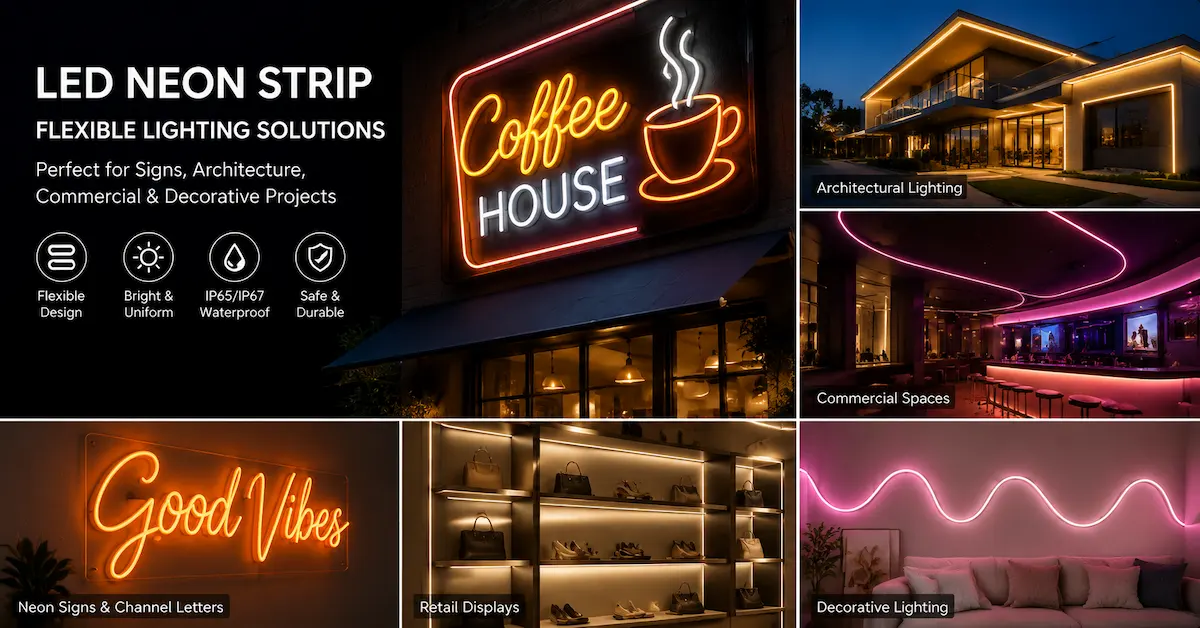


LED Neon Lighting Solutions Should Start With the Application
A neon product can look excellent in a sample room and still be wrong for the final project.
That happens because commercial buyers are not really purchasing “a neon strip.” They are purchasing a lighting result.
A storefront logo needs tight curves and clean lines. A hotel facade may need long, weather-resistant runs. A bar wants dynamic color control. A retail brand may care more about repeatable color across dozens of stores than about maximum brightness.
Good LED neon lighting solutions therefore start with five questions:
- What surface or structure will be illuminated?
- From what distance will people see it?
- Is the installation indoors or outdoors?
- Does the project require static or dynamic lighting?
- How will the product be powered, controlled, mounted, and serviced?
Answering those questions first makes product selection much easier.
YESUN offers several neon product directions, including silicone neon LED strips, flexible linear products, Neon Art Series solutions, separable neon strips, and customized neon applications. Buyers can review the current LED Neon Strip range before discussing a project configuration.
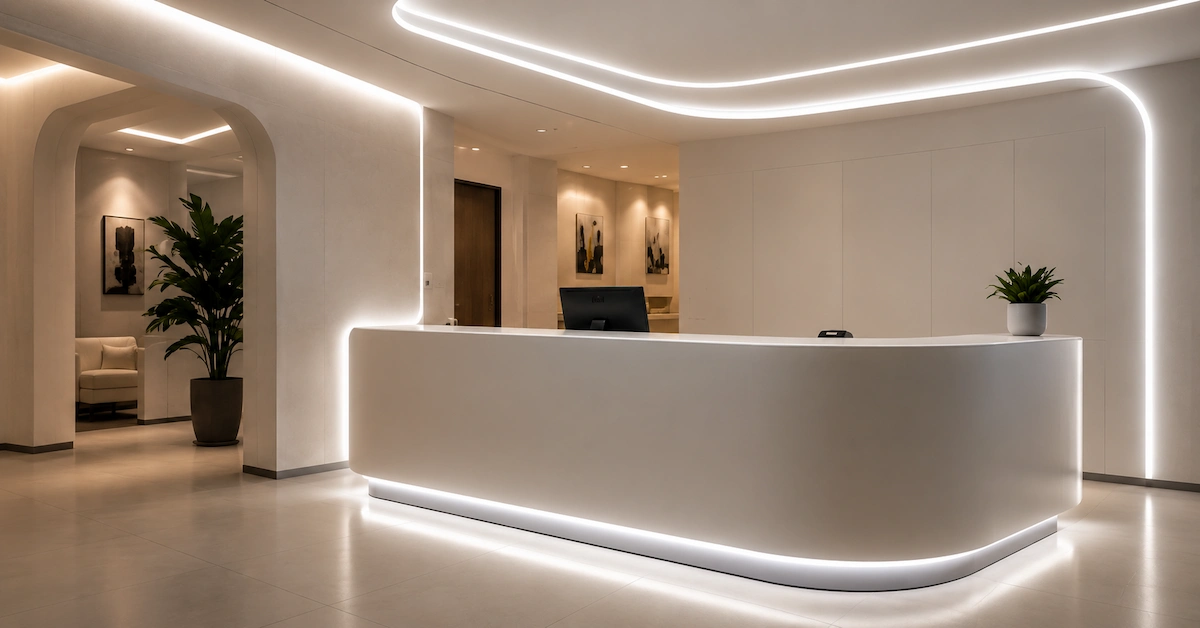
A Quick Selection Guide by Application
Different applications create different technical priorities.
| Application | Main Requirement | Recommended Direction |
|---|---|---|
| Storefront logo | Tight shapes and clean light line | Compact flexible neon profile |
| Building outline | Long runs and outdoor durability | 24V outdoor neon with zoned power |
| Retail display | Consistent color and refined appearance | Single-color or tunable-white neon |
| Hotel interior | Comfortable ambience | Warm white, dimmable neon |
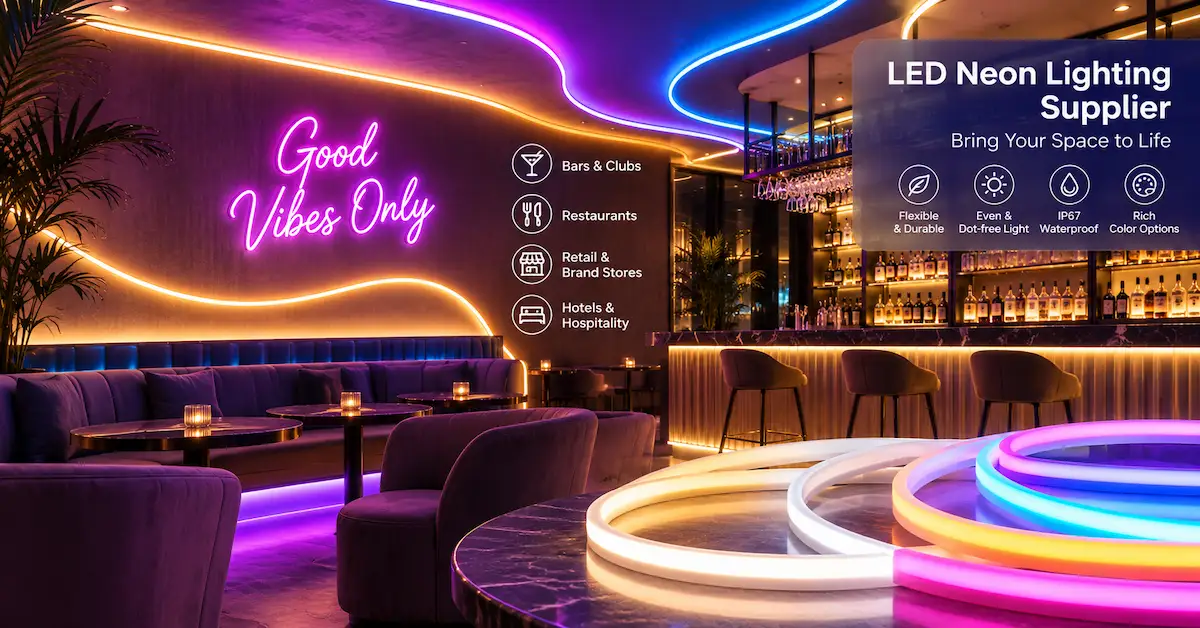
| Bar or club | Dynamic effects | RGB/RGBW or addressable neon |
| Landscape project | Weather resistance | Outdoor-rated flexible neon |
| Furniture lighting | Small dimensions and hidden mounting | Slim flexible neon solution |
| Chain-store rollout | Repeatability | Standardized custom configuration |
This table is only a starting point. The final specification still depends on dimensions, bend direction, mounting space, voltage, and control requirements.
Signage Projects Need Different Neon Than Architecture
The word “neon” covers many products, but the geometry of the project usually determines the correct profile.
Custom Signs and Logos
Sign makers frequently need neon to follow:
- Letters
- Curved logos
- Symbols
- Graphic outlines
- Small-radius corners
In this situation, the key parameters are not only brightness.
Buyers should check:
- Profile width
- Profile height
- Bend direction
- Minimum bending radius
- Cutting interval
- Cable exit location
A thick architectural neon profile may be difficult to shape into a small logo.
Likewise, an ultra-small sign profile may not be the most efficient choice for a large facade.
For detailed signage, flexible LED neon solutions should be evaluated around the actual artwork rather than selected only from a catalog photo.
Sending the supplier an AI, PDF, CAD, or dimensioned drawing early in the project can prevent unnecessary sampling.
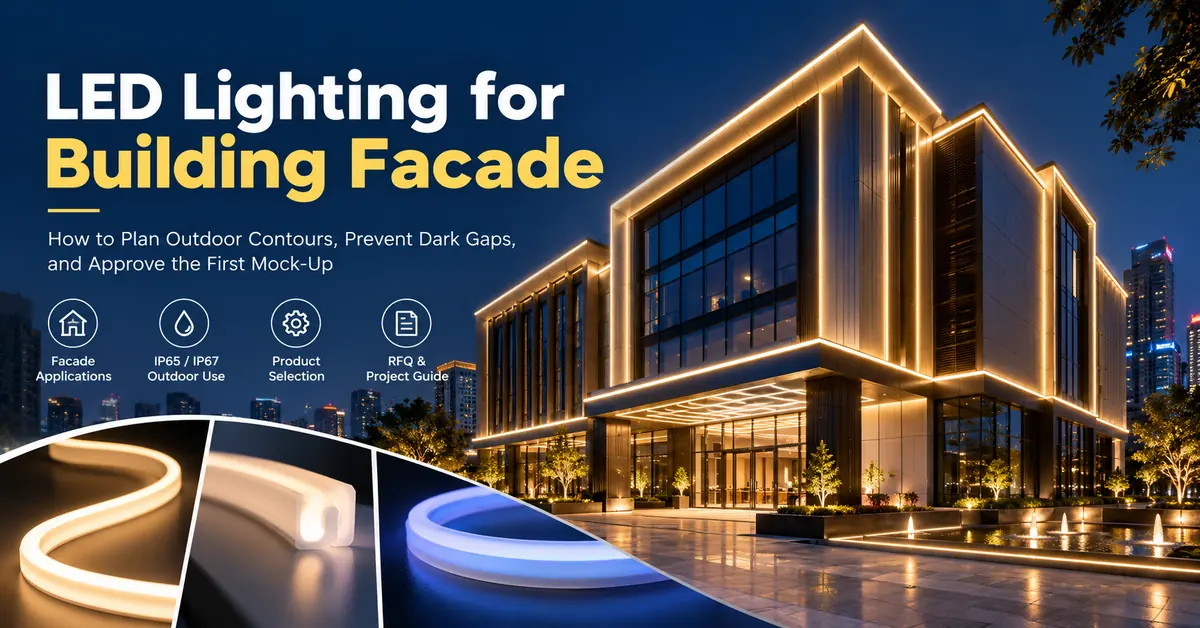
Architectural LED Neon Lighting Requires System Planning
Architectural LED neon lighting often looks simple after installation: one continuous illuminated line follows the building.
Electrically, however, it may be a much more complex system.
Long facade projects need to consider:
- Maximum practical run length
- Power-feed positions
- Voltage drop
- Cable size
- Driver locations
- Controller capacity
- Expansion and movement
- Mounting channels
- Access for future maintenance
The visual line may be continuous while the electrical system is divided into several zones.
That is usually a better approach than trying to power an extremely long run from one end.
For example, a facade can be divided into separate sections with independent power feeds while maintaining the appearance of one continuous lighting line.
This reduces the risk of the far end appearing dimmer than the beginning.
Commercial LED Neon Lighting Is About Consistency
For restaurants, hotels, retailers, and branded commercial spaces, product consistency can matter more than maximum output.
Consider a retail chain installing the same lighting detail in 30 stores.
The buyer needs:
- Similar CCT
- Similar brightness
- The same profile dimensions
- Matching cable locations
- Matching connectors
- Repeatable mounting accessories
A small color difference may be acceptable in one isolated installation.
Across several adjacent fixtures or multiple stores, it becomes much more noticeable.
This is why commercial LED neon lighting projects should use a clearly documented specification rather than relying on descriptions such as:
“warm white neon”
or
“standard 24V neon.”
A better purchasing specification includes:
- Exact product model
- Profile dimensions
- Voltage
- CCT or color
- Cable configuration
- Finished length
- Mounting method
- Control method
- Environmental requirement
How to Build a Complete LED Neon Lighting System
A practical LED neon lighting system normally contains more than the illuminated profile.
Think of the project as six connected parts.
1. Neon Light Source
Select according to:
- Required visual width
- Color
- Bend direction
- Installation geometry
2. Power Supply
The driver must match:
- Input voltage
- Total wattage
- Operating environment
- Required safety margin
3. Controller
A controller may be unnecessary for basic single-color lighting.
It becomes important for:
- Dimming
- Tunable white
- RGB
- RGBW
- Addressable effects
4. Wiring
Cable design affects:
- Voltage drop
- Installation convenience
- Maintenance
- Appearance
5. Mounting System
Possible options include:
- Clips
- Aluminum channels
- Flexible mounting profiles
6. Connections and Terminations
These include:
- End caps
- Cable exits
- Connectors
- Sealing
- Junction points
A project becomes more reliable when all six parts are defined together.
YESUN's broader LED product range also includes controllers, power supplies, and complementary LED products for complete commercial lighting projects.
Single Color, RGB, RGBW, or Addressable?
Control complexity should match the real application.
Single-Color Neon
Best suited to:
- Architectural outlines
- Logos
- Warm ambient lighting
- Permanent brand colors
Advantages include simple wiring and easier commissioning.
RGB Neon
Suitable for projects that need changing colors.
Typical applications include:
- Clubs
- Bars
- Entertainment spaces
- Event installations
RGBW
RGBW combines dynamic color with a dedicated white channel.
It can be useful where a project needs both entertainment effects and usable white light.
Addressable Neon
Addressable products enable more complex effects because sections can be controlled individually.
They are suitable for:
- Interactive displays
- Animated facades
- Entertainment installations
- Experiential retail
But they also introduce additional requirements:
- Compatible controller
- Signal planning
- Programming
- More complex commissioning
If a project only needs one static brand color, addressable lighting may add cost without adding real value.
Custom LED Neon Lighting: When Standard Products Are Not Enough
Standard reels work well for many projects.
Custom LED neon lighting becomes valuable when repeated field modification would otherwise increase labor or risk.
Custom Finished Lengths
Imagine a project requiring 200 identical 1.35-meter pieces.
Shipping standard reels and asking installers to cut every section on site creates:
- Labor
- Waste
- Variation
- Additional sealing work
Factory-prepared lengths can simplify installation.
Custom Cable Position
A default cable exit may conflict with:
- Wall cavities
- Sign structures
- Furniture frames
- Junction-box positions
Changing the cable location before production is usually easier than redesigning the installation later.
Custom CCT or Color
Hotels, brands, and architectural designers may specify a particular visual tone rather than generic warm white or cool white.
Custom Connectors
Project-specific connectors can reduce wiring time, particularly when multiple identical units are installed.
OEM Packaging
Distributors and private-label brands may also require:
- Brand labels
- Barcodes
- Manuals
- Retail boxes
- Project kits
YESUN supports OEM/ODM and customized LED projects. More information about its manufacturing capabilities is available on the About YESUN LED page.
Indoor and Outdoor Projects Should Not Use the Same Specification
Outdoor neon requires more than a waterproof-looking silicone body.
The finished system includes several possible water-entry points:
- Cut ends
- Cable exits
- Connectors
- End caps
- Field joints
That means an IP rating should be considered together with the actual finished configuration.
Before placing an outdoor order, confirm:
- Intended IP level
- Sealing method
- Cable-entry construction
- End treatment
- Installation orientation
Do not assume that a field-cut product automatically retains the same protection as the original factory-finished assembly.
Outdoor projects should also consider:
- UV exposure
- Temperature changes
- Rain
- Dust
- Drainage
- Maintenance access
Power Planning Can Decide Whether the Project Looks Uniform
A visually perfect neon profile can still produce poor results if the electrical layout is wrong.
The basic project load can be estimated as:
Total load = watts per meter × total connected length
But this number alone is not enough.
The designer must also consider:
- Length per electrical circuit
- Power-feed location
- Cable resistance
- Driver capacity
- Controller limits
For longer projects, dividing the installation into several circuits is often more reliable than one continuous electrical run.
A Simple Example
Suppose a project uses 80 meters of neon.
Instead of treating it as one 80-meter circuit, the installation may be divided into:
- Zone A
- Zone B
- Zone C
- Zone D
Each zone has its own appropriate power feed.
The lighting still appears continuous, but electrical performance is easier to control.
Three Common Project Failures That Start During Specification
Failure 1: The Neon Cannot Follow the Curve
Cause:
The wrong bending direction or profile was selected.
Prevention:
Send the actual drawing and confirm minimum bending requirements before sampling.
Failure 2: Brightness Drops at the Far End
Cause:
The run is too long or cable losses are excessive.
Prevention:
Plan power injection or multiple zones before installation.
Failure 3: Water Enters at the Connection
Cause:
The main silicone body is waterproof, but the field termination is not.
Prevention:
Define the finished sealing system, not only the raw neon IP rating.
Most expensive site problems can be traced back to something that was not specified clearly before production.
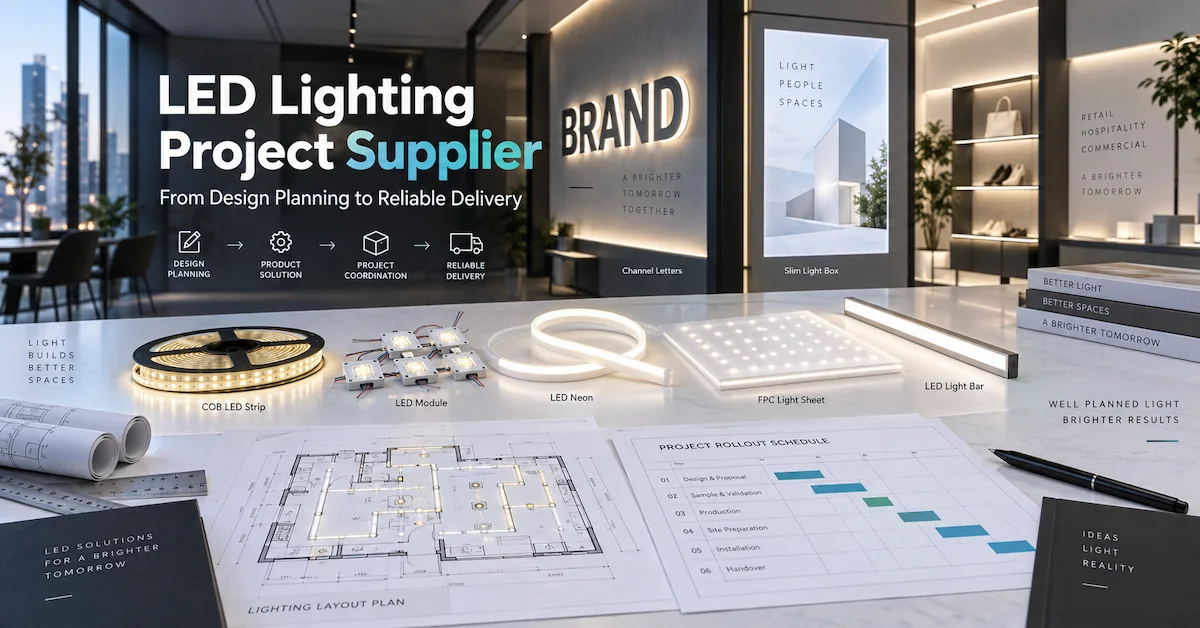
A Better Project Development Workflow
A practical B2B neon project can follow six stages.
Stage 1: Application Review
Provide:
- Application
- Location
- Drawing
- Environment
- Required visual result
Stage 2: Product Recommendation
Determine:
- Profile
- Voltage
- CCT/color
- Control method
- IP requirement
Stage 3: System Design
Confirm:
- Power supplies
- Controllers
- Wiring
- Zones
- Mounting
Stage 4: Sample Validation
Test:
- Appearance
- Curves
- Color
- Brightness
- Installation
Stage 5: Production Specification
Freeze:
- Model
- Length
- Cable
- Connector
- Packaging
- QC requirement
Stage 6: Bulk Production
Only after sample approval should the specification move into repeatable production.
This process is especially useful for:
- Chain stores
- Hotel projects
- Sign programs
- Distributors
- OEM brands
What Information Should Be Included in Your RFQ?
A detailed inquiry gets a much more useful response than “send price.”
Use this checklist:
| RFQ Item | What to Provide |
|---|---|
| Application | Signage, facade, hotel, retail, etc. |
| Drawing | PDF, CAD, artwork, or dimensions |
| Quantity | Meters or finished pieces |
| Profile | If already selected |
| Voltage | 12V / 24V / project requirement |
| Light Type | White / RGB / RGBW / addressable |
| CCT/Color | Required visual output |
| Environment | Indoor / outdoor |
| Protection | Required IP level |
| Control | On/off / dimming / dynamic |
| Cable | Length and exit direction |
| Mounting | Clips/channel/profile |
| Packaging | Standard/OEM |
| Market | Destination country |
| Deadline | Sample and production schedule |
Providing this information helps reduce quotation revisions and speeds up sampling.
Why Buyers Use YESUN for LED Neon Lighting Solutions
YESUN focuses on signage and commercial LED lighting applications.
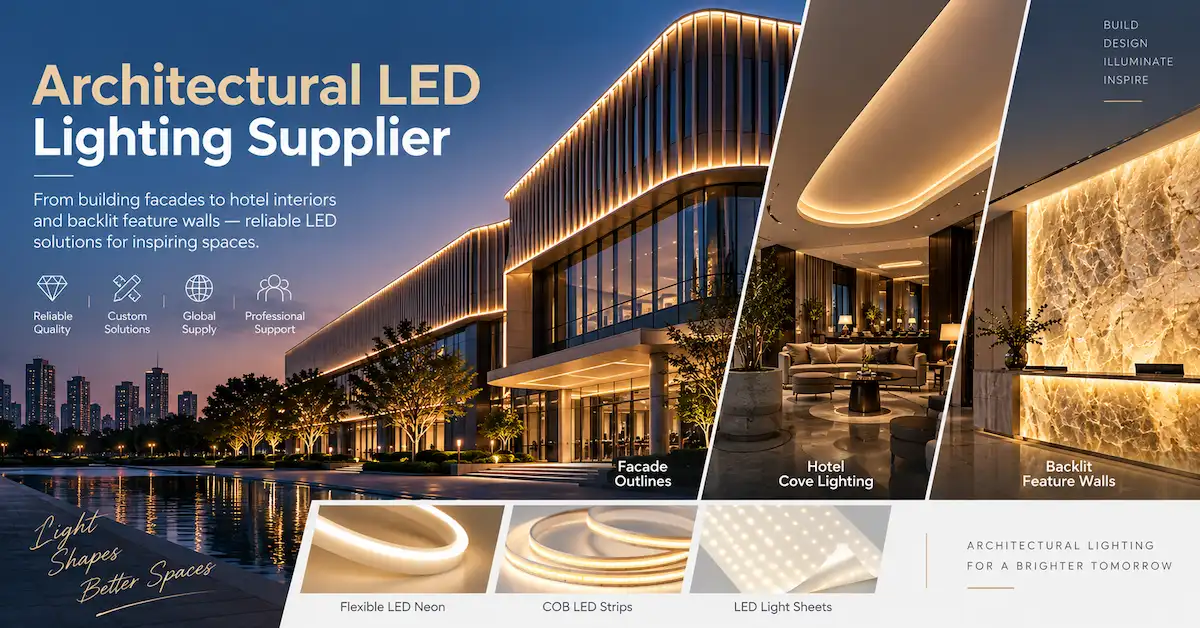
Its neon portfolio can support applications including:
- Signage
- Architectural outlines
- Retail environments
- Hospitality spaces
- Decorative installations
- Customized commercial projects
YESUN also supports OEM/ODM projects and provides complementary LED products, including controllers and power supplies.
For buyers developing a new project, the most efficient approach is to send the application drawing together with:
- Required dimensions
- Quantity
- Color
- Voltage
- Installation environment
- Control requirements
You can review the current YESUN LED Neon Strip range or submit project details through the Contact Us page.
If your main concern is sourcing rather than system selection, YESUN's existing guides on LED neon strip suppliers, LED neon strip manufacturers, and LED neon strip wholesale cover those purchasing stages separately.
Frequently Asked Questions About LED Neon Lighting Solutions
What are LED neon lighting solutions?
LED neon lighting solutions combine flexible neon products with the required power supplies, controllers, wiring, mounting accessories, and project-specific configuration needed for a complete installation.
Where is commercial LED neon lighting commonly used?
Common applications include storefront signs, retail stores, restaurants, hotels, bars, shopping centers, building facades, landscape projects, and branded interiors.
Can LED neon lighting be customized for a project?
Yes. Common customizations include finished length, color, CCT, cable length, cable exit position, connectors, packaging, and project-specific configurations.
How do I choose between top-emitting and side-emitting neon?
The correct choice depends on the direction in which the product needs to bend and the surface from which the light should be visible. A project drawing is often the easiest way to determine the correct structure.
Is 24V better than 12V for commercial neon lighting?
Neither voltage is automatically better. The choice depends on product design, run length, cutting interval, power distribution, and installation requirements. Longer commercial runs often benefit from careful voltage-drop planning.
Can architectural LED neon lighting be installed outdoors?
Yes, when the selected product, connections, end sealing, mounting, and electrical components are suitable for the intended outdoor environment.
What causes dark sections in a neon lighting system?
Possible causes include voltage drop, circuit damage, poor internal alignment, insufficient power, or incorrect connections.
Can one controller operate a large LED neon installation?
Possibly, but only if its output capacity and control protocol support the connected load. Larger projects may require multiple control zones.
What should I send YESUN for a custom LED neon lighting quote?
Send your drawing, application, dimensions, quantity, voltage, color or CCT, indoor/outdoor environment, control requirements, cable details, and expected delivery schedule.
Should I request a sample before bulk production?
Yes. For custom, architectural, outdoor, or multi-location projects, sample validation helps confirm appearance, installation, electrical performance, and color before mass production.
Conclusion
The best LED neon lighting solutions are designed around the project rather than selected from a catalog in isolation.
A reliable result depends on how the neon profile, bending direction, voltage, controller, power supply, wiring, mounting, sealing, and installation environment work together.
For signage, retail, hospitality, architecture, or large commercial projects, defining those requirements before sampling can prevent costly changes later.
If your project requires custom LED neon lighting, send YESUN the drawing and technical requirements first.
The objective should not be to find a neon strip that simply lights up.
It should be to build an LED neon lighting system that fits the project, installs efficiently, and can be reproduced consistently when the next order arrives.