

Why Choosing the Right LED Neon Strip Supplier Matters
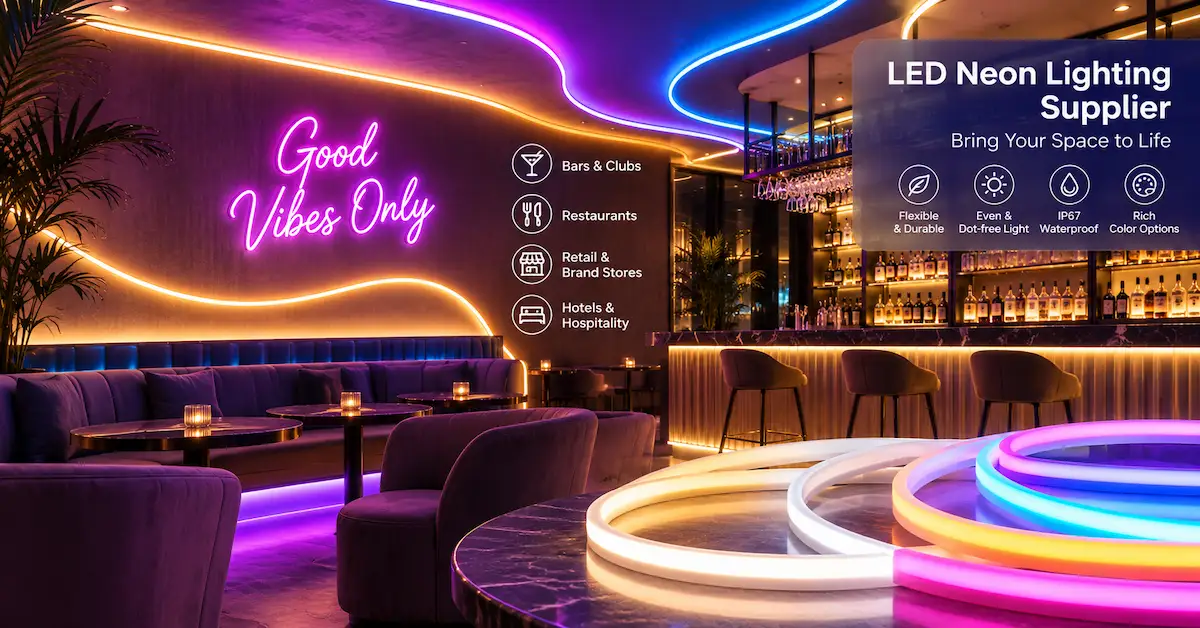
LED neon strips have become a popular alternative to traditional glass neon lighting because they provide flexible installation, lower energy consumption, improved safety, and more design possibilities.
However, not every LED neon strip supplier can provide the same level of product reliability.
For commercial projects, buyers need more than an attractive lighting effect. They need products that can maintain:
- Consistent brightness
- Stable color performance
- Reliable waterproof protection
- Flexible installation
- Long operating lifespan
- Batch-to-batch consistency
Professional applications such as signage, retail stores, hotels, restaurants, architectural decoration, and entertainment spaces often require customized lighting solutions rather than standard consumer products.
A qualified supplier should provide:
- Product selection guidance
- Technical recommendations
- Custom manufacturing capability
- Quality control support
- Project-based solutions
YESUN LED focuses on commercial LED lighting solutions, including flexible LED neon strips, LED strips, LED modules, and customized lighting products for global B2B customers.
Explore YESUN’s LED Neon Strip Products.
What Makes a Professional LED Neon Strip Supplier Different?
Choosing an LED neon strip supplier requires evaluating more than product appearance.
A professional manufacturer should have strong capabilities in product design, material selection, manufacturing control, and customization.
Complete LED Neon Strip Product Capability
Different projects require different neon lighting structures.
A reliable supplier should provide options such as:
- Flexible silicone neon strips
- Top-emitting neon strips
- Side-emitting neon strips
- RGB neon strips
- RGBW neon solutions
- Addressable neon lighting
- Waterproof outdoor neon strips
Different structures are suitable for different applications.
For example:
| Neon Strip Type | Main Feature | Typical Application |
|---|---|---|
| Top Emitting Neon | Direct front illumination | Signs, decorative outlines |
| Side Emitting Neon | Narrow light direction | Edge lighting, architectural details |
| RGB Neon | Dynamic colors | Entertainment spaces, events |
| Waterproof Neon | Outdoor protection | Facades, outdoor signs |
The correct selection depends on installation environment, viewing angle, brightness requirements, and control system.
Silicone Material Quality and Manufacturing Process
The silicone housing is one of the most important components of LED neon strips.
High-quality silicone helps provide:
- Better flexibility
- UV resistance
- Weather resistance
- Improved protection from dust and moisture
- Stable light diffusion
Poor-quality silicone may cause:
- Yellowing
- Cracking
- Reduced flexibility
- Uneven light transmission
A professional LED neon strip supplier should control:
- Silicone material selection
- Extrusion process
- Internal LED positioning
- Sealing quality
- Final appearance inspection
For outdoor and architectural projects, material consistency directly affects long-term performance.
LED Performance and Optical Design
The LED source and optical structure determine the final visual effect.
Important factors include:
LED Density
Higher LED density can help reduce visible dark areas and create smoother illumination.
Light Distribution
The internal optical design affects:
- Brightness uniformity
- Light diffusion
- Viewing experience
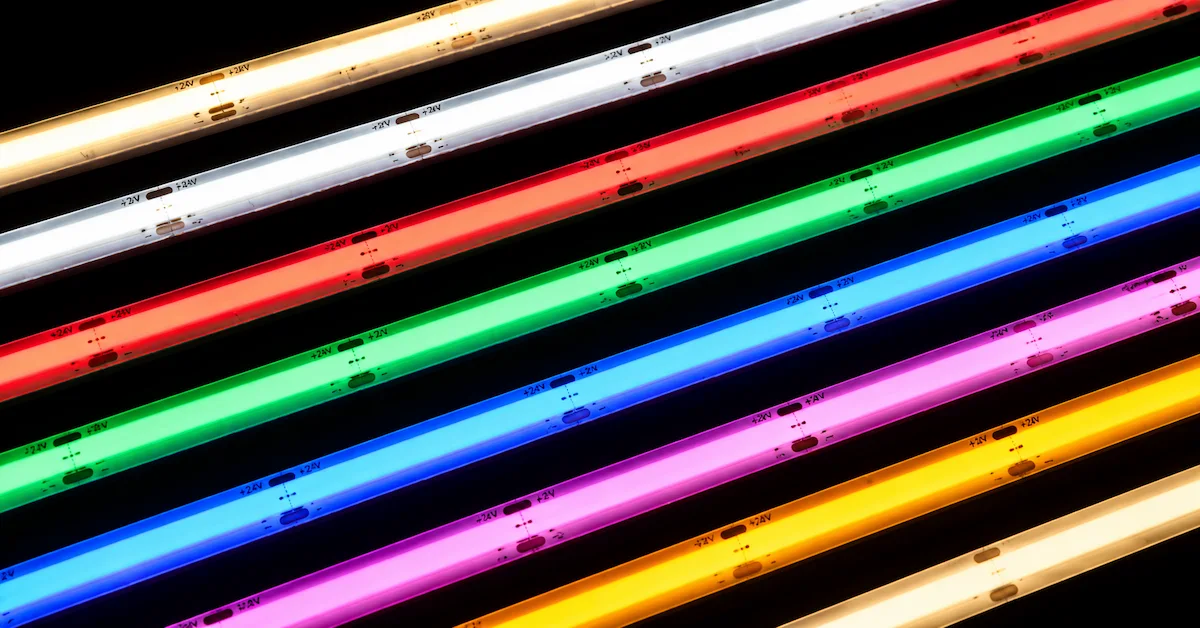
Color Consistency
Commercial projects require consistent colors across multiple installations.
Important considerations include:
- LED binning
- CCT tolerance
- Production batch control
A professional supplier should maintain stable color performance between samples and mass production.
Key Factors to Evaluate Before Selecting an LED Neon Strip Manufacturer
Waterproof Performance and IP Rating
Outdoor LED neon projects require appropriate protection levels.
Common requirements include:
- Indoor applications: IP20 or similar
- Semi-outdoor applications: IP65
- Outdoor applications: IP67/IP68 depending on design
The correct IP rating depends on:
- Rain exposure
- Installation location
- Temperature conditions
- Maintenance accessibility
A reliable LED neon strip supplier should provide clear application recommendations instead of simply promoting the highest IP rating.
Brightness and Color Selection
Brightness should match the application.
Overly bright neon lighting can create:
- Excessive glare
- Higher energy consumption
- Poor visual comfort
Insufficient brightness may result in:
- Weak visual impact
- Poor brand presentation
- Uneven appearance
Commercial buyers should consider:
- Installation distance
- Viewing angle
- Background material
- Ambient lighting conditions
Flexibility and Installation Design
One of the biggest advantages of LED neon strips is design flexibility.
They are commonly used for:
- Curved letters
- Custom shapes
- Decorative lines
- Architectural contours
Before purchasing, buyers should confirm:
- Minimum bending radius
- Cutting unit
- Mounting method
- Connector design
- Installation accessories
This is especially important for custom signage projects.
Heat Management and Lifespan
Although LED neon strips generate less heat than traditional lighting, thermal management still affects lifespan.
A professional supplier should consider:
- PCB design
- LED spacing
- Silicone structure
- Installation environment
- Power supply matching
Poor thermal management may lead to:
- Faster brightness decline
- Color changes
- Shorter product life
Reliable manufacturers evaluate the complete lighting system instead of only the LED strip itself.
LED Neon Strip Applications for Commercial Projects
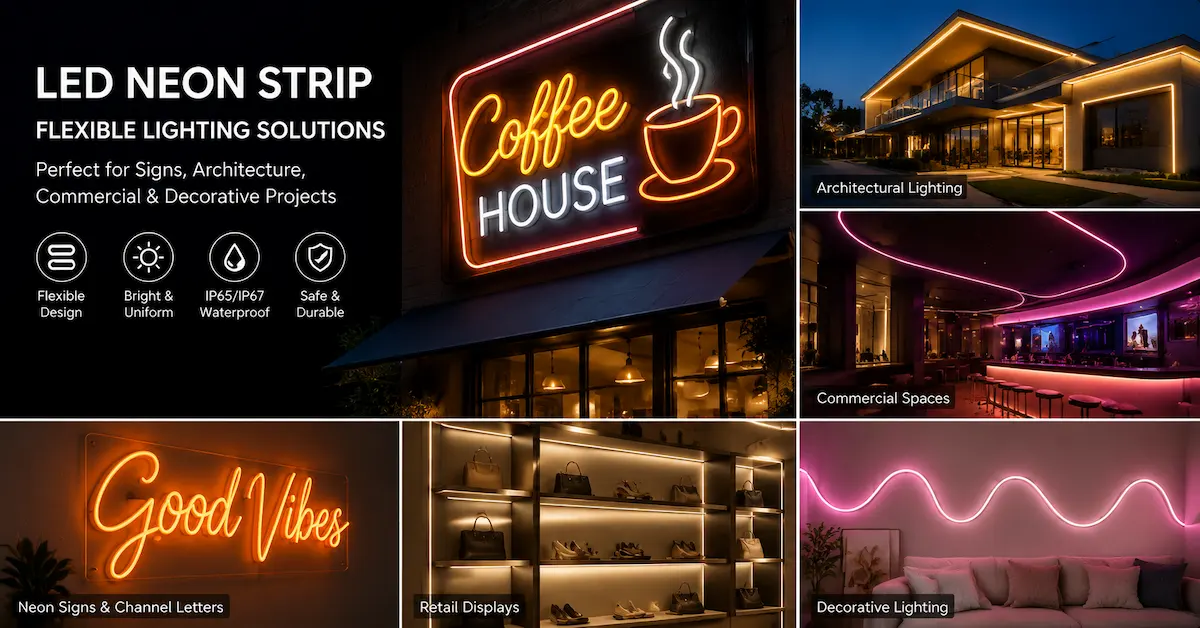
Neon Signs and Channel Letter Applications
LED neon strips are widely used for:
- Custom logo signs
- Brand displays
- Decorative lettering
- Storefront signs
Compared with traditional neon tubes, flexible LED neon solutions offer:
- Easier installation
- Lower power consumption
- More design flexibility
- Safer operation
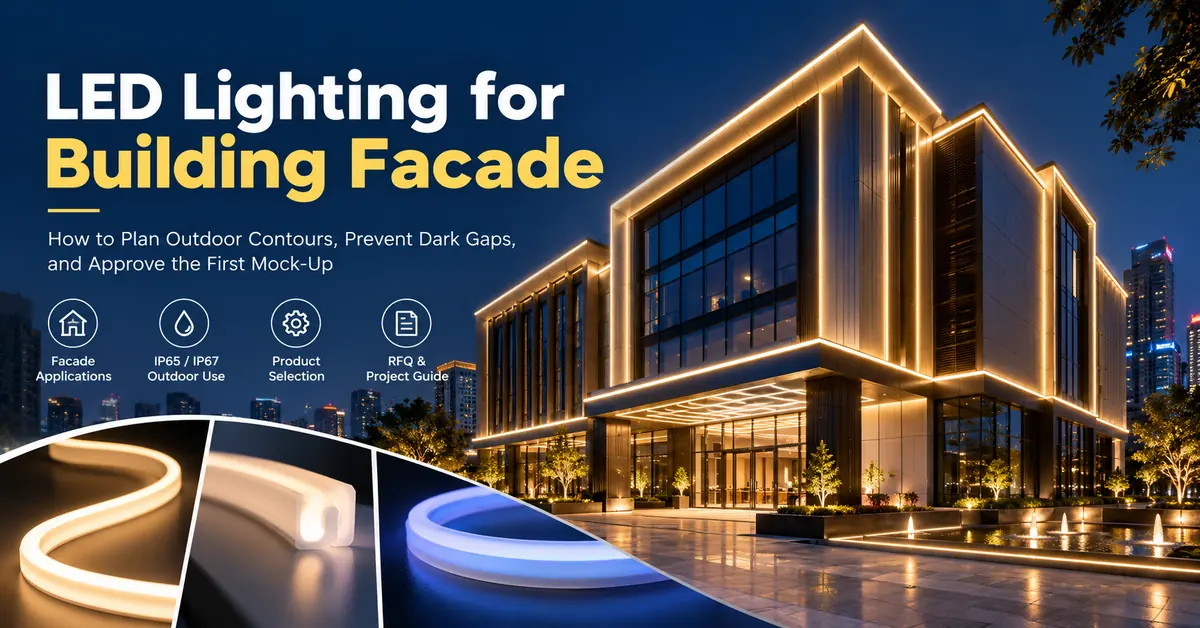
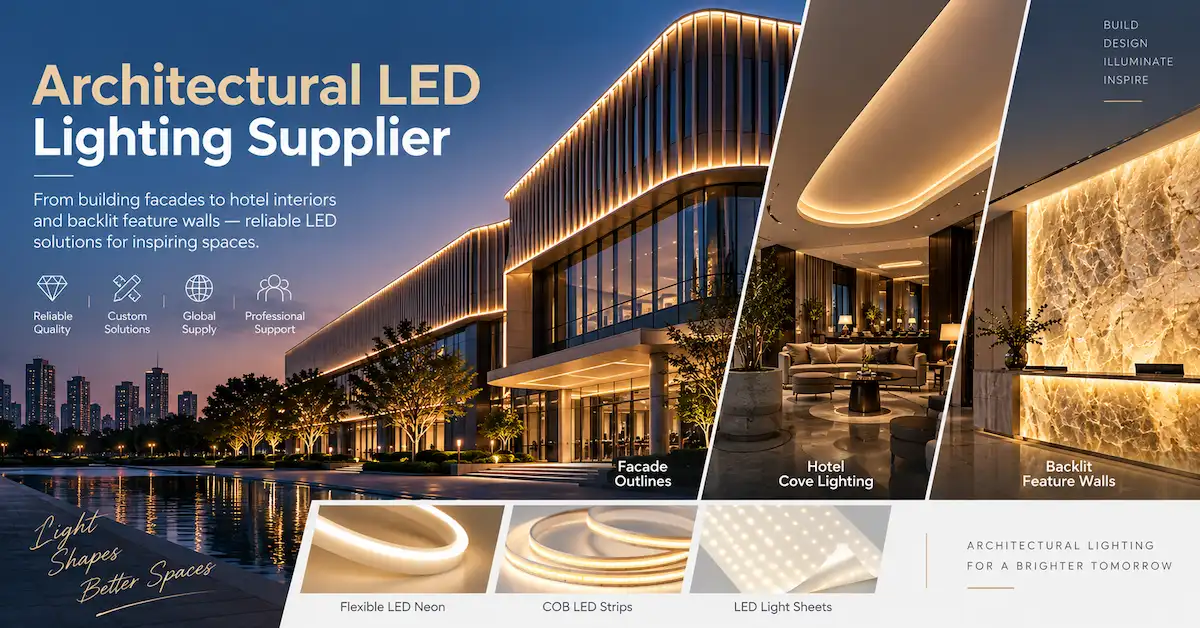
Architectural Lighting
Architectural projects use LED neon strips for:
- Building outlines
- Wall decoration
- Ceiling details
- Landscape lighting
- Stair lighting
These applications require:
- Stable outdoor performance
- Long working hours
- Consistent brightness
Retail and Hospitality Spaces
Retail stores, hotels, restaurants, and entertainment venues use LED neon lighting to create memorable environments.
Typical applications include:
- Store decoration
- Restaurant branding
- Bar atmosphere lighting
- Hotel feature walls
- Exhibition displays
Decorative Commercial Interiors
LED neon strips are also suitable for:
- Furniture lighting
- Creative installations
- Art displays
- Interior design projects
Their flexibility allows designers to create customized visual effects.
How to Choose the Right LED Neon Strip for Your Project
RGB vs Single Color Neon Strip
Single-color neon strips are suitable for:
- Brand signs
- Architectural lighting
- Professional commercial applications
RGB or RGBW neon strips are suitable for:
- Entertainment spaces
- Dynamic displays
- Interactive lighting projects
The choice depends on whether the project requires stable illumination or changing effects.
Side Emitting vs Top Emitting Neon Strip
Top Emitting Neon Strip
Best for:
- Direct viewing applications
- Signage outlines
- Decorative lines
Side Emitting Neon Strip
Best for:
- Narrow spaces
- Edge lighting
- Architectural details
Selecting the correct emitting direction helps achieve the intended visual effect.
12V vs 24V LED Neon Strip
Voltage selection affects installation planning.
12V Systems
Suitable for:
- Short installations
- Small projects
- Compact lighting areas
24V Systems
Often preferred for:
- Longer installations
- Commercial projects
- Reduced voltage drop requirements
The final choice depends on strip length, wiring design, and power supply location.
Indoor vs Outdoor Neon Applications
Indoor projects usually focus on:
- Appearance
- Installation flexibility
- Decorative effects
Outdoor projects require additional consideration:
- Waterproof structure
- UV resistance
- Temperature tolerance
- Weather protection
A professional LED neon strip supplier should recommend products based on actual environmental conditions.
Manufacturing Quality Control Behind Reliable LED Neon Strips
A trustworthy supplier should have a complete quality management process.
LED Component Inspection
Before production:
- LED chips are inspected
- PCB materials are checked
- Electronic components are verified
Silicone Extrusion Control
The silicone process affects:
- Shape accuracy
- Light diffusion
- Waterproof performance
Manufacturing consistency is essential for large orders.
Aging and Reliability Testing
Quality testing may include:
- Long-time aging tests
- Electrical testing
- Brightness inspection
- Color consistency evaluation
- Waterproof testing
These processes help ensure stable performance during actual customer use.
YESUN applies quality control procedures throughout manufacturing to support reliable commercial LED lighting production.
OEM and Custom LED Neon Strip Solutions
Many B2B buyers require customized products rather than standard catalog items.
A professional LED neon strip supplier should support:
Custom Product Design
Including:
- Custom lengths
- Special shapes
- Different LED densities
- Customized colors
- Specific voltage requirements
Branding and Packaging
For distributors and private-label customers:
- Custom labels
- Packaging design
- Product instructions
- Project-specific solutions
Engineering Support
Manufacturers can help with:
- Product selection
- Installation recommendations
- Sample testing
- Project optimization
YESUN provides OEM/ODM lighting support for customers requiring customized LED solutions.
Learn more about YESUN’s capabilities through the About YESUN LED page.
Common Mistakes When Buying LED Neon Strips
Choosing Only Based on Price
Low-cost products may create higher long-term costs due to:
- Product replacement
- Installation problems
- Inconsistent appearance
Ignoring Application Environment
Indoor products should not automatically be used outdoors.
Always confirm:
- Waterproof requirements
- Temperature conditions
- Installation location
Not Testing Samples
Before large orders, buyers should test:
- Brightness
- Color
- Flexibility
- Installation method
- Long-term operation
Selecting a Supplier Without Custom Capability
Commercial projects often require:
- Special dimensions
- Unique colors
- Custom packaging
- Project support
A supplier without engineering capability may create limitations later.
Why Choose YESUN as Your LED Neon Strip Supplier?
YESUN provides flexible LED neon lighting solutions for commercial signage, architectural decoration, and customized lighting projects.
The company supports customers with:
- Flexible LED neon strips
- LED strips
- LED modules
- Light sheet solutions
- Controllers
- Power solutions
YESUN focuses on:
- Product customization
- Stable manufacturing
- Quality control
- Technical support
- Global B2B project cooperation
Customers can explore the complete YESUN LED Product Range for different commercial lighting applications.
Frequently Asked Questions About LED Neon Strip Suppliers
What should I look for in an LED neon strip supplier?
Look for manufacturing experience, product quality, customization capability, testing processes, technical support, and reliable communication.
Can LED neon strips be customized?
Yes. Professional suppliers can customize length, color, voltage, connectors, packaging, and product structure based on project requirements.
Are LED neon strips suitable for outdoor use?
Yes, when the product is designed with suitable waterproof protection and environmental resistance.
What is the difference between LED neon strips and traditional neon lights?
LED neon strips are generally more flexible, energy-efficient, safer, and easier to customize compared with traditional glass neon systems.
Which LED neon strip is best for signage?
The best option depends on sign design, viewing direction, installation space, brightness requirements, and environmental conditions.
How long do LED neon strips last?
Lifespan depends on LED quality, heat management, operating conditions, and power supply design.
Can LED neon strips be used for architectural lighting?
Yes. Flexible neon strips are commonly used for building outlines, decorative walls, landscape features, and commercial interiors.
Does YESUN support OEM LED neon strip projects?
Yes. YESUN supports customized LED neon lighting projects with product development and manufacturing assistance.
Conclusion
Choosing the right LED neon strip supplier is essential for achieving reliable, attractive, and durable commercial lighting results.
A professional supplier should provide more than flexible LED products. They should offer technical expertise, manufacturing quality control, customization capability, and project support.
For signage companies, lighting contractors, distributors, and commercial project buyers, working with an experienced LED neon manufacturer can reduce risks and improve final project performance.
YESUN provides customized LED neon strip solutions designed for global commercial applications, helping customers create reliable and visually impressive lighting systems.